
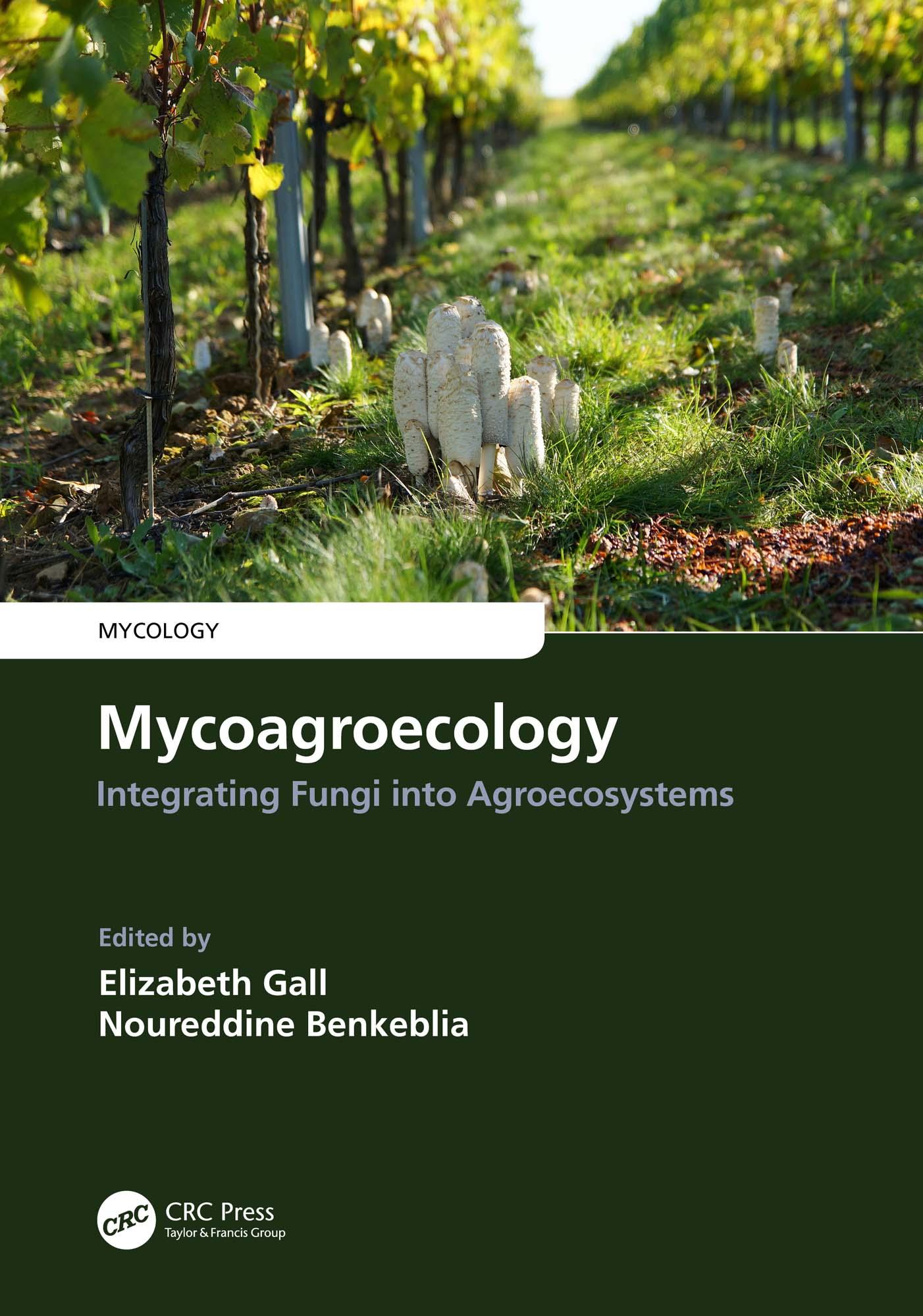
During the 20th century, agriculture underwent many unsustainable changes for the sake of greater food production. Today, the effects of climate change are becoming ever more apparent and the global population continues to grow, placing additional pressures on agricultural systems. For this reason, it is vital to turn international agriculture towards a sustainable future capable of providing healthy, bountiful foods by using methods that preserve and reconstruct the balance of natural ecosystems.
Fungi are an underappreciated, underutilized group of organisms with massive potential to aid in the production of healthy food and other products while also increasing the sustainability of agricultural systems. Mycoagroecology: Integrating Fungi into Agroecosystems lays the foundations for integrated fungal-agricultural understanding and management, the proposed practice of “mycoagroecology”. Suitable for students and professionals of multiple disciplines, this text includes nine introductory chapters that create a firm foundation in ecosystem functioning, evolution and population dynamics, fungal biology, principles of crop breeding and pest management, basic economics of agriculture, and the history of agricultural development during the 20th century. The latter half of the text is application-oriented, integrating the knowledge from the introductory chapters to help readers understand more deeply the various roles of fungi in natural and agricultural systems:
PARTNERS: This text explores known benefits of wild plant-fungal mutualisms, and how to foster and maintain these relationships in a productive agricultural setting.
PESTS AND PEST CONTROL AGENTS: This text acknowledges the historical and continuing role of agriculturally significant fungal pathogens, surveying modern chemical, biotechnological, and cultural methods of controlling them and other pests. However, this book also emphasizes the strong potential of beneficial fungi to biologically control fungal, insect, and other pests.
PRODUCTS: This text covers not just isolated production of mushrooms on specialized farms but also the potential for co-cropping mushrooms in existing plant-based farms, making farm systems more self-sustaining while adding valuable and nutritious new products. An extensive chapter is also devoted to the many historical and forward-facing uses of fungi in food preservation and processing.
Payez facilement par carte, Klarna, Apple Pay ou Google Pay. Pas satisfait ? Vous avez toujours une garantie de remboursement de 14 jours. En savoir plus dans nos conditions. Si vous avez des questions, envoyez-nous un e-mail à hello@memmo.org.
Memmo facilite tes études, où que tu sois dans le monde. On rassemble tes manuels de cours et des outils d'étude intelligents au même endroit : résumés, quiz, podcasts et flashcards. Et il y a Ted, ton compagnon d'étude qui répond à toutes tes questions. Plus de 50 000 étudiants étudient déjà ici – conçu pour t'aider à apprendre plus vite et à moins stresser.