
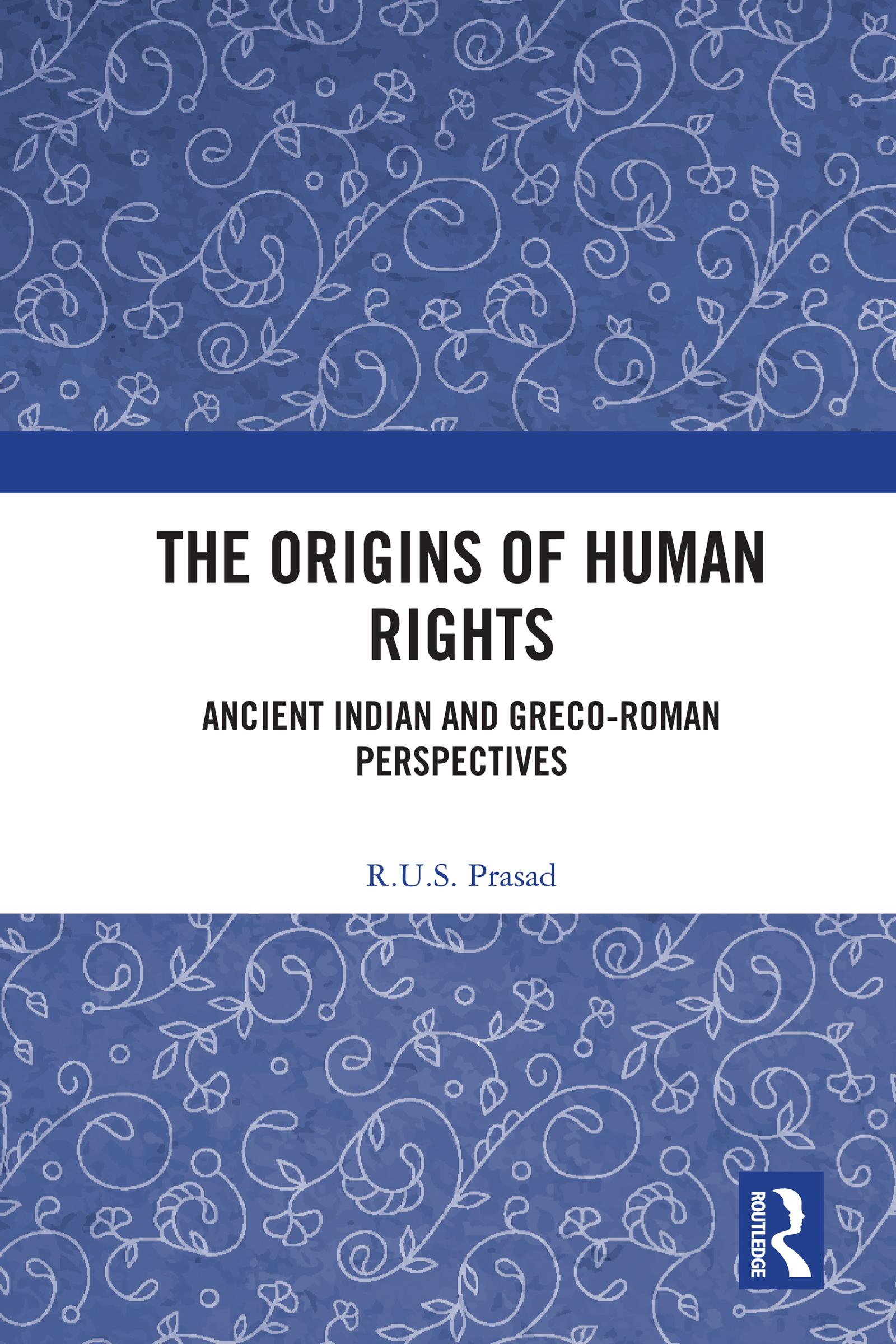
This book studies the history of intercultural human rights. It examines the foundational elements of human rights in the East and the West and provides a comparative analysis of the independent streams of thought originating from the two different geographic spaces. It traces the genesis of the idea of human rights back to ancient Indian and Greco-Roman texts, especially concepts such as the Rigvedic universal moral law, the Upanishadic narratives, the Romans’ model of governance, the rule of law, and administration of justice. It also looks at Cicero’s concept of rights and duties which focuses on quality of compassion and fair play, and Seneca’s expositions on mercy, empathy, justice, and checks on the arbitrary exercise of power.
An important contribution, this book fills a significant gap in the study of human rights. It will be useful for students and researchers of political science, ancient history, religion and civilizations, philosophy, history, human rights, governance, law, sociology, and South Asian studies. The book also caters to general readers interested in the history of human rights.
Payez facilement par carte, Klarna, Apple Pay ou Google Pay. Pas satisfait ? Vous avez toujours une garantie de remboursement de 14 jours. En savoir plus dans nos conditions. Si vous avez des questions, envoyez-nous un e-mail à hello@memmo.org.
Memmo facilite tes études, où que tu sois dans le monde. On rassemble tes manuels de cours et des outils d'étude intelligents au même endroit : résumés, quiz, podcasts et flashcards. Et il y a Ted, ton compagnon d'étude qui répond à toutes tes questions. Plus de 50 000 étudiants étudient déjà ici – conçu pour t'aider à apprendre plus vite et à moins stresser.