
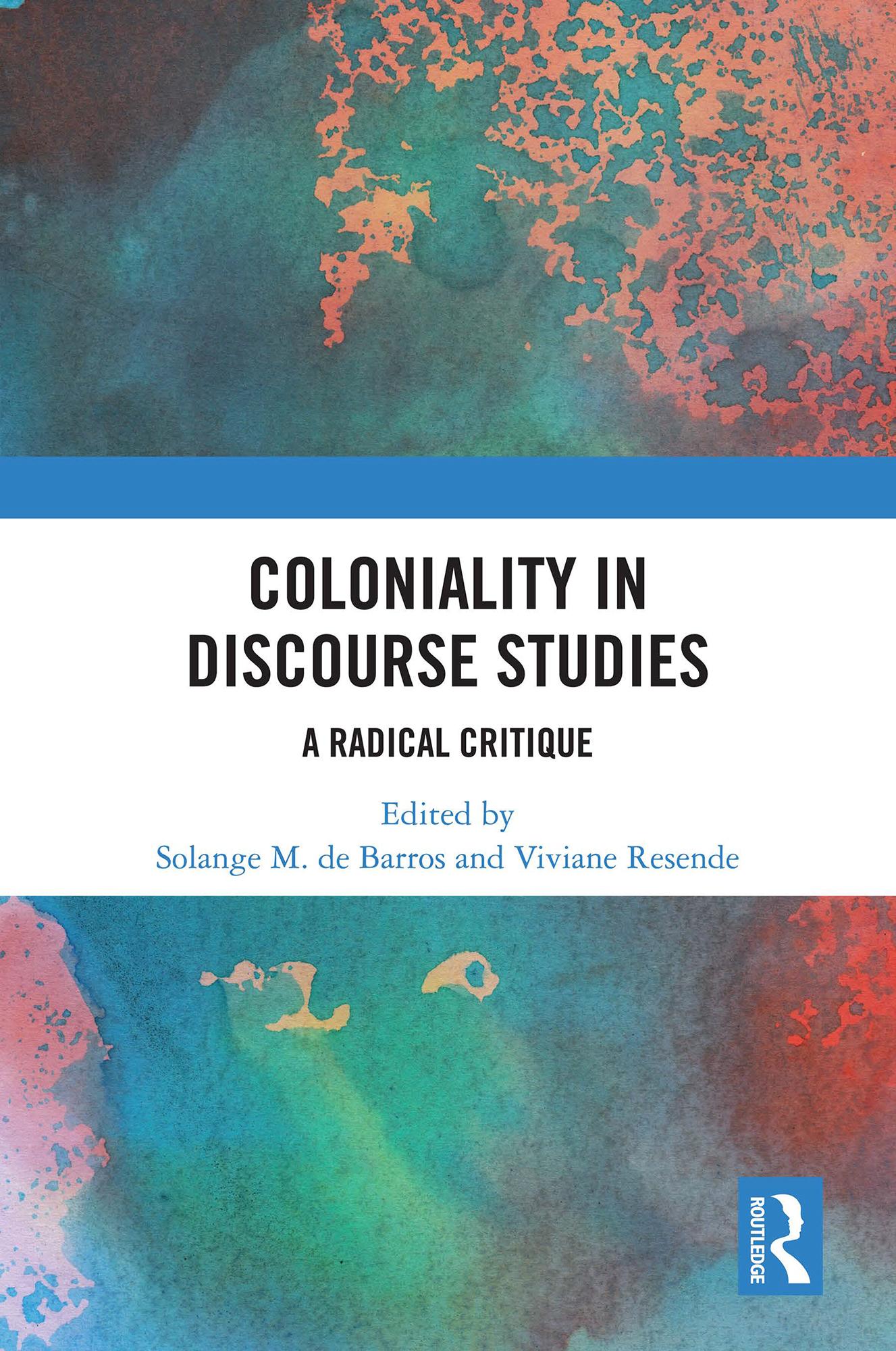
The volume examines the discourse-based critique of coloniality. It brings together an extensive interdisciplinary dialogue that reveals what different research fields – such as sociology of language, social psychology, history and political science, among others – have to say about discourse criticism and de/coloniality. In doing so, it also invites a critique of critical thinking, acknowledging the relevance of dissonant voices that arise from this debate.
The essays in this volume discuss possibilities to decolonize discursive studies without losing sight of its contradictions. The book delves into how one can, as an intellectual who enjoys the privileges of coloniality in academic environments of the Global North, deal with the limitations and paradox of a radical critique through discourse. It discusses how ideas, entrenched in privilege, can be extracted, shared and applied while ensuring the radicality of their local contextualization. These ideas then must not only make sense within themselves but also resonate with other contexts, readings and peoples, in the South, without repeating the mistakes of hermetic scholarly lexicons.
A key reading on decoloniality, critical thinking, methodologies, ideas, ideologies, language and critical discourse analysis, this volume will be of immense interest to scholar and researchers of language and literature, political science, the social sciences and Global South Studies.
Payez facilement par carte, Klarna, Apple Pay ou Google Pay. Pas satisfait ? Vous avez toujours une garantie de remboursement de 14 jours. En savoir plus dans nos conditions. Si vous avez des questions, envoyez-nous un e-mail à hello@memmo.org.
Memmo facilite tes études, où que tu sois dans le monde. On rassemble tes manuels de cours et des outils d'étude intelligents au même endroit : résumés, quiz, podcasts et flashcards. Et il y a Ted, ton compagnon d'étude qui répond à toutes tes questions. Plus de 50 000 étudiants étudient déjà ici – conçu pour t'aider à apprendre plus vite et à moins stresser.