
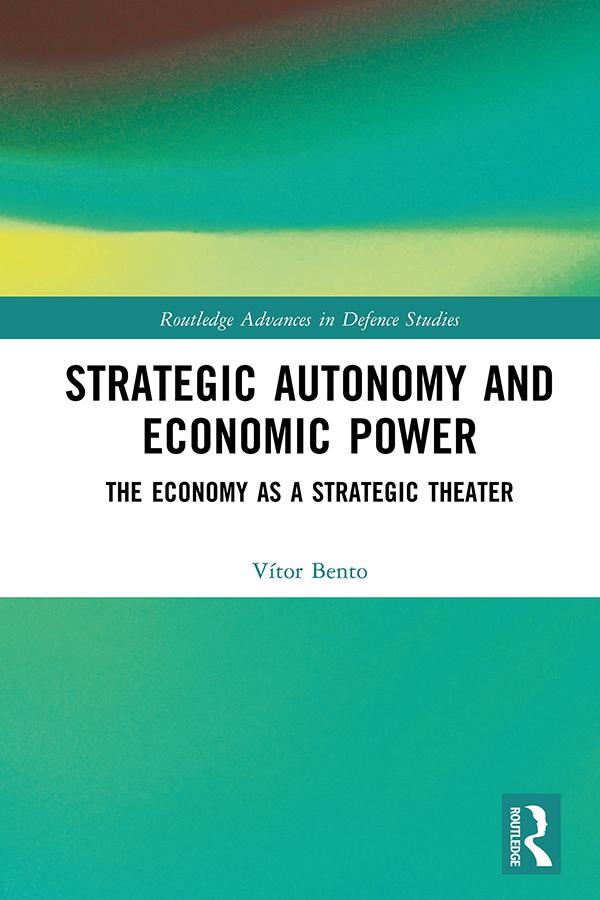
This book examines the effect of economic power on a state’s strategic autonomy.
Strategic autonomy is a fundamental condition for the availability of strategic options in the interaction of states. This book provides the first clear operational definition of the concept and offers an analysis of the relevance of the national economy to strategic autonomy. The main sources of economic power – size of the economy, position in trade and technological networks, savings, wealth, and finance – and their impact on strategic autonomy are analyzed in depth. The strategic governance of the national economy is also addressed as a way of ensuring that national economic power can work as strategic power for a country, providing it with strategic autonomy. The strategies pursued by China – which in under four decades has gone from an underdeveloped state to the main challenger of the dominant world power – and Germany – which, despite being defeated in World War II, having no nuclear weapons and having chosen to be a "civilian power", became the dominant power in Europe – are analyzed in depth, as two paradigmatic examples of the theory developed by the book.
This book will be of much interest to students of strategic studies, economics, foreign policy and International Relations.
Payez facilement par carte, Klarna, Apple Pay ou Google Pay. Pas satisfait ? Vous avez toujours une garantie de remboursement de 14 jours. En savoir plus dans nos conditions. Si vous avez des questions, envoyez-nous un e-mail à hello@memmo.org.
Memmo facilite tes études, où que tu sois dans le monde. On rassemble tes manuels de cours et des outils d'étude intelligents au même endroit : résumés, quiz, podcasts et flashcards. Et il y a Ted, ton compagnon d'étude qui répond à toutes tes questions. Plus de 50 000 étudiants étudient déjà ici – conçu pour t'aider à apprendre plus vite et à moins stresser.