
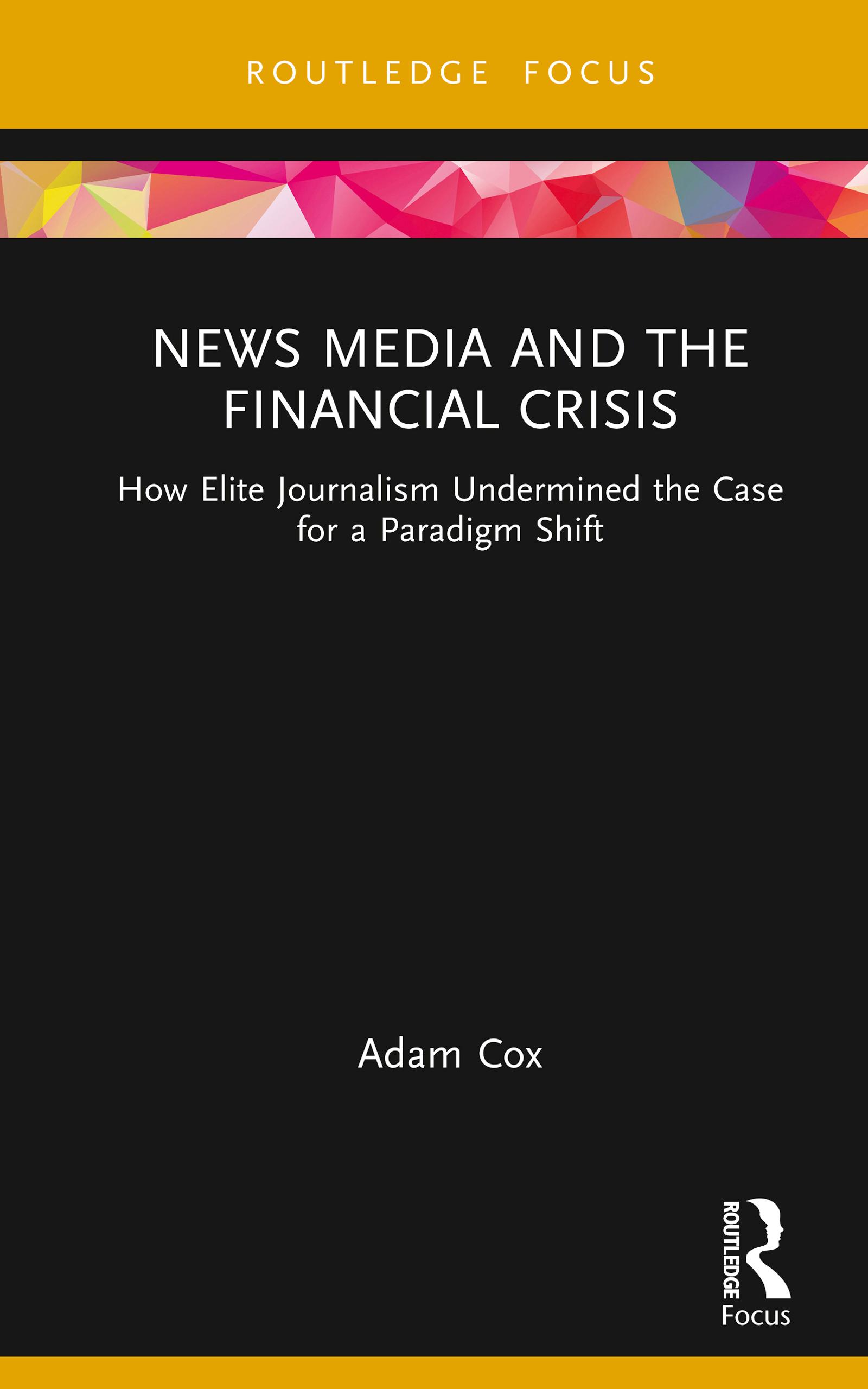
This book explores how leading news media responded to the 2008 financial crisis and its aftermath, showing how journalists regularly framed discussions about post-crisis regulatory reform in ways that reinforced the same market liberal policy paradigm that had ushered in the crisis.
Drawing on an analysis of nearly three years of news coverage and on interviews with journalists who covered the financial crash for major media groups, Adam Cox demonstrates how this framing of issues, often focusing on the costs of tighter regulation rather than the preventive benefits, formed the basis of a post-crisis narrative in the United States that undermined the role of the state, despite the wreckage that had just occurred. He looks at how state actors, think tanks and the financial industry worked in concert to encourage such a narrative, ultimately lending support to a market liberal worldview that was being seriously challenged for the first time in decades. While highlighting journalists’ ability to resist agenda-building efforts by powerful actors, this book offers a methodology for considering media narratives based on quantitative analysis of framing patterns.
News Media and the Financial Crisis is aimed at students and researchers working at the intersection of communications, journalism, political economy and public policy.
Payez facilement par carte, Klarna, Apple Pay ou Google Pay. Pas satisfait ? Vous avez toujours une garantie de remboursement de 14 jours. En savoir plus dans nos conditions. Si vous avez des questions, envoyez-nous un e-mail à hello@memmo.org.
Memmo facilite tes études, où que tu sois dans le monde. On rassemble tes manuels de cours et des outils d'étude intelligents au même endroit : résumés, quiz, podcasts et flashcards. Et il y a Ted, ton compagnon d'étude qui répond à toutes tes questions. Plus de 50 000 étudiants étudient déjà ici – conçu pour t'aider à apprendre plus vite et à moins stresser.