
"Rarely, but just often enough to rebuild hope, something happens to confound my pessimism about the recent unprecedented happenings in the world. This book is the most recent instance, and I think that all its readers will join me in rejoicing at the good it seeks to do. It is an example of the kind of international comity and collaboration that we could and should undertake to solve various societal problems.
This book is a beautiful example of the power of the possible. [It] provides a blueprint for how the LISA 2020 model can be replicated in other fields. Civil engineers, or accountants, or nurses, or any other profession could follow this outline to share expertise and build capacity and promote progress in other countries. It also contains some tutorials for statistical literacy across several fields. The details would change, of course, but ideas are durable, and the generalizations seem pretty straightforward. This book shows every other profession where and how to stand in order to move the world. I urge every researcher to get a copy!"
—David Banks from the Foreword
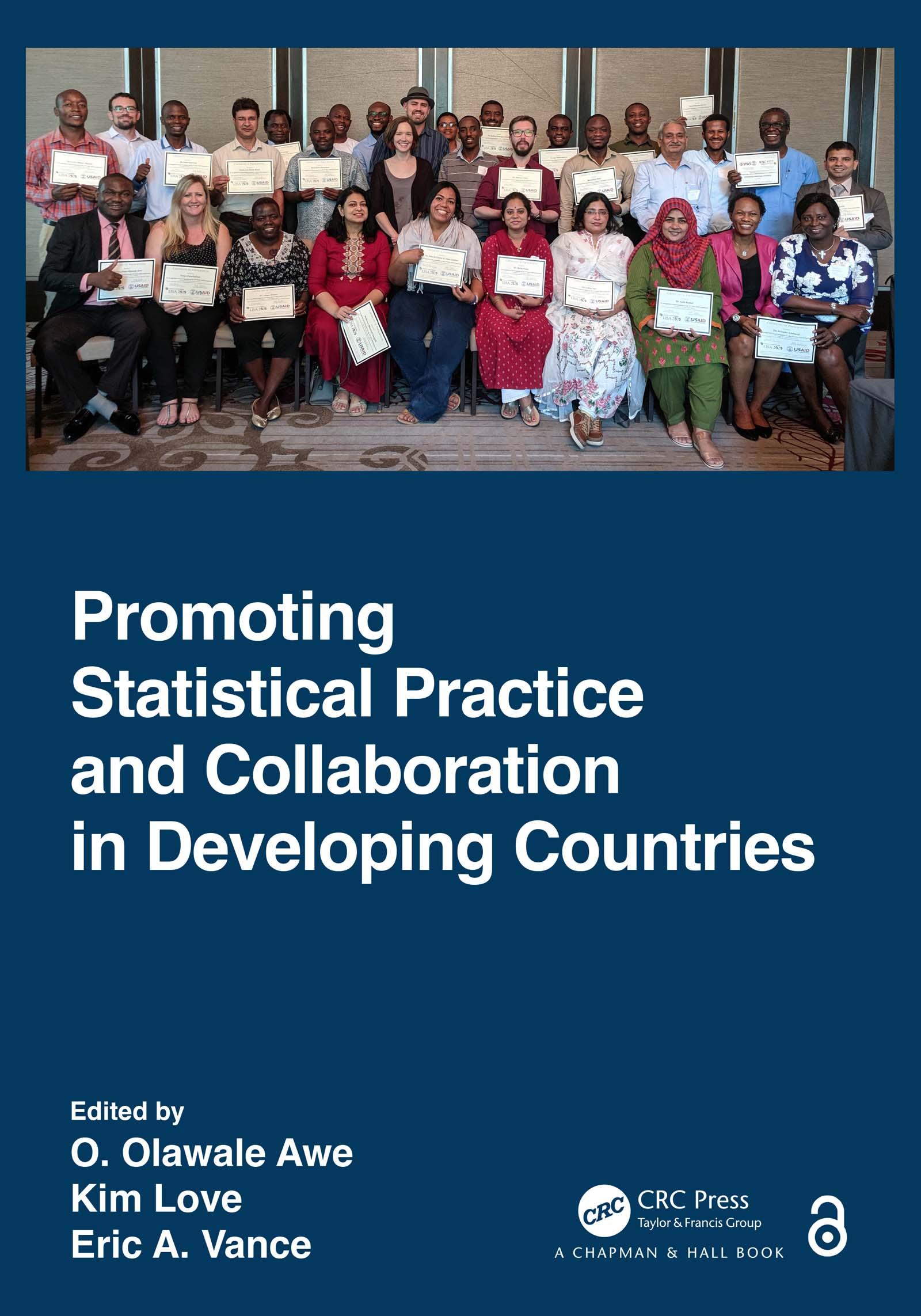
Promoting Statistical Practice and Collaboration in Developing Countries provides new insights into the current issues and opportunities in international statistics education, statistical consulting, and collaboration, particularly in developing countries around the world. The book addresses the topics discussed in individual chapters from the perspectives of the historical context, the present state, and future directions of statistical training and practice, so that readers may fully understand the challenges and opportunities in the field of statistics and data science, especially in developing countries.
Features
• Reference point on statistical practice in developing countries for researchers, scholars, students, and practitioners
• Comprehensive source of state-of-the-art knowledge on creating statistical collaboration laboratories within the field of data science and statistics
• Collection of innovative statistical teaching and learning techniques in developing countries
Each chapter consists of independent case study contributions on a particular theme that are developed with a common structure and format. The common goal across the chapters is to enhance the exchange of diverse educational and action-oriented information among our intended audiences, which include practitioners, researchers, students, and statistics educators in developing countries.
Payez facilement par carte, Klarna, Apple Pay ou Google Pay. Pas satisfait ? Vous avez toujours une garantie de remboursement de 14 jours. En savoir plus dans nos conditions. Si vous avez des questions, envoyez-nous un e-mail à hello@memmo.org.
Memmo facilite tes études, où que tu sois dans le monde. On rassemble tes manuels de cours et des outils d'étude intelligents au même endroit : résumés, quiz, podcasts et flashcards. Et il y a Ted, ton compagnon d'étude qui répond à toutes tes questions. Plus de 50 000 étudiants étudient déjà ici – conçu pour t'aider à apprendre plus vite et à moins stresser.