
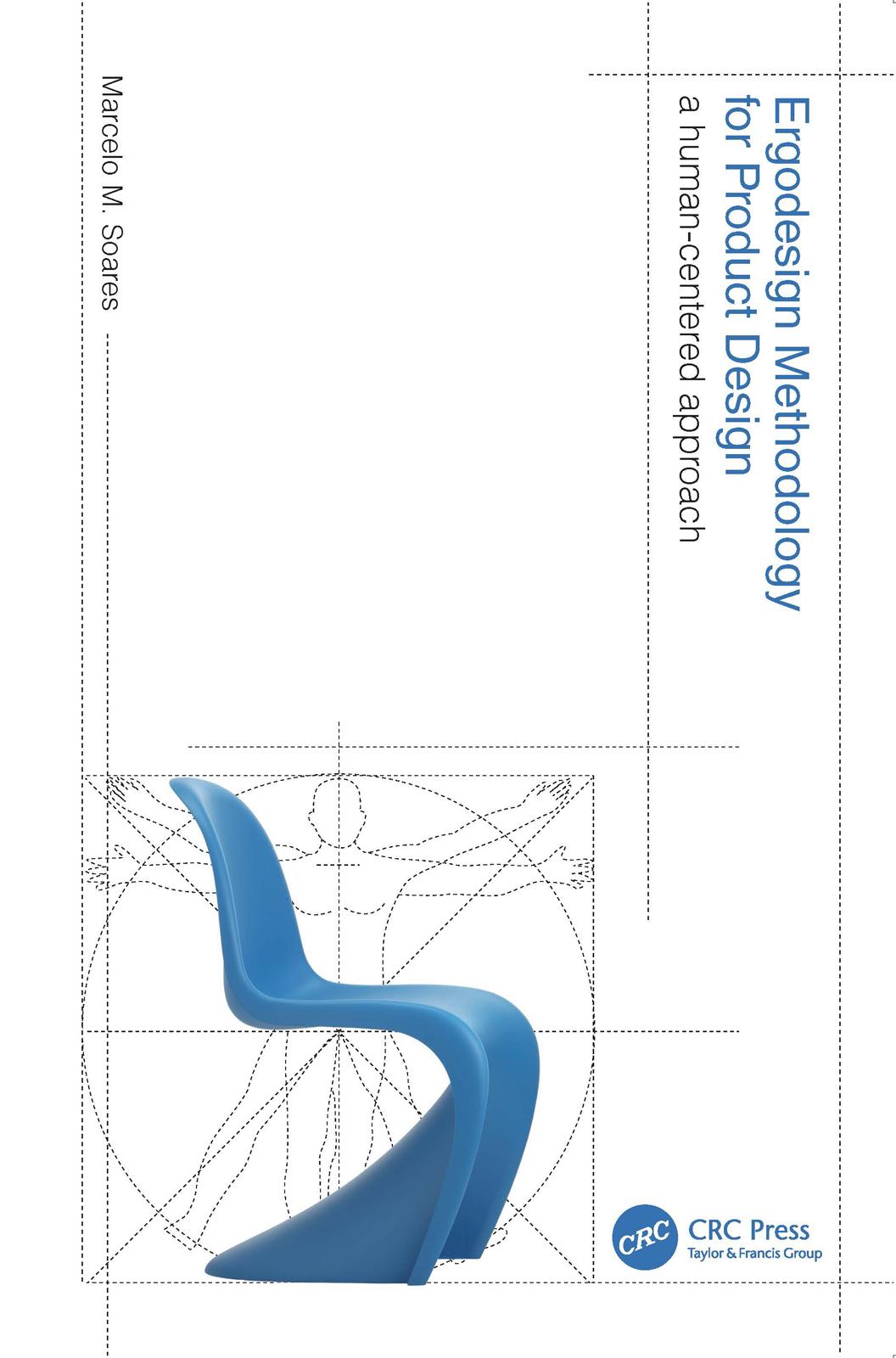
This book presents a co-design detailed methodology that will enable the reader to develop human-centered product designs, considering the user’s needs, skills, and limitations.
The purpose of this book is to produce an ergonomic design methodology in which the "user’s voice" can be translated into product requirements in a way that designers and manufacturers can use, characterizing it as a co-design methodology. It discusses important topics including ergonomics and product design, design specifications, project evaluation, modeling and prototyping, product safety, human error, kansei/affective engineering, usability and user experience, models of usability, methods for research and evaluation of usability, methods for evaluation of user-experience, preliminary strategic design planning, detailing design, and design, ergonomic and pandemics.
The book offers a human-centered design methodology that allows the reader to carry out analysis and design projects for both products aimed at the disabled user population and those that serve the general population. It will be a valuable reference text for undergraduate and graduate students and professionals in the fields of ergonomics, design, architecture, engineering, and related fields. It can also be used by students and professionals of physiotherapy and occupational therapy interested in designing products for people with special needs.
Payez facilement par carte, Klarna, Apple Pay ou Google Pay. Pas satisfait ? Vous avez toujours une garantie de remboursement de 14 jours. En savoir plus dans nos conditions. Si vous avez des questions, envoyez-nous un e-mail à hello@memmo.org.
Memmo facilite tes études, où que tu sois dans le monde. On rassemble tes manuels de cours et des outils d'étude intelligents au même endroit : résumés, quiz, podcasts et flashcards. Et il y a Ted, ton compagnon d'étude qui répond à toutes tes questions. Plus de 50 000 étudiants étudient déjà ici – conçu pour t'aider à apprendre plus vite et à moins stresser.