
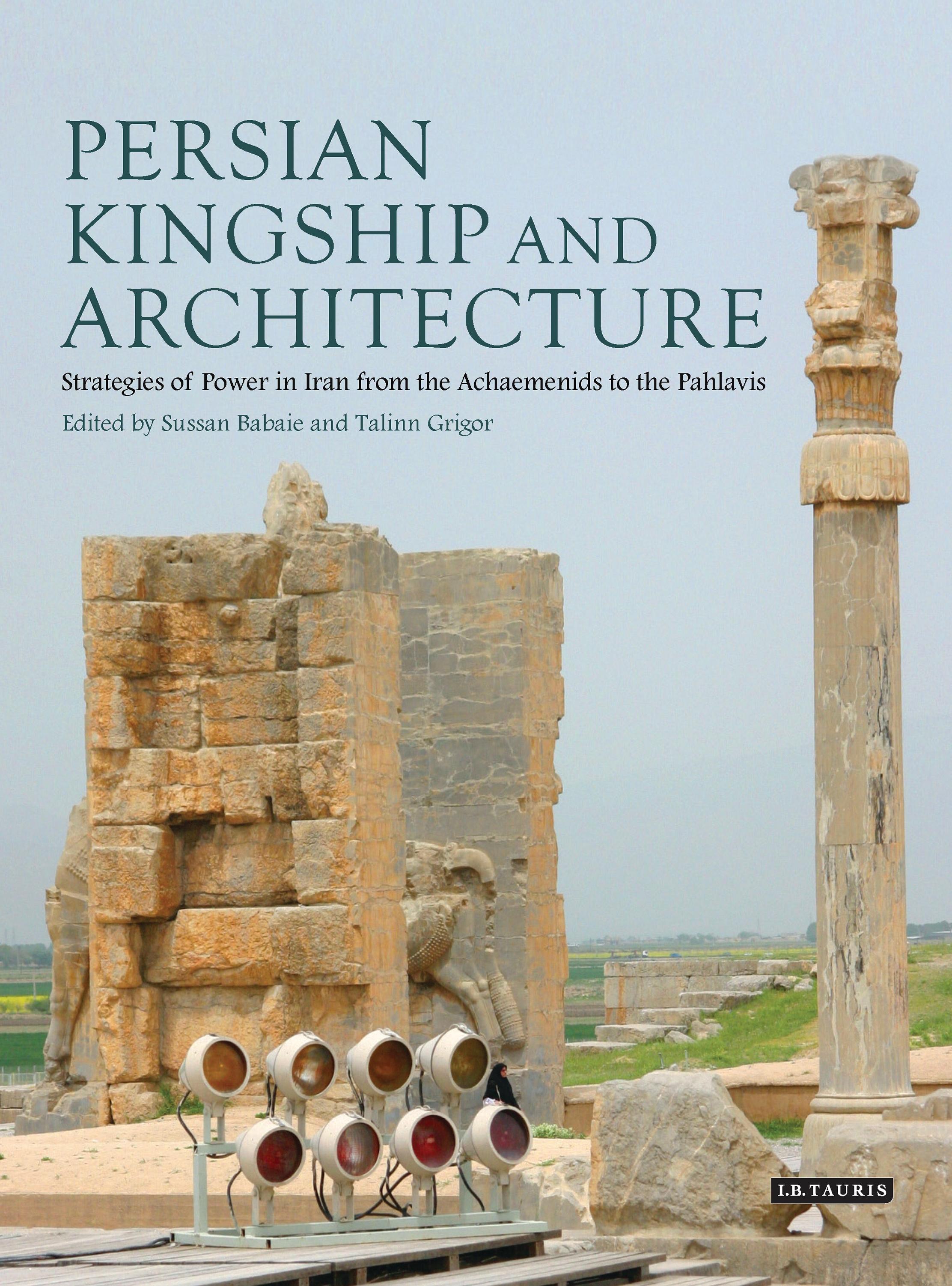
Since the Shah went into exile and the Islamic Republic was established in 1979 in the wake of the Iranian Revolution, the very idea of monarchy in Iran has been contentious. Yet, as Persian Kingship and Architecture argues, the institution of kingship has historically played a pivotal role in articulating the abstract notion of 'Iran' since antiquity. These ideas surrounding kingship and nation have, in turn, served as a unifying cultural force despite shifting political and religious allegiances. Through analyses of palaces, mausolea, art, architectural decoration and urban design the authors show how architecture was appropriated by different rulers as an integral part of their strategies of legitimising power. They refer to a variety of examples, from the monuments of Persepolis under the Achamenids, the Sassanian palaces at Kish, the Safavid public squares of Isfahan, the Qajar palaces at Shiraz and to the modernisation and urban agendas of the Pahlavis. Drawing on archaeology, ancient, medieval, early and modern architectural history, both Islamic and secular, this book is indispensable for all those interested in Iranian studies and visual culture.
Payez facilement par carte, Klarna, Apple Pay ou Google Pay. Pas satisfait ? Vous avez toujours une garantie de remboursement de 14 jours. En savoir plus dans nos conditions. Si vous avez des questions, envoyez-nous un e-mail à hello@memmo.org.
Memmo facilite tes études, où que tu sois dans le monde. On rassemble tes manuels de cours et des outils d'étude intelligents au même endroit : résumés, quiz, podcasts et flashcards. Et il y a Ted, ton compagnon d'étude qui répond à toutes tes questions. Plus de 50 000 étudiants étudient déjà ici – conçu pour t'aider à apprendre plus vite et à moins stresser.