
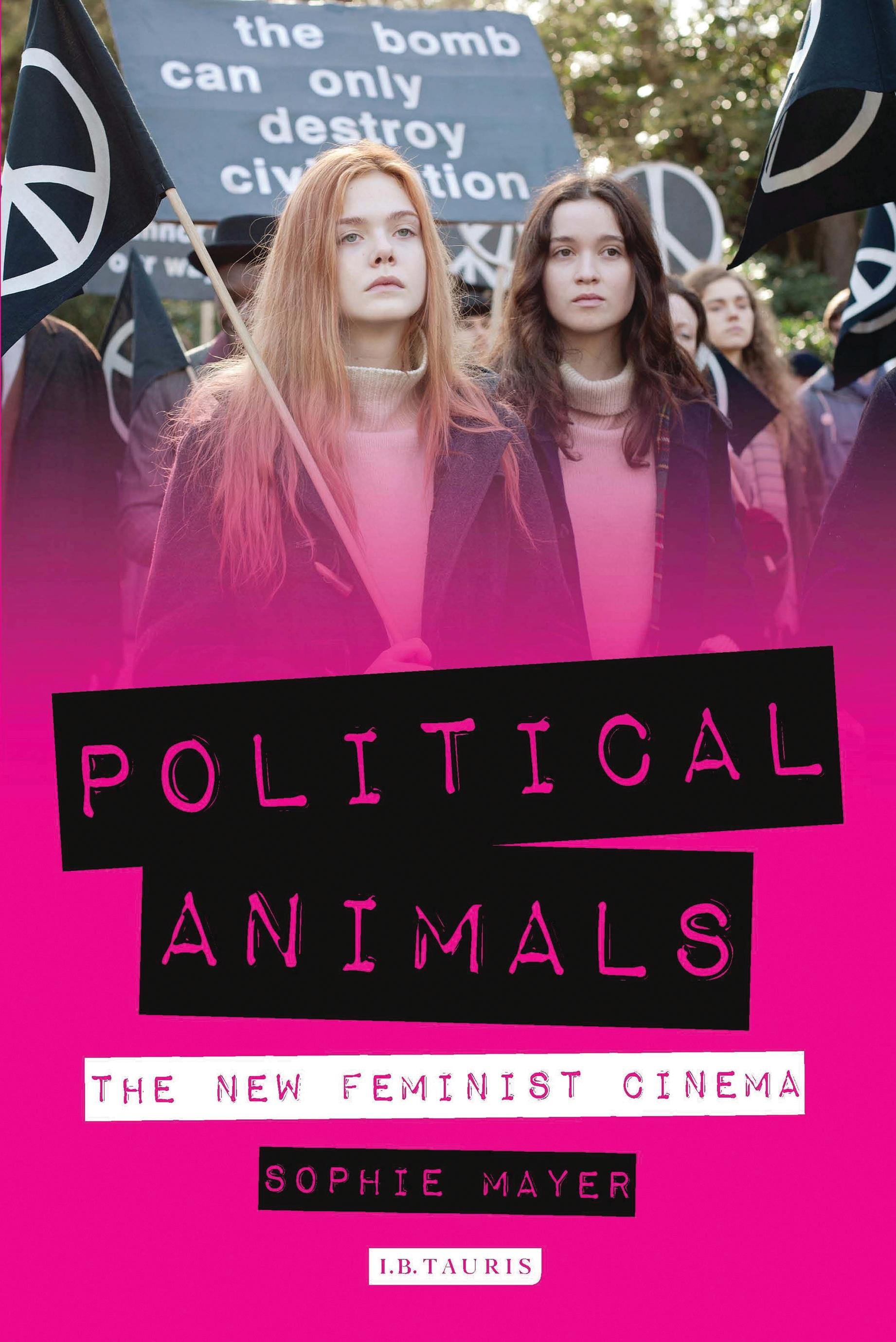
Feminist filmmakers are hitting the headlines. The last decade has witnessed: the first Best Director Academy Award won by a woman; female filmmakers reviving, or starting, careers via analogue and digital television; women filmmakers emerging from Saudi Arabia, Palestine, Pakistan, South Korea, Paraguay, Peru, Burkina Faso, Kenya and The Cree Nation; a bold emergent trans cinema; feminist porn screened at public festivals; Sweden's A-Markt for films that pass the Bechdel Test; and Pussy Riot's online videos sending shockwaves around the world. A new generation of feminist filmmakers, curators and critics is not only influencing contemporary debates on gender and sexuality, but starting to change cinema itself, calling for a film world that is intersectional, sustainable, family-friendly and far-reaching. Political Animals argues that, forty years since Laura Mulvey's seminal essay 'Visual Pleasure and Narrative Cinema' identified the urgent need for a feminist counter-cinema, this promise seems to be on the point of fulfilment.
Forty years of a transnational, trans-generational cinema has given rise to conversations between the work of now well-established filmmakers such as Abigail Child, Sally Potter and Agnes Varda, twenty-first century auteurs including Kelly Reichardt and Lucretia Martel, and emerging directors such as Sandrine Bonnaire, Shonali Bose, Zeina Daccache, and Hana Makhmalbaf. A new and diverse generation of British independent filmmakers such as Franny Armstrong, Andrea Arnold, Amma Asante, Clio Barnard, Tina Gharavi, Sally El Hoseini, Carol Morley, Samantha Morton, Penny Woolcock, and Campbell X join a worldwide dialogue between filmmakers and viewers hungry for a new and informed point of view. Lovely, vigorous and brave, the new feminist cinema is a political animal that refuses to be domesticated by the persistence of everyday sexism, striking out boldly to claim the public sphere as its own.
Forty years of a transnational, trans-generational cinema has given rise to conversations between the work of now well-established filmmakers such as Abigail Child, Sally Potter and Agnes Varda, twenty-first century auteurs including Kelly Reichardt and Lucretia Martel, and emerging directors such as Sandrine Bonnaire, Shonali Bose, Zeina Daccache, and Hana Makhmalbaf. A new and diverse generation of British independent filmmakers such as Franny Armstrong, Andrea Arnold, Amma Asante, Clio Barnard, Tina Gharavi, Sally El Hoseini, Carol Morley, Samantha Morton, Penny Woolcock, and Campbell X join a worldwide dialogue between filmmakers and viewers hungry for a new and informed point of view. Lovely, vigorous and brave, the new feminist cinema is a political animal that refuses to be domesticated by the persistence of everyday sexism, striking out boldly to claim the public sphere as its own.
Payez facilement par carte, Klarna, Apple Pay ou Google Pay. Pas satisfait ? Vous avez toujours une garantie de remboursement de 14 jours. En savoir plus dans nos conditions. Si vous avez des questions, envoyez-nous un e-mail à hello@memmo.org.
Memmo facilite tes études, où que tu sois dans le monde. On rassemble tes manuels de cours et des outils d'étude intelligents au même endroit : résumés, quiz, podcasts et flashcards. Et il y a Ted, ton compagnon d'étude qui répond à toutes tes questions. Plus de 50 000 étudiants étudient déjà ici – conçu pour t'aider à apprendre plus vite et à moins stresser.