
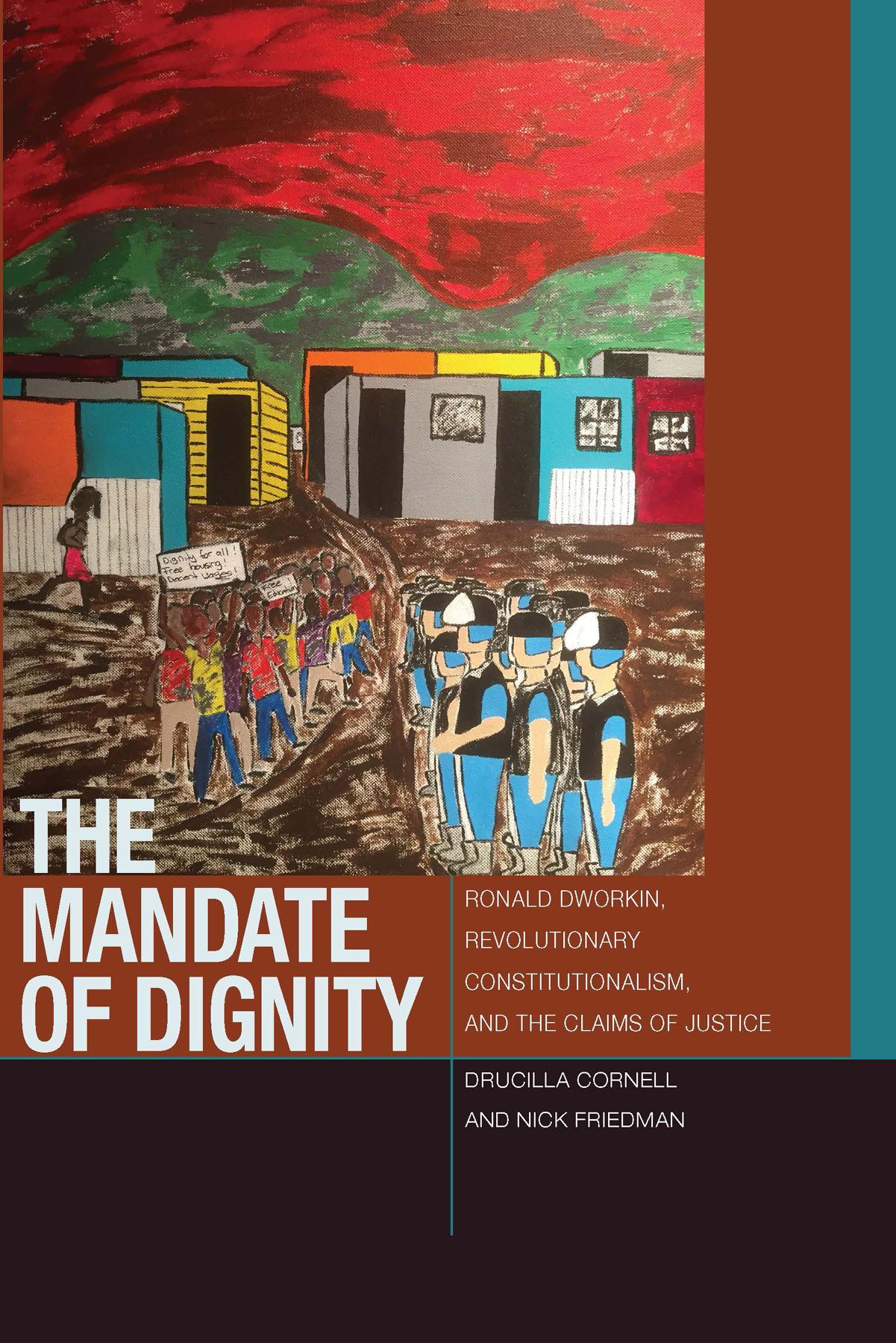
A major American legal thinker, the late Ronald Dworkin also helped shape new dispensations in the Global South. In South Africa, in particular, his work has been fiercely debated in the context of one of the world’s most progressive constitutions. Despite Dworkin’s discomfort with that document’s enshrinement of “socioeconomic rights,” his work enables an important defense of a jurisprudence premised on justice, rather than on legitimacy.
Beginning with a critical overview of Dworkin’s work culminating in his two principles of dignity, Cornell and Friedman turn to Kant and Hegel for an approach better able to ground the principles of dignity Dworkin advocates. Framed thus, Dworkin’s challenge to legal positivism enables a theory of constitutional revolution in which existing legal structures are transformatively revalued according to ethical mandates. By founding law on dignity, Dworkin begins to articulate an ethical jurisprudence responsive to the lived experience of injustice. This book, then, articulates a revolutionary constitutionalism crucial to the struggle for decolonization.
Payez facilement par carte, Klarna, Apple Pay ou Google Pay. Pas satisfait ? Vous avez toujours une garantie de remboursement de 14 jours. En savoir plus dans nos conditions. Si vous avez des questions, envoyez-nous un e-mail à hello@memmo.org.
Memmo facilite tes études, où que tu sois dans le monde. On rassemble tes manuels de cours et des outils d'étude intelligents au même endroit : résumés, quiz, podcasts et flashcards. Et il y a Ted, ton compagnon d'étude qui répond à toutes tes questions. Plus de 50 000 étudiants étudient déjà ici – conçu pour t'aider à apprendre plus vite et à moins stresser.