
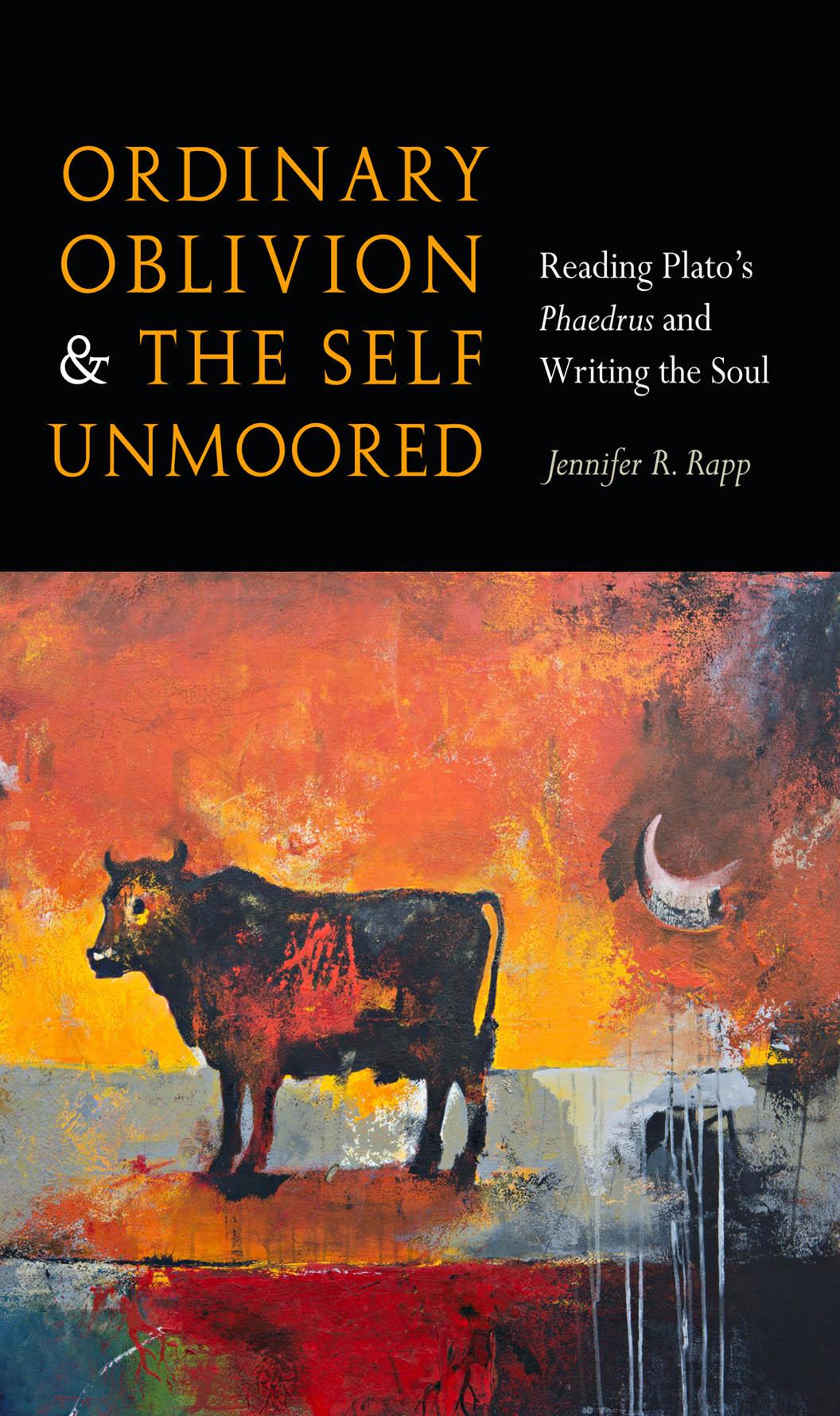
Rapp begins with a question posed by the poet Theodore Roethke: “Should we say that the self, once perceived, becomes a soul?” Through her examination of Plato’s Phaedrus and her insights about the place of forgetting in a life, Rapp answers Roethke’s query with a resounding Yes. In so doing, Rapp reimagines the Phaedrus, interprets anew Plato’s relevance to contemporary life, and offers an innovative account of forgetting as a fertile fragility constitutive of humanity.
Drawing upon poetry and comparisons with other ancient Greek and Daoist texts, Rapp brings to light overlooked features of the Phaedrus, disrupts longstanding interpretations of Plato as the facile champion of memory, and offers new lines of sight onto (and from) his corpus. Her attention to the Phaedrus and her meditative apprehension of the permeable character of human life leave our understanding of both Plato and forgetting inescapably altered. Unsettle everything you think you know about Plato, suspend the twentieth-century entreaty to “Never forget,” and behold here a new mode of critical reflection in which textual study and humanistic inquiry commingle to expansive effect.
Payez facilement par carte, Klarna, Apple Pay ou Google Pay. Pas satisfait ? Vous avez toujours une garantie de remboursement de 14 jours. En savoir plus dans nos conditions. Si vous avez des questions, envoyez-nous un e-mail à hello@memmo.org.
Memmo facilite tes études, où que tu sois dans le monde. On rassemble tes manuels de cours et des outils d'étude intelligents au même endroit : résumés, quiz, podcasts et flashcards. Et il y a Ted, ton compagnon d'étude qui répond à toutes tes questions. Plus de 50 000 étudiants étudient déjà ici – conçu pour t'aider à apprendre plus vite et à moins stresser.