
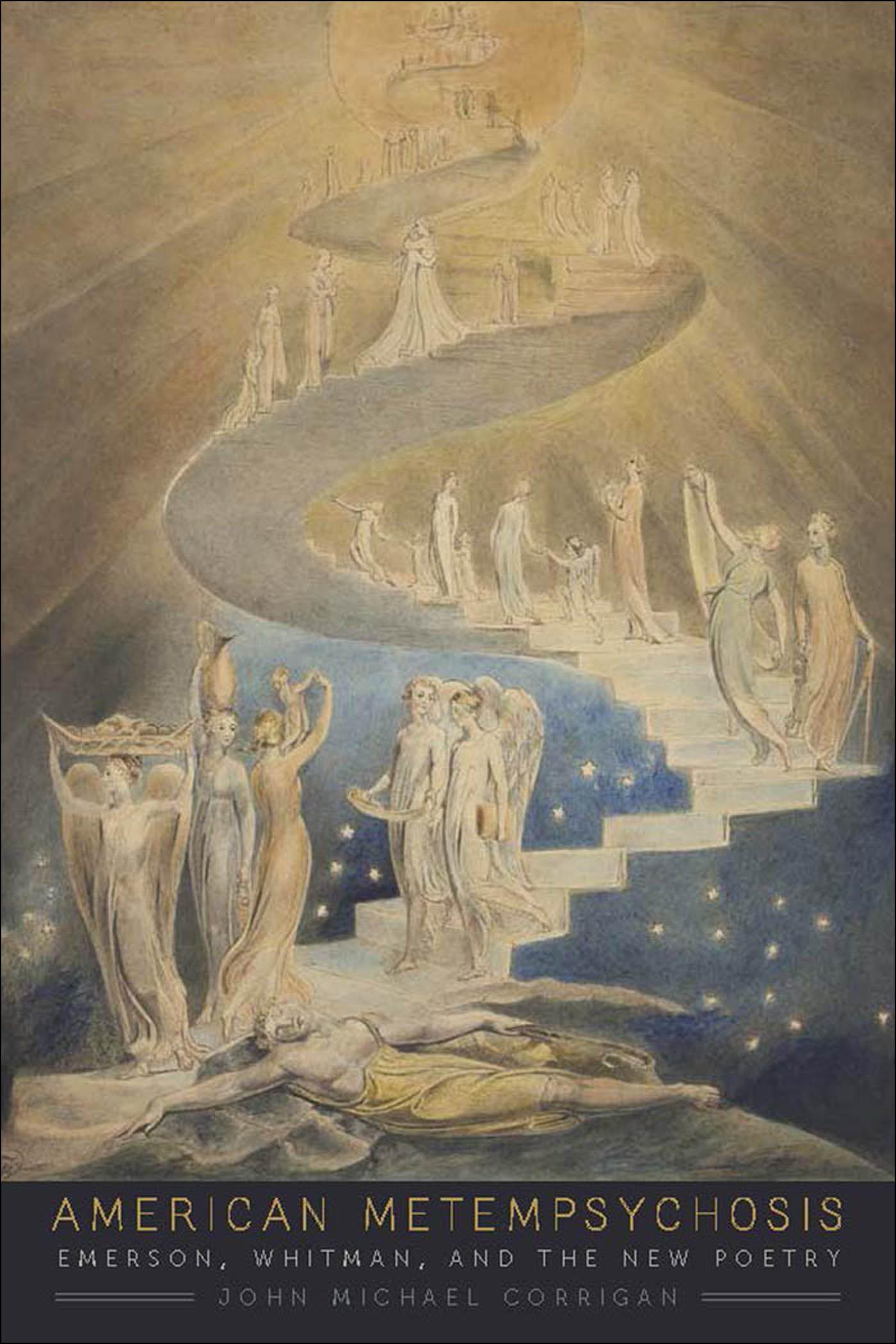
The “transmigration of souls is no fable. I would it were, but men and women are only half human.” With these words, Ralph Waldo Emerson confronts a dilemma that illuminates the formation of American individualism: to evolve and become fully human requires a heightened engagement with history. Americans, Emerson argues, must realize history’s chronology in themselves—because their own minds and bodies are its evolving record.
Whereas scholarship has tended to minimize the mystical underpinnings of Emerson’s notion of the self, his depictions of “the metempsychosis of nature” reveal deep roots in mystical traditions from Hinduism and Buddhism to Platonism and Christian esotericism. In essay after essay, Emerson uses metempsychosis as an open-ended template to understand human development.
In Leaves of Grass, Walt Whitman transforms Emerson’s conception of metempsychotic selfhood into an expressly poetic event. His vision of transmigration viscerally celebrates the poet’s ability to assume and live in other bodies; his American poet seeks to incorporate the entire nation into his own person so that he can speak for every man and woman.
Payez facilement par carte, Klarna, Apple Pay ou Google Pay. Pas satisfait ? Vous avez toujours une garantie de remboursement de 14 jours. En savoir plus dans nos conditions. Si vous avez des questions, envoyez-nous un e-mail à hello@memmo.org.
Memmo facilite tes études, où que tu sois dans le monde. On rassemble tes manuels de cours et des outils d'étude intelligents au même endroit : résumés, quiz, podcasts et flashcards. Et il y a Ted, ton compagnon d'étude qui répond à toutes tes questions. Plus de 50 000 étudiants étudient déjà ici – conçu pour t'aider à apprendre plus vite et à moins stresser.