
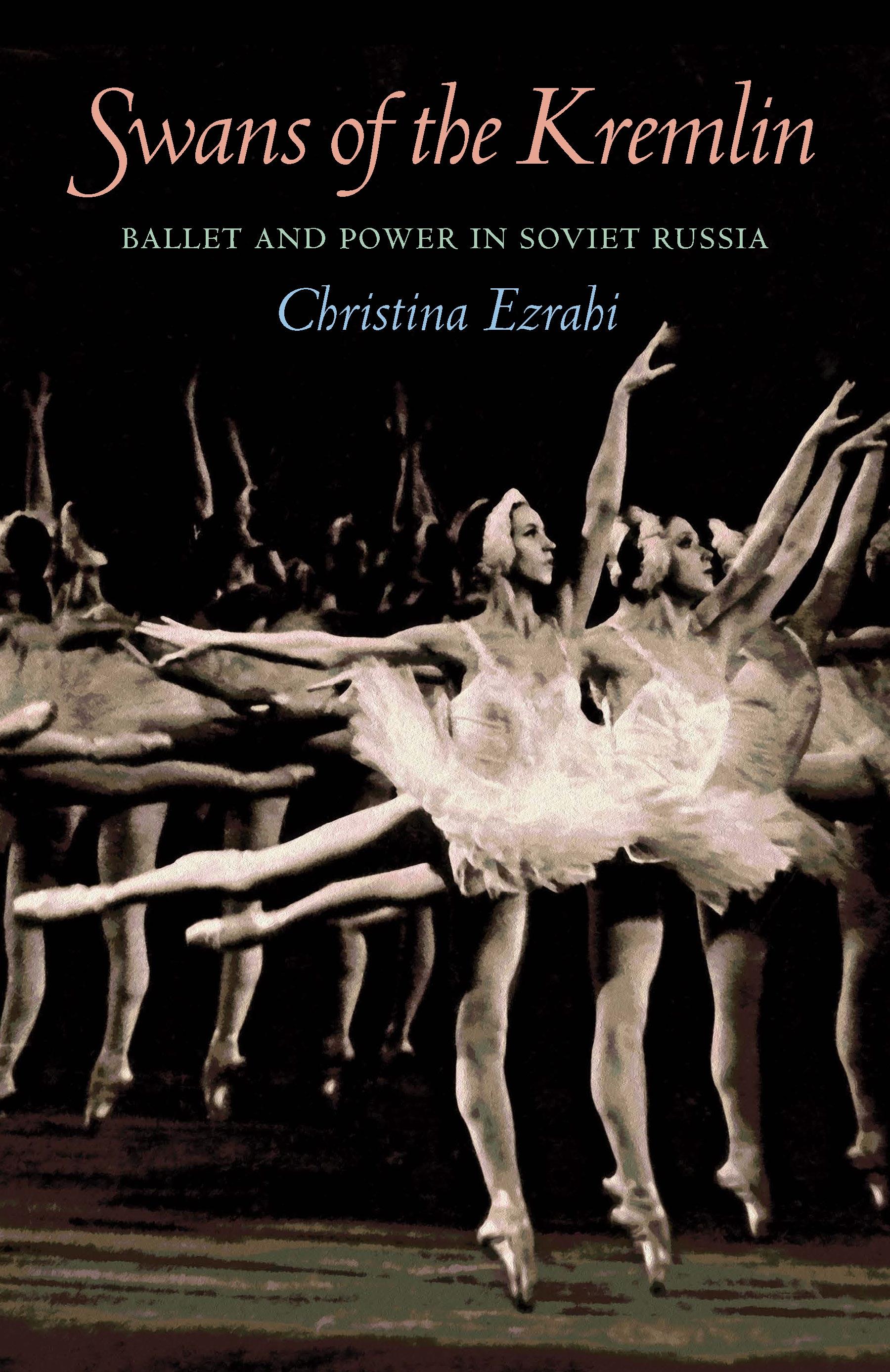
Classical ballet was perhaps the most visible symbol of aristocratic culture and its isolation from the rest of Russian society under the tsars. In the wake of the October Revolution, ballet, like all of the arts, fell under the auspices of the Soviet authorities. In light of these events, many feared that the imperial ballet troupes would be disbanded. Instead, the Soviets attempted to mold the former imperial ballet to suit their revolutionary cultural agenda and employ it to reeducate the masses. As Christina Ezrahi's groundbreaking study reveals, they were far from successful in this ambitious effort to gain complete control over art.
Swans of the Kremlin offers a fascinating glimpse at the collision of art and politics during the volatile first fifty years of the Soviet period. Ezrahi shows how the producers and performers of Russia's two major troupes, the Mariinsky (later Kirov) and the Bolshoi, quietly but effectively resisted Soviet cultural hegemony during this period. Despite all controls put on them, they managed to maintain the classical forms and traditions of their rich artistic past and to further develop their art form. These aesthetic and professional standards proved to be the power behind the ballet's worldwide appeal. The troupes soon became the showpiece of Soviet cultural achievement, as they captivated Western audiences during the Cold War period.
Based on her extensive research into official archives, and personal interviews with many of the artists and staff, Ezrahi presents the first-ever account of the inner workings of these famed ballet troupes during the Soviet era. She follows their struggles in the postrevolutionary period, their peak during the golden age of the 1950s and 1960s, and concludes with their monumental productions staged to celebrate the fiftieth anniversary of the revolution in 1968.
Swans of the Kremlin offers a fascinating glimpse at the collision of art and politics during the volatile first fifty years of the Soviet period. Ezrahi shows how the producers and performers of Russia's two major troupes, the Mariinsky (later Kirov) and the Bolshoi, quietly but effectively resisted Soviet cultural hegemony during this period. Despite all controls put on them, they managed to maintain the classical forms and traditions of their rich artistic past and to further develop their art form. These aesthetic and professional standards proved to be the power behind the ballet's worldwide appeal. The troupes soon became the showpiece of Soviet cultural achievement, as they captivated Western audiences during the Cold War period.
Based on her extensive research into official archives, and personal interviews with many of the artists and staff, Ezrahi presents the first-ever account of the inner workings of these famed ballet troupes during the Soviet era. She follows their struggles in the postrevolutionary period, their peak during the golden age of the 1950s and 1960s, and concludes with their monumental productions staged to celebrate the fiftieth anniversary of the revolution in 1968.
Catégorie: Drama, Teater & Scenkonst
e-ISBN: 9780822978077
Payez facilement par carte, Klarna, Apple Pay ou Google Pay. Pas satisfait ? Vous avez toujours une garantie de remboursement de 14 jours. En savoir plus dans nos conditions. Si vous avez des questions, envoyez-nous un e-mail à hello@memmo.org.
Memmo facilite tes études, où que tu sois dans le monde. On rassemble tes manuels de cours et des outils d'étude intelligents au même endroit : résumés, quiz, podcasts et flashcards. Et il y a Ted, ton compagnon d'étude qui répond à toutes tes questions. Plus de 50 000 étudiants étudient déjà ici – conçu pour t'aider à apprendre plus vite et à moins stresser.
Tu pourrais aussi aimer
Acheter le livre0