
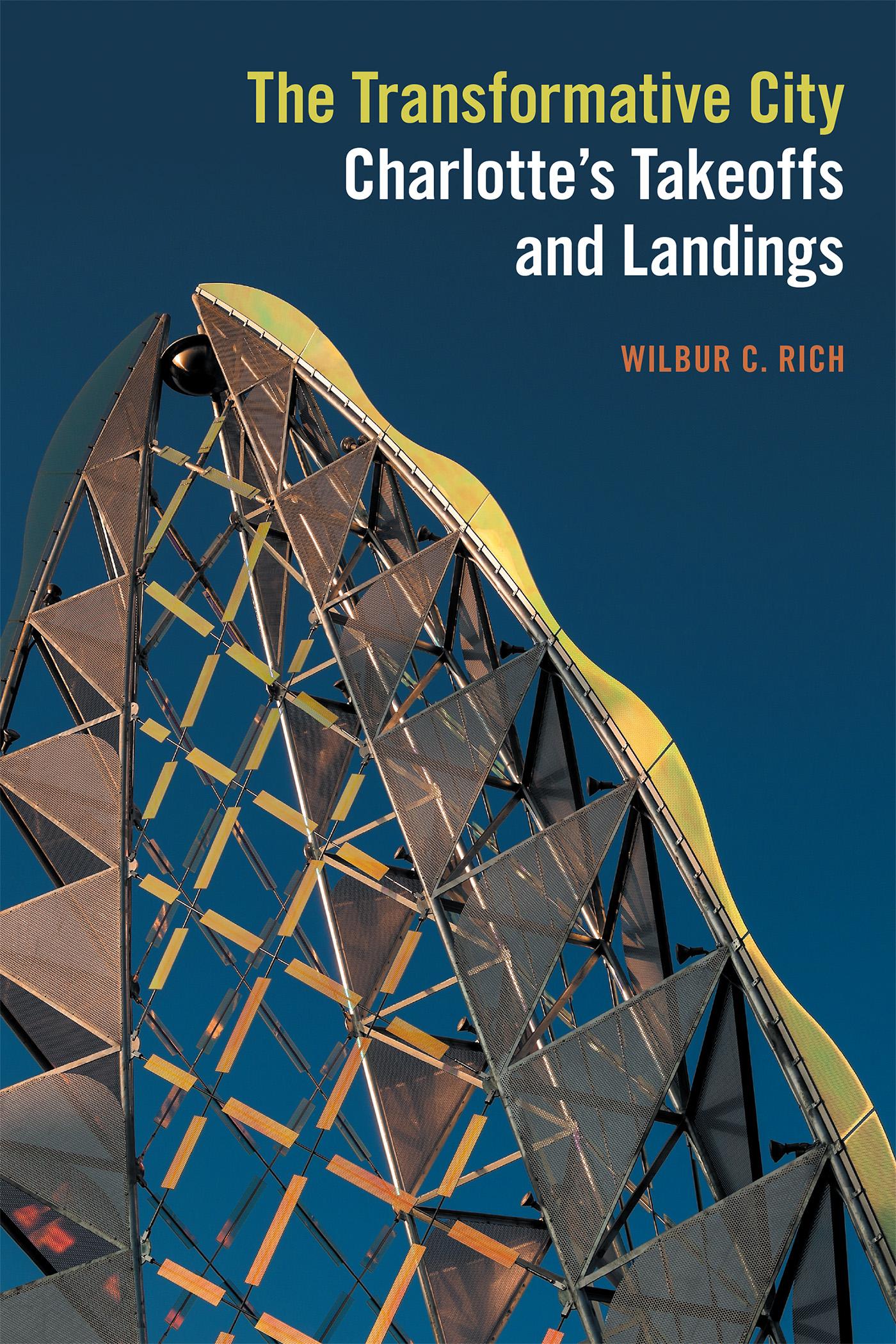
Sunbelt cities like Atlanta, Charlotte, and Miami, with their international airports, have a transportation advantage that overwhelms global competition from other southern cities. Why? The short answer to this question seems to be intuitive, but the long answer lies at the intersection of built infrastructure policies, civic boosterism, and the changing nature of American cities. Simply put, Charlotte leaders invested in the future and took advantage of its opportunities. In the twentieth century Charlotte, North Carolina, underwent several generational changes in leadership and saw the emergence of a pro-growth coalition active in matters of the city’s ambience, race relations, business decisions, and use of state and federal government grants-in-aid.
In The Transformative City, Wilbur C. Rich examines the complex interrelationships of these factors to illustrate the uniqueness of North Carolina’s most populous city and explores the ways in which the development and success of Charlotte Douglas International Airport has in turn led to development in the city itself, including the growth of both the financial industries and political sectors. Rich also examines the role the federal government had in airport development, banking, and race relation reforms. The Transformative City traces the economic transformation of Charlotte as a city and its airport as an agent of change.
Payez facilement par carte, Klarna, Apple Pay ou Google Pay. Pas satisfait ? Vous avez toujours une garantie de remboursement de 14 jours. En savoir plus dans nos conditions. Si vous avez des questions, envoyez-nous un e-mail à hello@memmo.org.
Memmo facilite tes études, où que tu sois dans le monde. On rassemble tes manuels de cours et des outils d'étude intelligents au même endroit : résumés, quiz, podcasts et flashcards. Et il y a Ted, ton compagnon d'étude qui répond à toutes tes questions. Plus de 50 000 étudiants étudient déjà ici – conçu pour t'aider à apprendre plus vite et à moins stresser.