
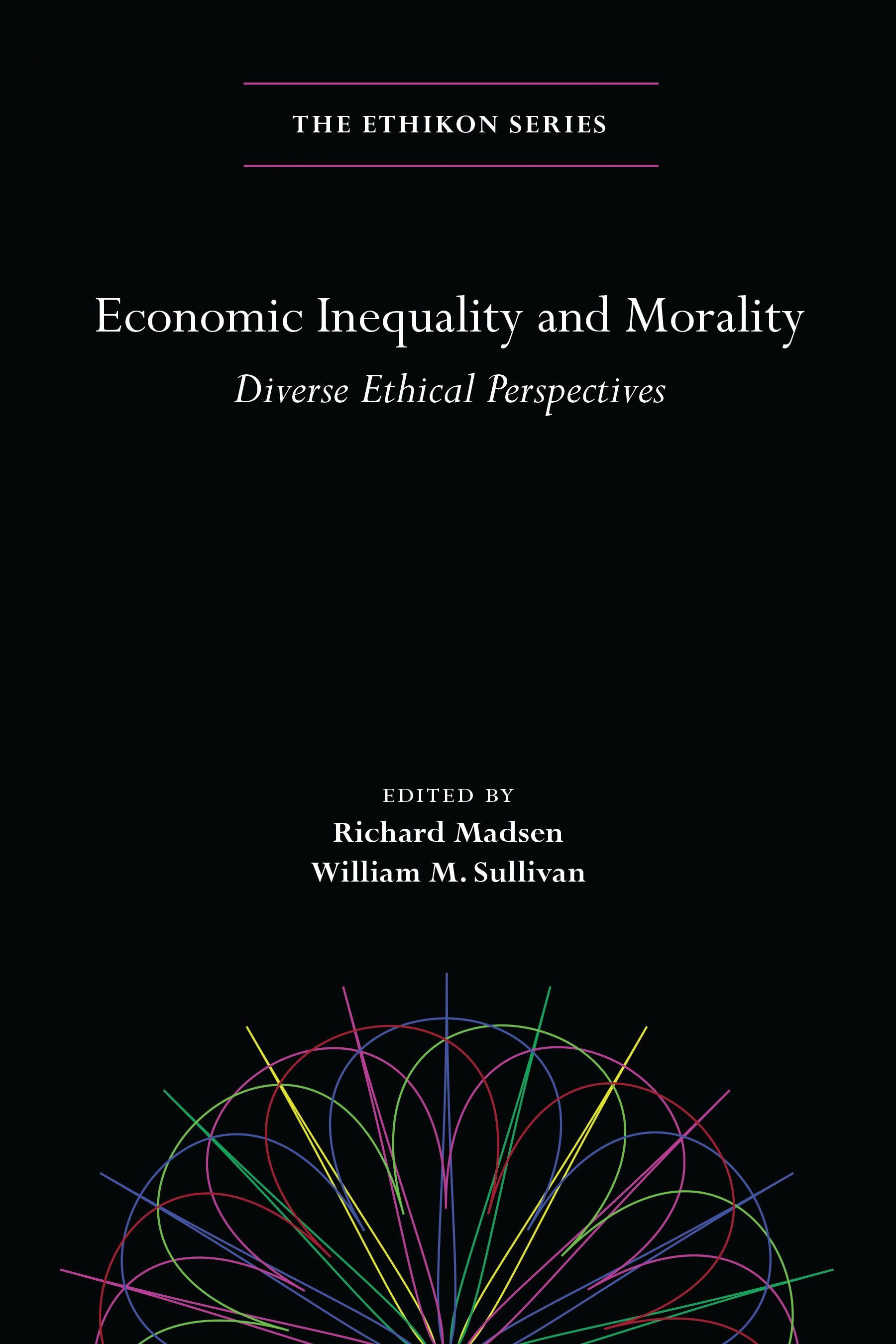
Examining inequality through the lenses of moral traditionsRising inequality has attracted a great deal of attention in recent years from scholars and politicians, but the moral dimensions of inequality tend to be ignored. Is inequality morally acceptable? Is it morally permissible to allow practices and systems that contribute to inequality? Is there an ethical obligation to try to alleviate inequality, and if so, who is obligated to take that action?
This book addresses these and similar questions not through a single lens of morality but through a comparative study of ethical traditions, both secular and religious, Western and non-Western. The moral and political traditions considered are: liberalism, Marxism, natural law, feminism, Buddhism, Judaism, Islam, Christianity, and Confucianism. The types of inequality examined include property, natural resources, products, wealth, income, jobs, and taxation. The editors open the book with an introduction providing information on contemporary dimensions of the problem of economic inequality, and the book concludes with a summary of the perspectives represented.
Economic Inequality and Morality is unusual in that it addresses similarities and differences on the questions of inequality within and across moral traditions. Authors of the individual studies answer a common set of topic-related questions, giving the reader a broad perspective on how a broad range of traditions view and respond to inequality.
This book addresses these and similar questions not through a single lens of morality but through a comparative study of ethical traditions, both secular and religious, Western and non-Western. The moral and political traditions considered are: liberalism, Marxism, natural law, feminism, Buddhism, Judaism, Islam, Christianity, and Confucianism. The types of inequality examined include property, natural resources, products, wealth, income, jobs, and taxation. The editors open the book with an introduction providing information on contemporary dimensions of the problem of economic inequality, and the book concludes with a summary of the perspectives represented.
Economic Inequality and Morality is unusual in that it addresses similarities and differences on the questions of inequality within and across moral traditions. Authors of the individual studies answer a common set of topic-related questions, giving the reader a broad perspective on how a broad range of traditions view and respond to inequality.
Payez facilement par carte, Klarna, Apple Pay ou Google Pay. Pas satisfait ? Vous avez toujours une garantie de remboursement de 14 jours. En savoir plus dans nos conditions. Si vous avez des questions, envoyez-nous un e-mail à hello@memmo.org.
Memmo facilite tes études, où que tu sois dans le monde. On rassemble tes manuels de cours et des outils d'étude intelligents au même endroit : résumés, quiz, podcasts et flashcards. Et il y a Ted, ton compagnon d'étude qui répond à toutes tes questions. Plus de 50 000 étudiants étudient déjà ici – conçu pour t'aider à apprendre plus vite et à moins stresser.