
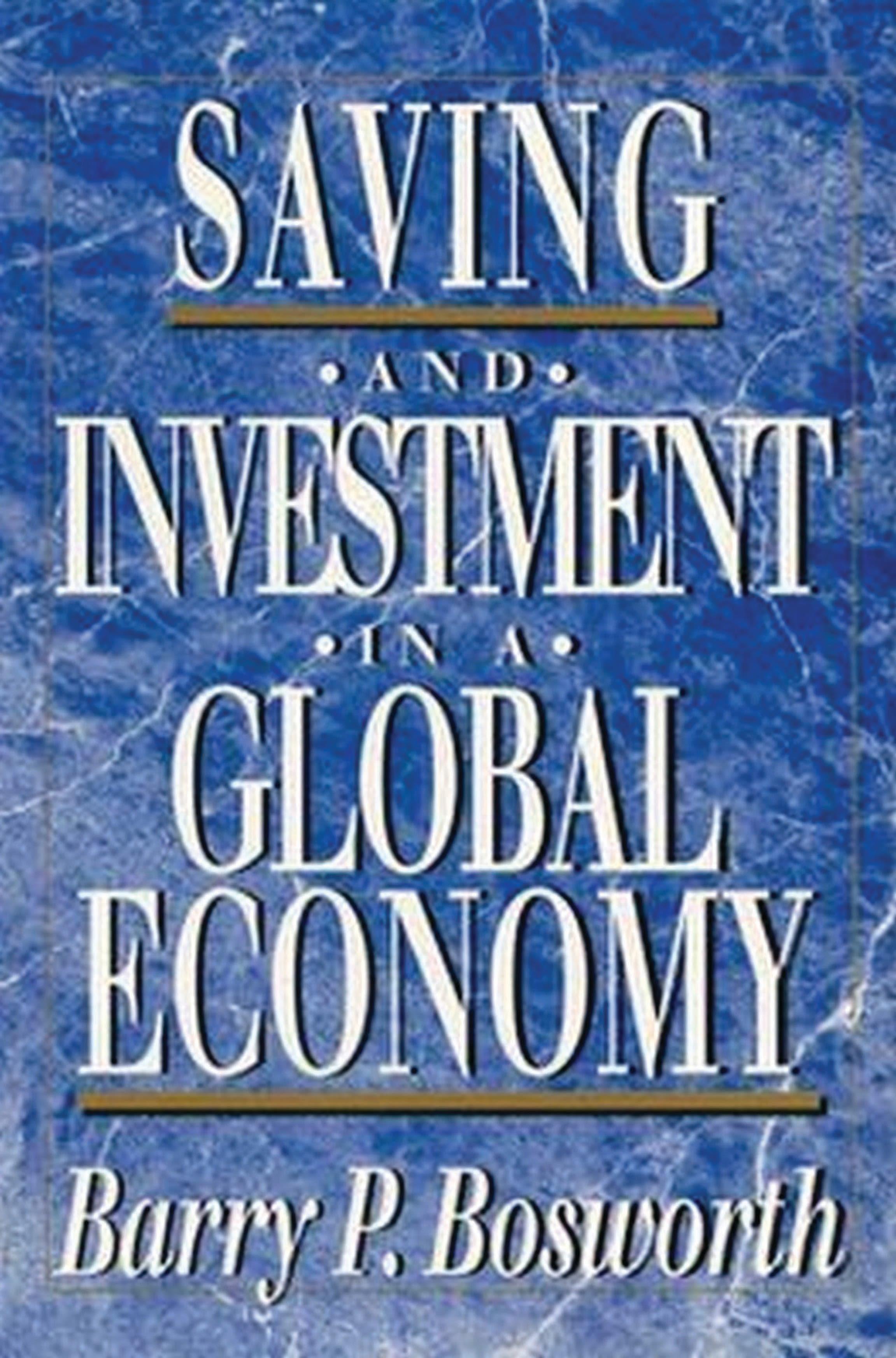
The emergence of large trade imbalances among the industrial countries during the 1980s-particularly the massive deficit of the United States and the surpluses of Germany and Japan-has led to growing disenchantment with the international economic system. But while many critics point to unfair trade practices as the cause of these imbalances, others contend that this emphasis is misplaced. In this provocative book by one of the nation's leading economists, Barry Bosworth argues that disparities are not the result of external infraction, but rather a reflection of domestic failures. He shows that the United States, for example, with its large government budget deficit and low rate of private saving, must borrow abroad to finance its investments. Similarly, trade surpluses of countries such as Japan reflect a surplus of national saving over domestic investment, rather than restrictive trade practices. Bosworth explains that large trade imbalances became possible in the 1980s because of the development of an international capital market that greatly reduced the barriers to borrowing and lending across national borders. The result is an international system in which national economies are closely linked through international capital markets as well as trade in goods and services. Using data from the major industrial countries, Bosworth highlights the process by which changes in domestic rates of saving and investment lead to changes in interest rates, exchange rates, and trade balances. He first examines why national saving and investment have fallen throughout the industrialized world. He then focuses on how exchange rates respond to trade imbalances, and considers whether the wide fluctuations in exchange rates are a cause for concern or simply an integral part of the international adjustment to the divergent patterns of national saving and investment.
Payez facilement par carte, Klarna, Apple Pay ou Google Pay. Pas satisfait ? Vous avez toujours une garantie de remboursement de 14 jours. En savoir plus dans nos conditions. Si vous avez des questions, envoyez-nous un e-mail à hello@memmo.org.
Memmo facilite tes études, où que tu sois dans le monde. On rassemble tes manuels de cours et des outils d'étude intelligents au même endroit : résumés, quiz, podcasts et flashcards. Et il y a Ted, ton compagnon d'étude qui répond à toutes tes questions. Plus de 50 000 étudiants étudient déjà ici – conçu pour t'aider à apprendre plus vite et à moins stresser.