
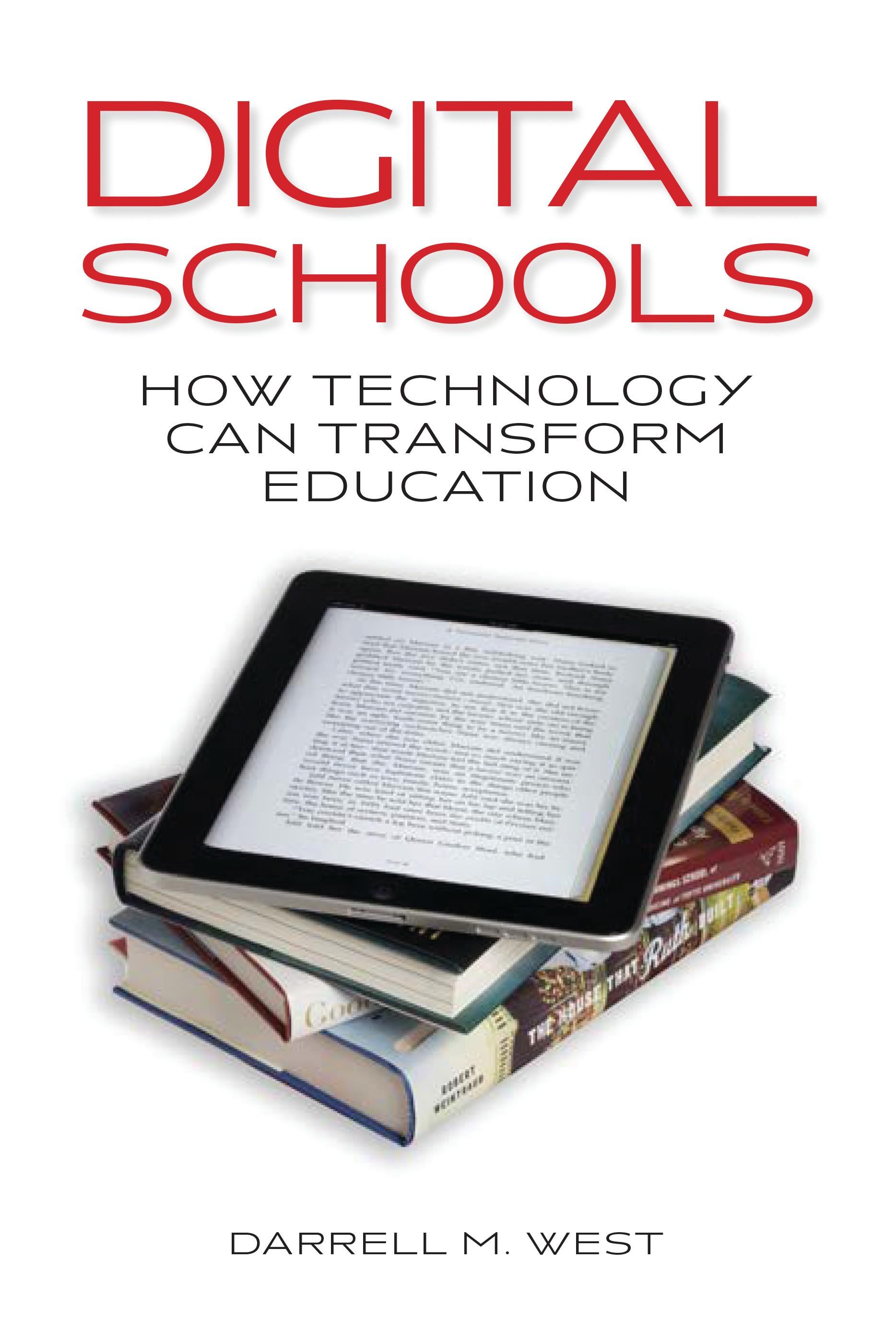
Nearly a century ago, famed educator John Dewey said that ""if we teach today's students as we taught yesterday's, we rob them of tomorrow."" That wisdom resonates more strongly than ever today, and that maxim underlies this insightful look at the present and future of education in the digital age.
As Darrell West makes clear, today's educational institutions must reinvent themselves to engage students successfully and provide them with the skills needed to compete in an increasingly global, technological, and online world. Otherwise the American education system will continue to fall woefully short in its mission to prepare the population to survive and thrive in a rapidly changing world.
West examines new models of education made possible by enhanced information technology, new approaches that will make public education in the post-industrial age more relevant, efficient, and ultimately more productive. Innovative pilot programs are popping up all over the nation, experimenting with different forms of organization and delivery systems.
Digital Schools surveys this promising new landscape, examining in particular personalized learning; realtime student assessment; ways to enhance teacher evaluation; the untapped potential of distance learning; and the ways in which technology can improve the effectiveness of special education and foreign language instruction. West illustrates the potential contributions of blogs, wikis, social media, and video games and augmented reality in K12 and higher education.
Technology by itself will not remake education. But if today's schools combine increased digitization with needed improvements in organization, operations, and culture, we can overcome current barriers, produce better results, and improve the manner in which schools function. And we can get back to teaching for tomorrow, rather than for yesterday.
As Darrell West makes clear, today's educational institutions must reinvent themselves to engage students successfully and provide them with the skills needed to compete in an increasingly global, technological, and online world. Otherwise the American education system will continue to fall woefully short in its mission to prepare the population to survive and thrive in a rapidly changing world.
West examines new models of education made possible by enhanced information technology, new approaches that will make public education in the post-industrial age more relevant, efficient, and ultimately more productive. Innovative pilot programs are popping up all over the nation, experimenting with different forms of organization and delivery systems.
Digital Schools surveys this promising new landscape, examining in particular personalized learning; realtime student assessment; ways to enhance teacher evaluation; the untapped potential of distance learning; and the ways in which technology can improve the effectiveness of special education and foreign language instruction. West illustrates the potential contributions of blogs, wikis, social media, and video games and augmented reality in K12 and higher education.
Technology by itself will not remake education. But if today's schools combine increased digitization with needed improvements in organization, operations, and culture, we can overcome current barriers, produce better results, and improve the manner in which schools function. And we can get back to teaching for tomorrow, rather than for yesterday.
Payez facilement par carte, Klarna, Apple Pay ou Google Pay. Pas satisfait ? Vous avez toujours une garantie de remboursement de 14 jours. En savoir plus dans nos conditions. Si vous avez des questions, envoyez-nous un e-mail à hello@memmo.org.
Memmo facilite tes études, où que tu sois dans le monde. On rassemble tes manuels de cours et des outils d'étude intelligents au même endroit : résumés, quiz, podcasts et flashcards. Et il y a Ted, ton compagnon d'étude qui répond à toutes tes questions. Plus de 50 000 étudiants étudient déjà ici – conçu pour t'aider à apprendre plus vite et à moins stresser.