
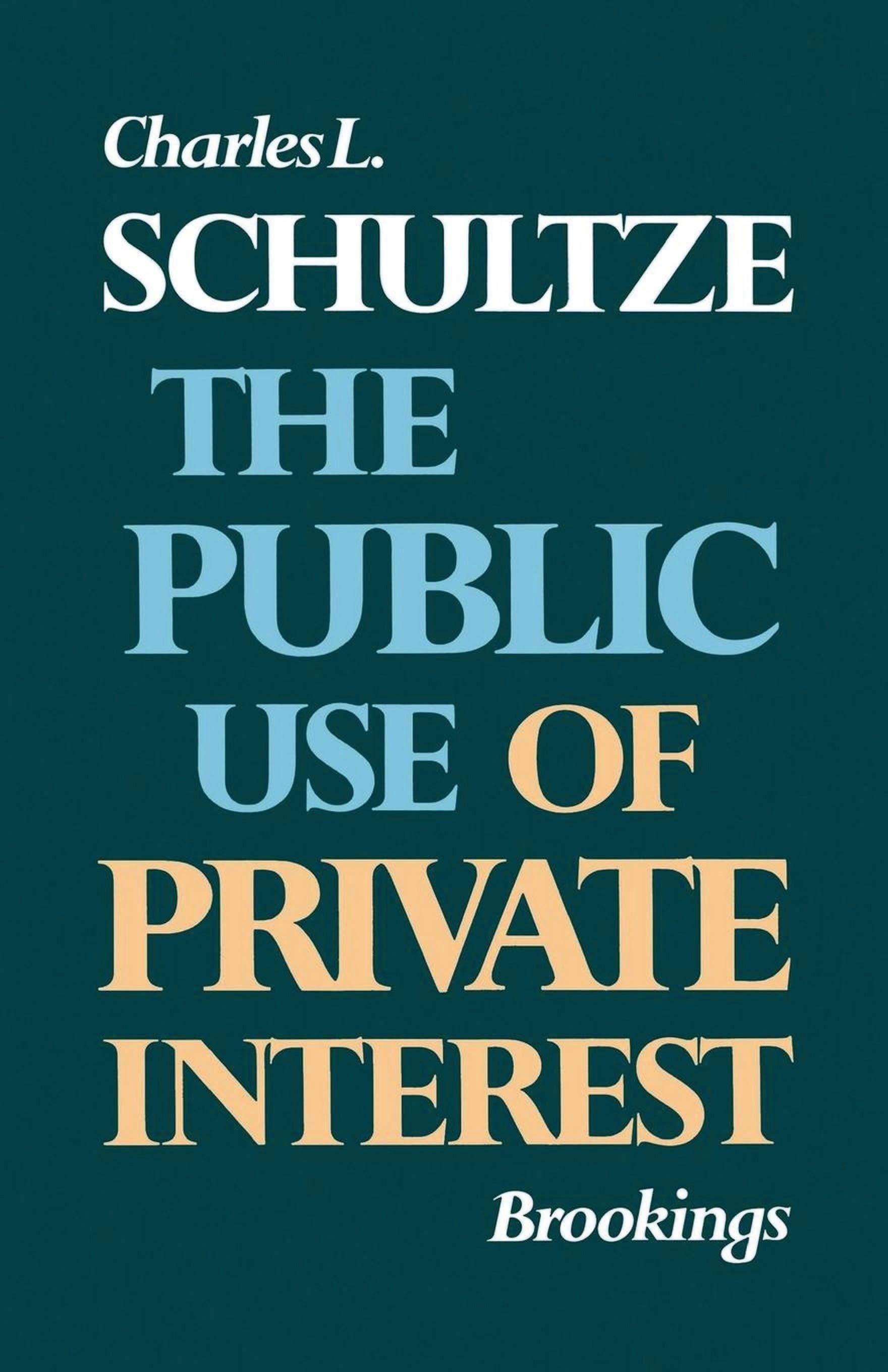
According to conventional wisdom, government may intervene when private markets fail to provide goods and services that society values. This view has led to the passage of much legislation and the creation of a host of agencies that have attempted, by exquisitely detailed regulations, to compel legislatively defined behavior in a broad range of activities affecting society as a wholehealth care, housing, pollution abatement, transportation, to name only a few. Far from achieving the goals of the legislators and regulators, these efforts have been largely ineffective; worse, they have spawned endless litigation and countless administrative proceedings as the individuals and firms on who the regulations fall seek to avoid, or at least soften, their impact. The result has been long delays in determining whether government programs work at all, thwarting of agreed-upon societal aims, and deep skepticism about the power of government to make any difference. Strangely enough in a nation that since its inception has valued both the means and the ends of the private market system, the United States has rarely tried to harness private interests to public goals. Whenever private markets fail to produce some desired good or service (or fail to deter undesirable activity), the remedies proposed have hardly ever involved creating a system of incentives similar to those of the market place so as to make private choice consonant with public virtue. In this revision of the Godkin Lectures presented at Harvard University in November and December 1976, Charles L. Schultze examines the sources of this paradox. He outlines a plan for government intervention that would turn away from the direct ""command and control"" regulating techniques of the past and rely instead on market-like incentives to encourage people indirectly to take publicly desired actions.
Payez facilement par carte, Klarna, Apple Pay ou Google Pay. Pas satisfait ? Vous avez toujours une garantie de remboursement de 14 jours. En savoir plus dans nos conditions. Si vous avez des questions, envoyez-nous un e-mail à hello@memmo.org.
Memmo facilite tes études, où que tu sois dans le monde. On rassemble tes manuels de cours et des outils d'étude intelligents au même endroit : résumés, quiz, podcasts et flashcards. Et il y a Ted, ton compagnon d'étude qui répond à toutes tes questions. Plus de 50 000 étudiants étudient déjà ici – conçu pour t'aider à apprendre plus vite et à moins stresser.