
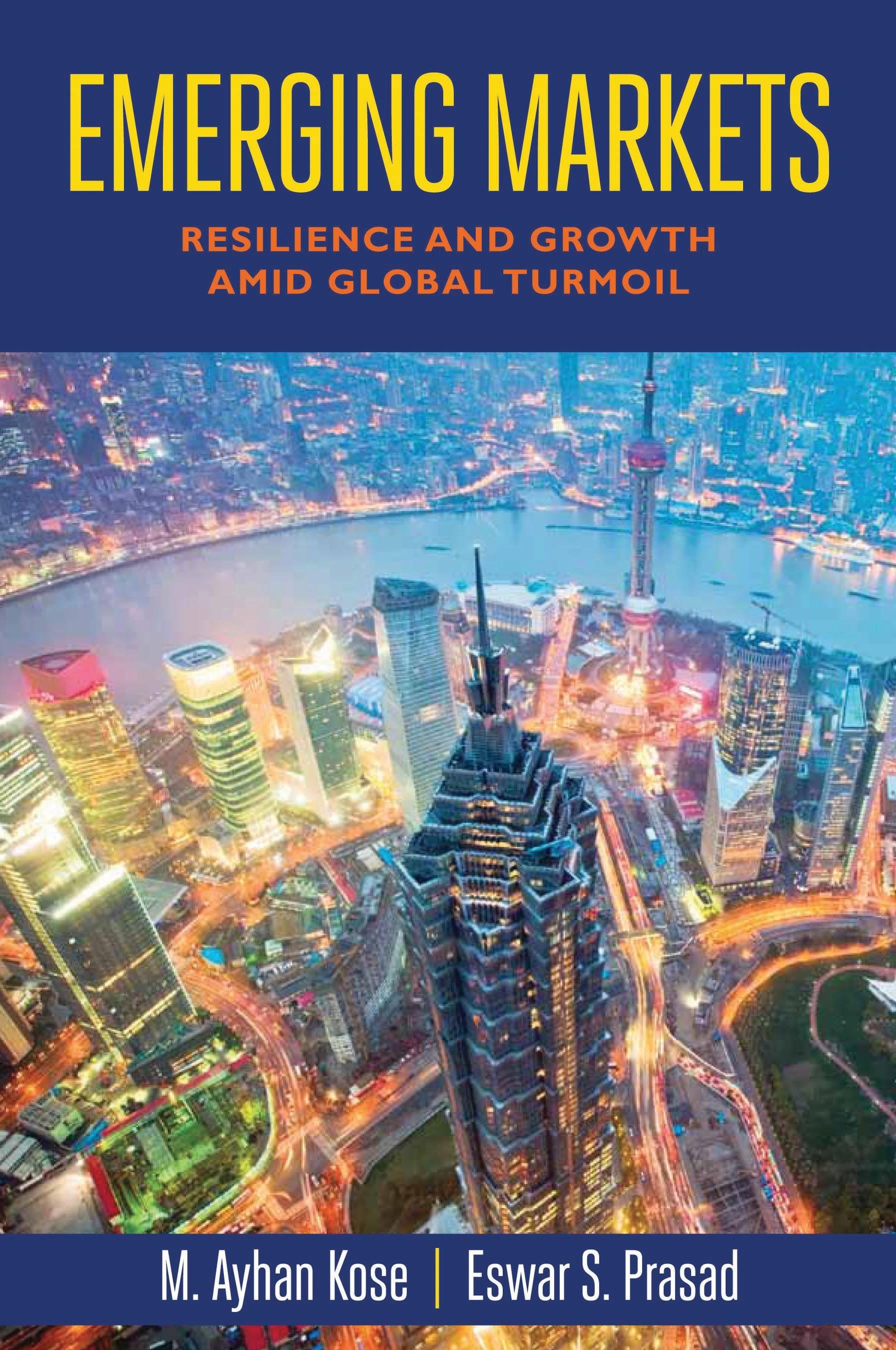
Emerging market economies (EMEs) have become the darlings of international investors and the focus of enormous attention in academic, media, and policy circles. M. Ayhan Kose and Eswar Prasad present the definitive account of the evolution of EMEs and use the lens of the global financial crisis to evaluate their strengths and weaknesses.
Led by a set of large and dynamic countriesincluding Brazil, China, India, and RussiaEMEs have become a dominant presence in the world economy. They now account for a substantial share of world output and have been a major driver of global growth during the past decade. They are significant players in international trade and financial flows and are beginning to exert rising clout in global policy debates. However, the financial crisis of 200709 and the worldwide recession that followed cast a pall over the notion that EMEs had become self-reliant and ""decoupled"" from demand conditions in and financial flows from advanced countries.
Kose and Prasad, prominent experts on emerging market economies and globalization, draw on their extensive research to assess the resilience of EMEs in the face of the global financial crisis. Their analysis shows that EMEs, as a group, weathered the crisis much better than the advanced countries, and most of these economies have bounced back rapidly from the global recession. The authors track down the reasons for this resilience and explain why some countries in this group have done better than others. Based on this analysis, they draw lessons for the durability and sustainability of these economies' long-term growth. This book is important reading for anyone trying to anticipate the future growth of emerging markets or contemplating business opportunities in these economies.
Led by a set of large and dynamic countriesincluding Brazil, China, India, and RussiaEMEs have become a dominant presence in the world economy. They now account for a substantial share of world output and have been a major driver of global growth during the past decade. They are significant players in international trade and financial flows and are beginning to exert rising clout in global policy debates. However, the financial crisis of 200709 and the worldwide recession that followed cast a pall over the notion that EMEs had become self-reliant and ""decoupled"" from demand conditions in and financial flows from advanced countries.
Kose and Prasad, prominent experts on emerging market economies and globalization, draw on their extensive research to assess the resilience of EMEs in the face of the global financial crisis. Their analysis shows that EMEs, as a group, weathered the crisis much better than the advanced countries, and most of these economies have bounced back rapidly from the global recession. The authors track down the reasons for this resilience and explain why some countries in this group have done better than others. Based on this analysis, they draw lessons for the durability and sustainability of these economies' long-term growth. This book is important reading for anyone trying to anticipate the future growth of emerging markets or contemplating business opportunities in these economies.
Payez facilement par carte, Klarna, Apple Pay ou Google Pay. Pas satisfait ? Vous avez toujours une garantie de remboursement de 14 jours. En savoir plus dans nos conditions. Si vous avez des questions, envoyez-nous un e-mail à hello@memmo.org.
Memmo facilite tes études, où que tu sois dans le monde. On rassemble tes manuels de cours et des outils d'étude intelligents au même endroit : résumés, quiz, podcasts et flashcards. Et il y a Ted, ton compagnon d'étude qui répond à toutes tes questions. Plus de 50 000 étudiants étudient déjà ici – conçu pour t'aider à apprendre plus vite et à moins stresser.