
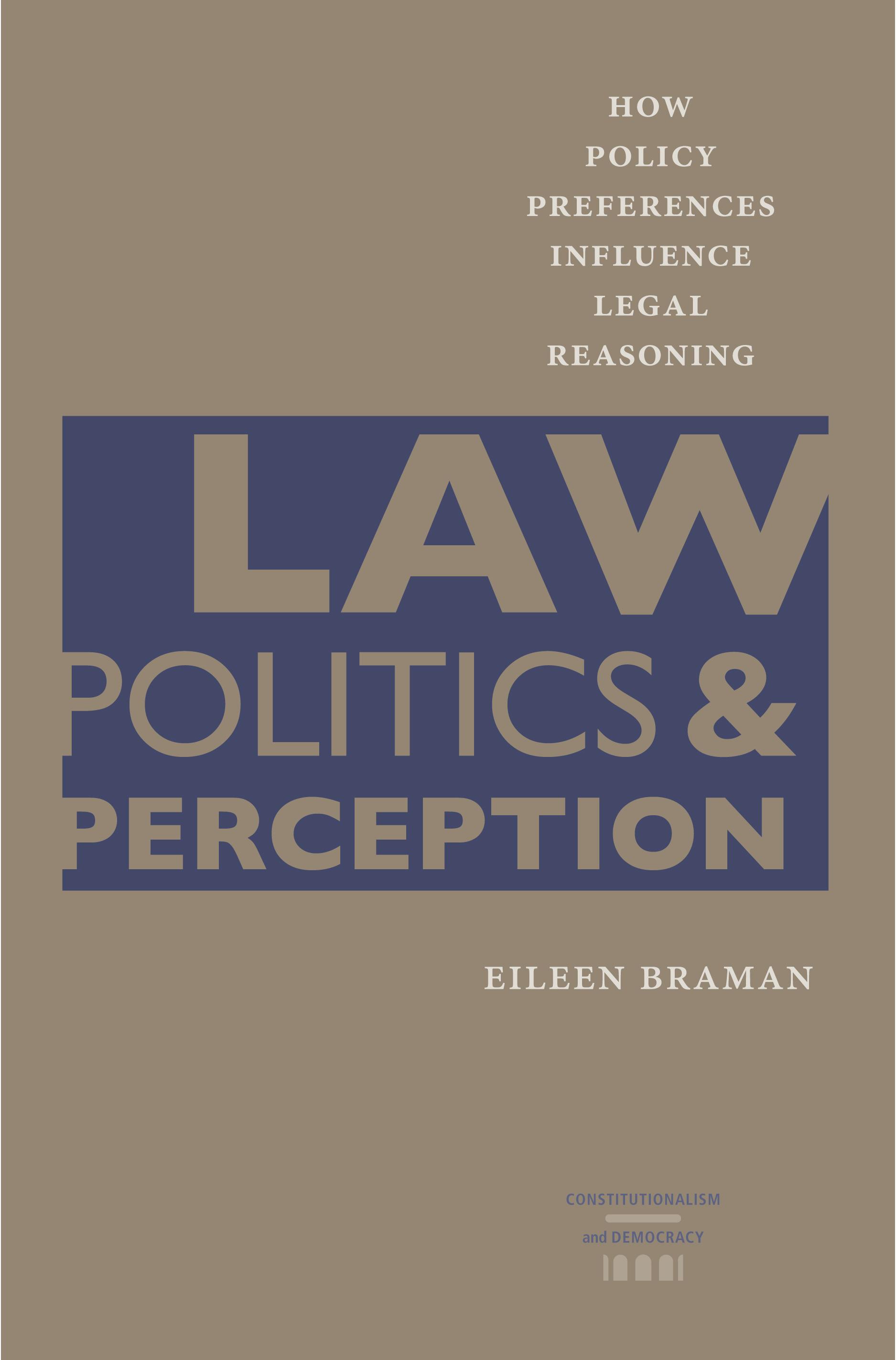
Are judges' decisions more likely to be based on personal inclinations or legal authority? The answer, Eileen Braman argues, is both. Law, Politics, and Perception brings cognitive psychology to bear on the question of the relative importance of norms of legal reasoning versus decision markers' policy preferences in legal decision-making. While Braman acknowledges that decision makers' attitudes—or, more precisely, their preference for policy outcomes—can play a significant role in judicial decisions, she also believes that decision-makers' belief that they must abide by accepted rules of legal analysis significantly limits the role of preferences in their judgements. To reconcile these competing factors, Braman posits that judges engage in "motivated reasoning," a biased process in which decision-makers are unconsciously predisposed to find legal authority that is consistent with their own preferences more convincing than those that go against them. But Braman also provides evidence that the scope of motivated reasoning is limited. Objective case facts and accepted norms of legal reasoning can often inhibit decision makers' ability to reach conclusions consistent with their preferences.
Payez facilement par carte, Klarna, Apple Pay ou Google Pay. Pas satisfait ? Vous avez toujours une garantie de remboursement de 14 jours. En savoir plus dans nos conditions. Si vous avez des questions, envoyez-nous un e-mail à hello@memmo.org.
Memmo facilite tes études, où que tu sois dans le monde. On rassemble tes manuels de cours et des outils d'étude intelligents au même endroit : résumés, quiz, podcasts et flashcards. Et il y a Ted, ton compagnon d'étude qui répond à toutes tes questions. Plus de 50 000 étudiants étudient déjà ici – conçu pour t'aider à apprendre plus vite et à moins stresser.