
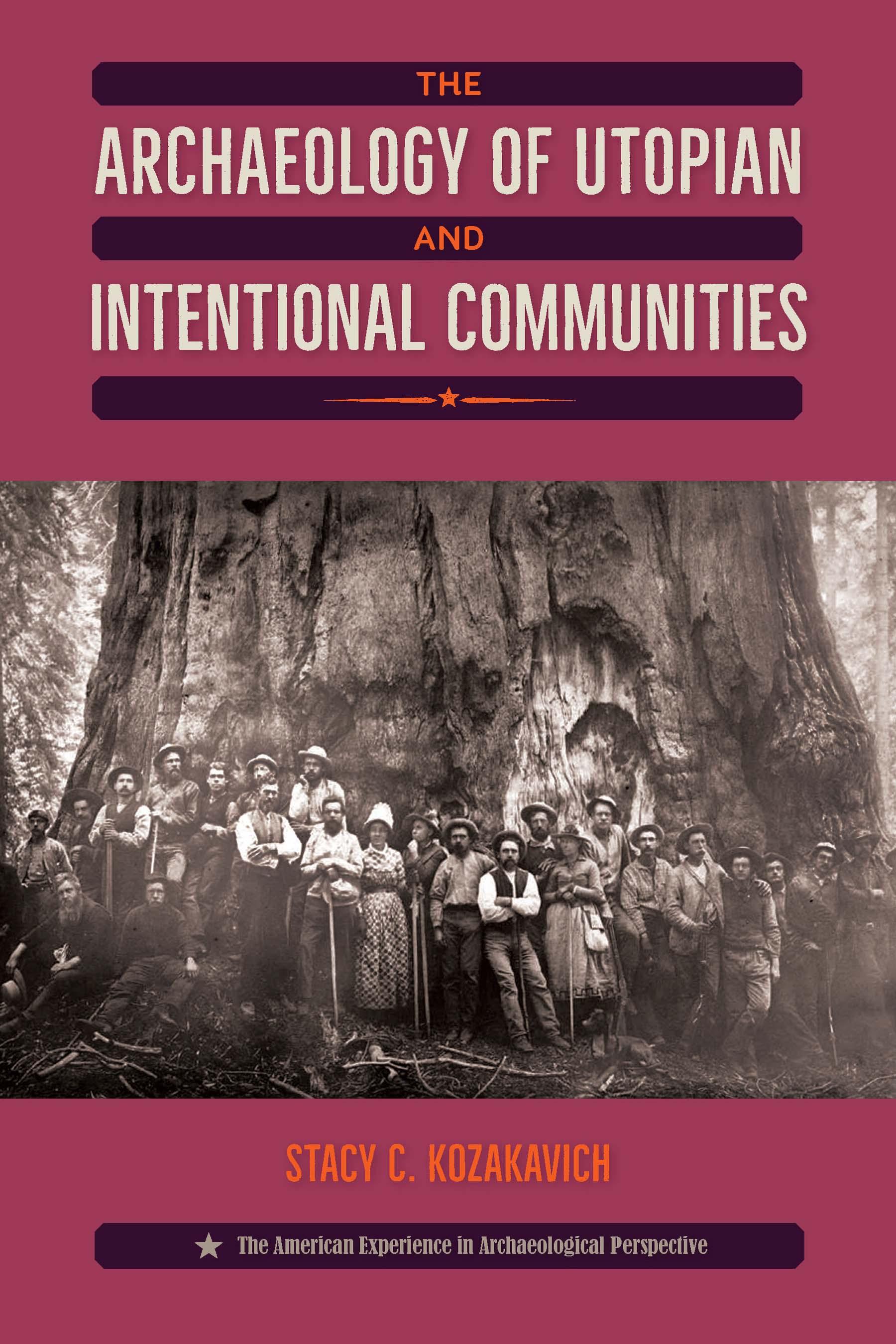
Reconstructing the past of intentional communities from across the United States
Utopian and intentional communities have dotted the American landscape since the colonial era, yet only in recent decades have archaeologists begun analyzing the material culture left behind by these groups. This volume includes discussions of the Shakers, the Harmony Society, the Moravians, the Oneida community, Brook Farm, and Mormon towns. Also featured is an expanded case study of California’s late nineteenth-century Kaweah Colony, offering a new perspective on approaches to the study of utopian societies.
Surveys of settlement patterns, the built environment, and even the smallest artifacts such as tobacco pipes and buttons are used to uncover what daily life was like in these communities. Archaeological evidence reveals how these communities upheld their societal ideals. Shakers, for example, constructed homes with separate living quarters for men and women, reflecting the group’s commitment to celibacy. On the other hand, some communities diverged from their principles, as evidenced by the presence of a key and coins found at Kaweah, indicating private property and a cash economy despite claims to communal and egalitarian practices.
Stacy Kozakavich argues archaeology has much to offer in the reconstruction and interpretation of community pasts for the public. Material evidence provides information about these communities free from the underlying assumptions, positive or negative, that characterize past interpretations. She urges researchers not to dismiss these communal experiments as quaint failures but to question how the lifestyles of the people in these groups are interpreted for visitors today. She reminds us that there is inspiration to be found in the unique ways these intentional communities pursued radical social goals.
Payez facilement par carte, Klarna, Apple Pay ou Google Pay. Pas satisfait ? Vous avez toujours une garantie de remboursement de 14 jours. En savoir plus dans nos conditions. Si vous avez des questions, envoyez-nous un e-mail à hello@memmo.org.
Memmo facilite tes études, où que tu sois dans le monde. On rassemble tes manuels de cours et des outils d'étude intelligents au même endroit : résumés, quiz, podcasts et flashcards. Et il y a Ted, ton compagnon d'étude qui répond à toutes tes questions. Plus de 50 000 étudiants étudient déjà ici – conçu pour t'aider à apprendre plus vite et à moins stresser.