
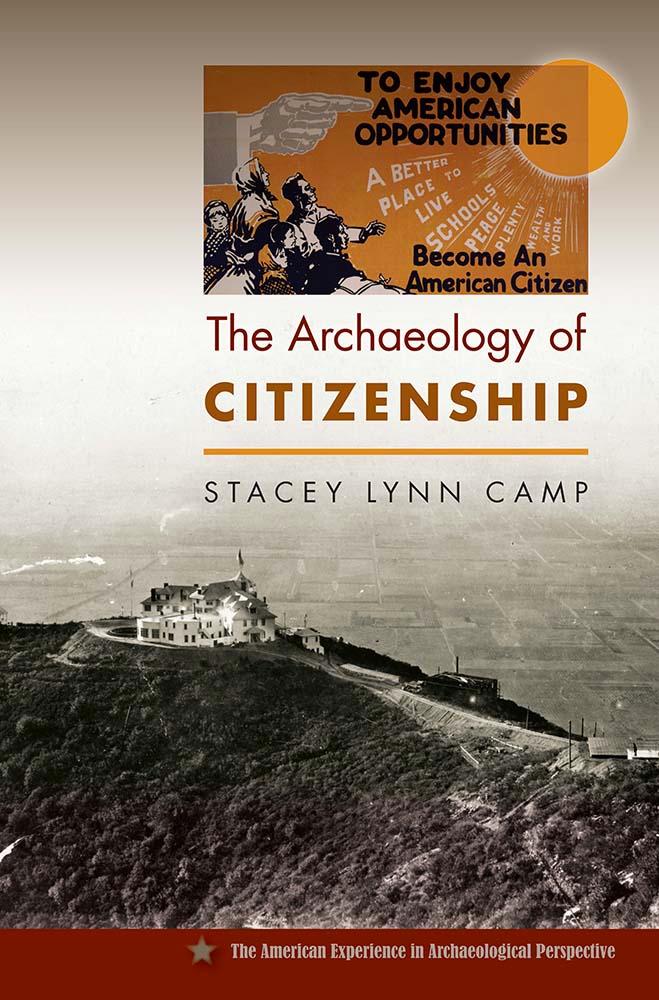
Since the founding of the United States, the rights to citizenship have been carefully crafted and policed by the Europeans who originally settled and founded the country. Immigrants have been extended and denied citizenship in various legal and cultural ways.
While the subject of citizenship has often been examined from a sociological, historical, or legal perspective, historical archaeologists have yet to fully explore the material aspects of these social boundaries. The Archaeology of Citizenship uses the material record to explore what it means to be an American.
Using a late-nineteenth-century California resort as a case study, Stacey Camp discusses how the parameters of citizenship and national belonging have been defined and redefined since Europeans arrived on the continent. In a unique and powerful contribution to the field of historical archaeology, Camp uses the remnants of material culture to reveal how those in power sought to mold the composition of the United States and how those on the margins of American society carved out their own definitions of citizenship.
Payez facilement par carte, Klarna, Apple Pay ou Google Pay. Pas satisfait ? Vous avez toujours une garantie de remboursement de 14 jours. En savoir plus dans nos conditions. Si vous avez des questions, envoyez-nous un e-mail à hello@memmo.org.
Memmo facilite tes études, où que tu sois dans le monde. On rassemble tes manuels de cours et des outils d'étude intelligents au même endroit : résumés, quiz, podcasts et flashcards. Et il y a Ted, ton compagnon d'étude qui répond à toutes tes questions. Plus de 50 000 étudiants étudient déjà ici – conçu pour t'aider à apprendre plus vite et à moins stresser.
Tu pourrais aussi aimer
Acheter le livre0