
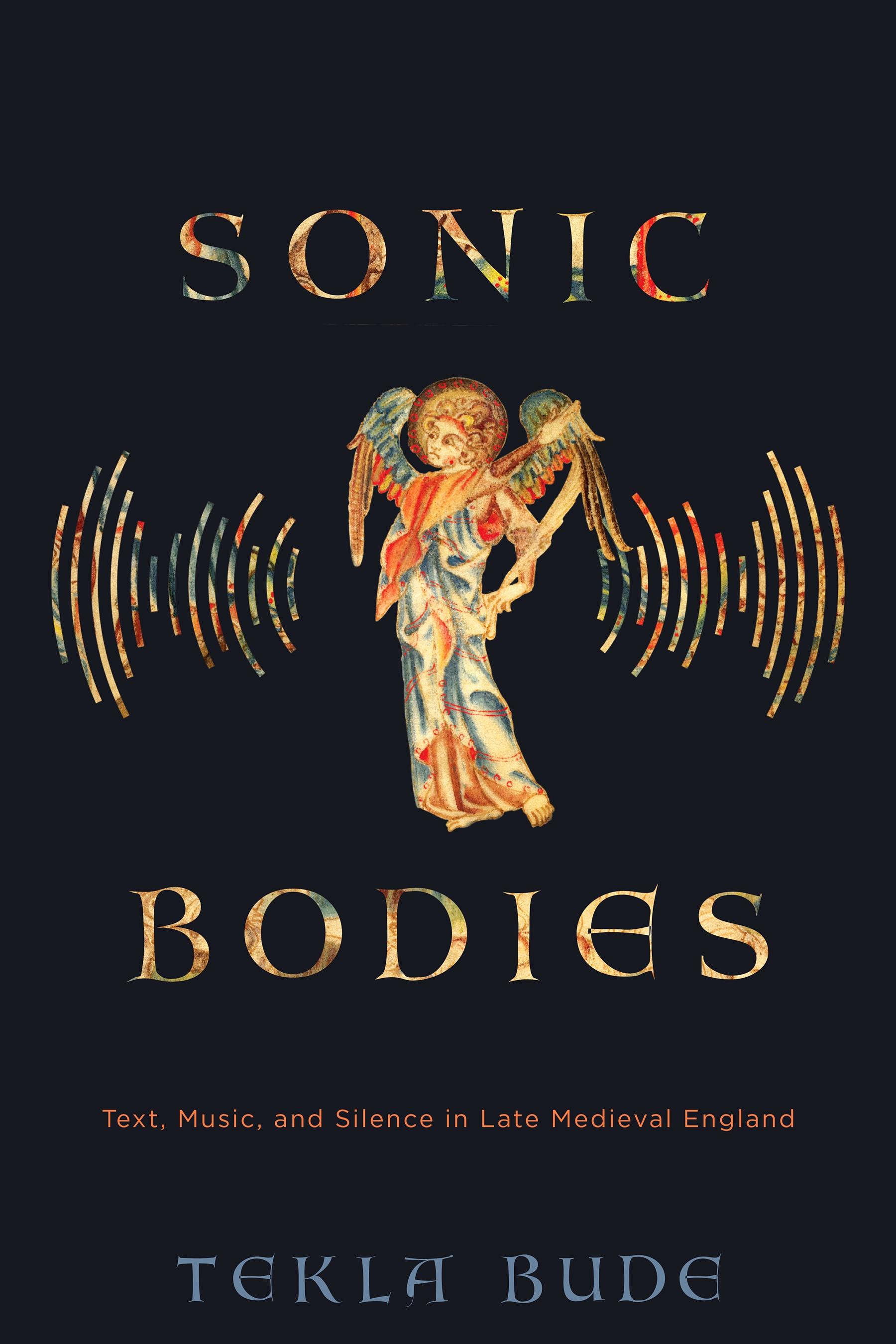
What is the body when it performs music? And what, conversely, is music as it reverberates through or pours out of a performing body? Tekla Bude starts from a simple premise—that music requires a body to perform it—to rethink the relationship between music, matter, and the body in the late medieval period.
Progressing by way of a series of case studies of texts by Richard Rolle, Walter Hilton, Margery Kempe, Geoffrey Chaucer, William Langland, and others, Bude argues that writers thought of "music" and "the body" not as separate objects or ontologically prior categories, but as mutually dependent and historically determined processes that called each other into being in complex and shifting ways. For Bude, these "sonic bodies" are often unexpected, peculiar, even bizarre, and challenge our understanding of their constitutive parts.
Building on recent conversations about embodiment and the voice in literary criticism and music theory, Sonic Bodies makes two major interventions across these fields: first, it broadens the definitional ambits and functions of both "music" and "the body" in the medieval period; and second, it demonstrates how embodiment and musicality are deeply and multiply intertwined in medieval writing. Compelling literary subjects, Bude argues, are literally built out of musical situations.
Payez facilement par carte, Klarna, Apple Pay ou Google Pay. Pas satisfait ? Vous avez toujours une garantie de remboursement de 14 jours. En savoir plus dans nos conditions. Si vous avez des questions, envoyez-nous un e-mail à hello@memmo.org.
Memmo facilite tes études, où que tu sois dans le monde. On rassemble tes manuels de cours et des outils d'étude intelligents au même endroit : résumés, quiz, podcasts et flashcards. Et il y a Ted, ton compagnon d'étude qui répond à toutes tes questions. Plus de 50 000 étudiants étudient déjà ici – conçu pour t'aider à apprendre plus vite et à moins stresser.