
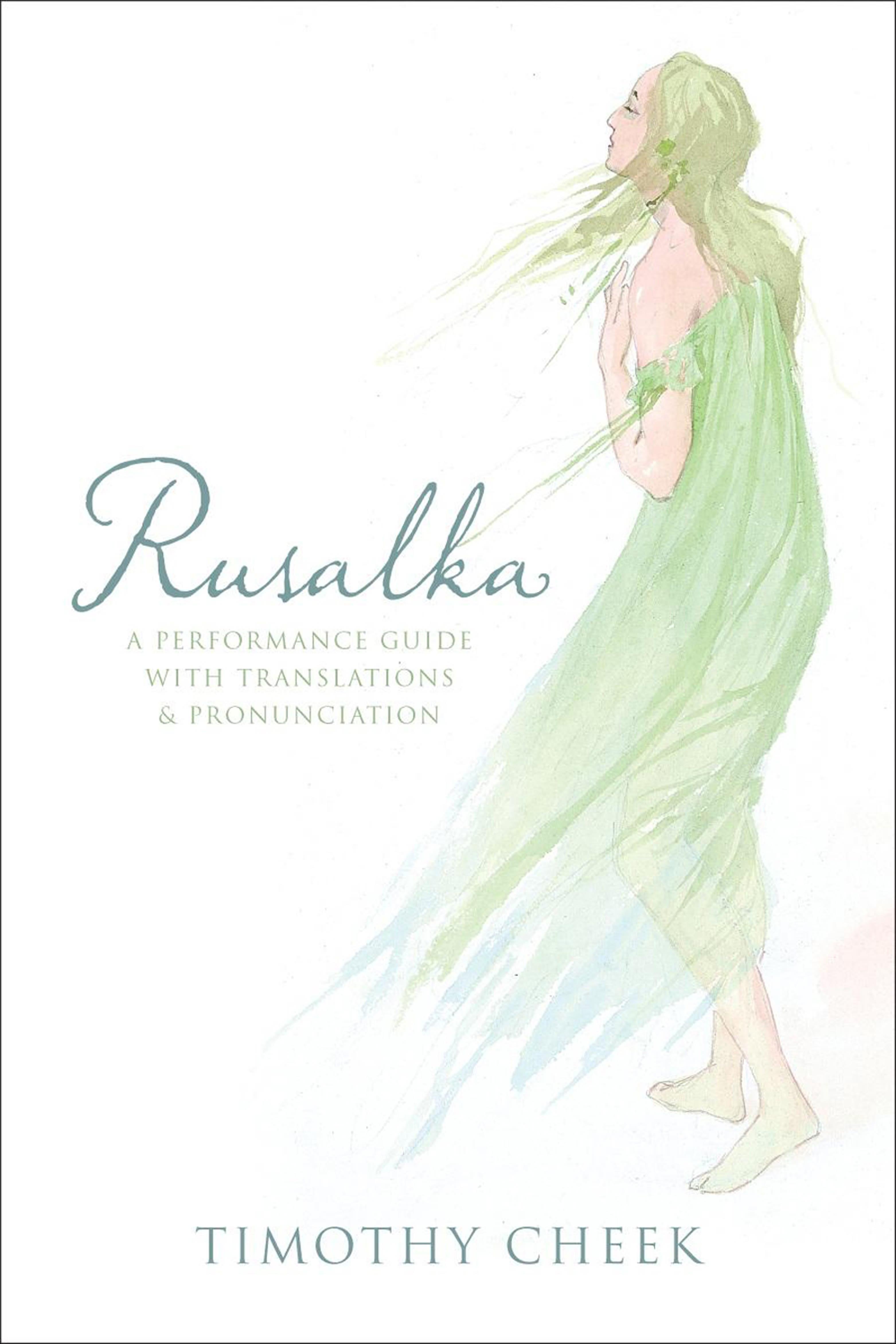
Known worldwide as a composer of symphonies and chamber music, Czech composer Antonín Dvorák declared toward the end of his life that his main love was writing operas. Written in 1900 at the height of Dvorák’s creative powers, his fairy tale opera Rusalka is a masterpiece firmly established in the international repertory—from 2010 to 2012 alone, over 200 performances of 27 productions of the opera played in 21 European cities alone! Worldwide, music schools and summer programs have mounted the work, as well, reflecting not only the power of Dvorák’s music but the lyricism and depth of Jaroslav Kvapil’s Czech libretto, one of the greatest of all opera libretti, regardless of language. This book serves as an aid to anyone seeking to perform and gain a deeper understanding of this multi-layered opera, which so trenchantly asks what it means to be human, to love, and to be loved in return.
In the first part, Czech music scholar Timothy Cheek offers a thorough review of Czech lyric diction and inflection, describes the characters and their vocal requirements, and supplies a synopsis of the plot, an elucidation of the layers of meaning in Kvapil’s libretto, a section on musical style and dance elements, and a fascinating explanation of why such a remarkable work took so long to be embraced by Western audiences. In the second half, Cheek gives word-for-word and idiomatic English translations of the Czech libretto, including stage directions, along with the International Phonetic Alphabet for pronunciation. Rounding out the book are illustrations from the Prague National Theatre, New York Metropolitan Opera, and elsewhere, as well as an appendix listing recordings and videos.
Rusalka: A Performance Guide with Translations and Pronunciation is written for singers, pianists, vocal coaches, conductors, stage directors, translators, and opera enthusiasts—anyone who wishes to perform the work, or who is simply moved and intrigued by this stunning opera.
In the first part, Czech music scholar Timothy Cheek offers a thorough review of Czech lyric diction and inflection, describes the characters and their vocal requirements, and supplies a synopsis of the plot, an elucidation of the layers of meaning in Kvapil’s libretto, a section on musical style and dance elements, and a fascinating explanation of why such a remarkable work took so long to be embraced by Western audiences. In the second half, Cheek gives word-for-word and idiomatic English translations of the Czech libretto, including stage directions, along with the International Phonetic Alphabet for pronunciation. Rounding out the book are illustrations from the Prague National Theatre, New York Metropolitan Opera, and elsewhere, as well as an appendix listing recordings and videos.
Rusalka: A Performance Guide with Translations and Pronunciation is written for singers, pianists, vocal coaches, conductors, stage directors, translators, and opera enthusiasts—anyone who wishes to perform the work, or who is simply moved and intrigued by this stunning opera.
Payez facilement par carte, Klarna, Apple Pay ou Google Pay. Pas satisfait ? Vous avez toujours une garantie de remboursement de 14 jours. En savoir plus dans nos conditions. Si vous avez des questions, envoyez-nous un e-mail à hello@memmo.org.
Memmo facilite tes études, où que tu sois dans le monde. On rassemble tes manuels de cours et des outils d'étude intelligents au même endroit : résumés, quiz, podcasts et flashcards. Et il y a Ted, ton compagnon d'étude qui répond à toutes tes questions. Plus de 50 000 étudiants étudient déjà ici – conçu pour t'aider à apprendre plus vite et à moins stresser.