
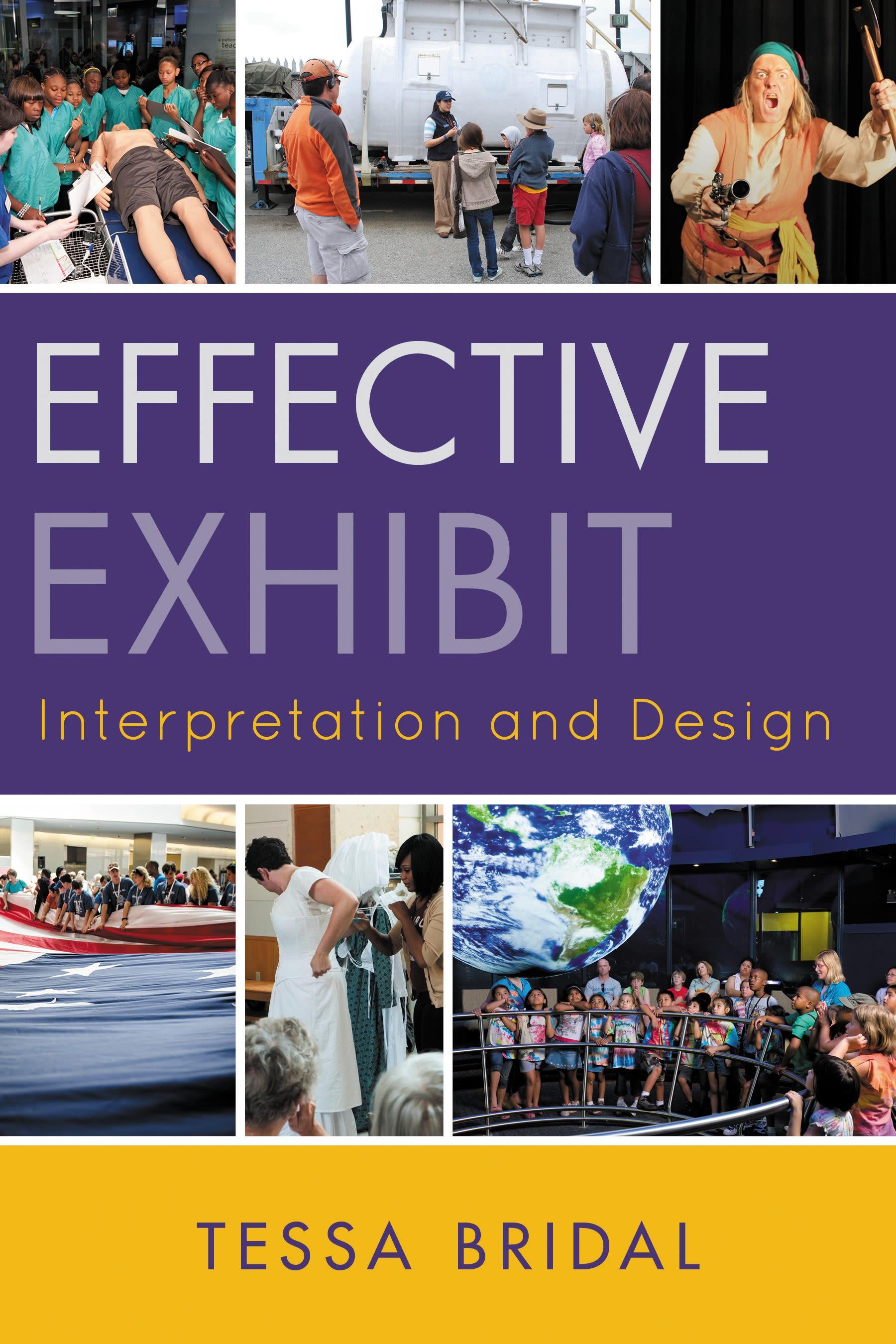
As the American Alliance of Museums’ (AAM) Standing Professional Committees Council tells us “exhibitions are the public face of museums. The effective presentation of collections and information in exhibitions is an activity unique to museums, and it is through their exhibitions that the vast majority of people know museums.”
Effective Exhibit Interpretation and Design examines the impact of an integrated approach to exhibit design and development on the effective creation and support of live interpretation of exhibit messages and institutional mission. Bridal argues that the interpreters who bring these exhibitions, an institution’s mission, collections, and stories to life and the forefront of a visitor’s attention are just as vital a part of an institution’s public face, and that neglecting to give live interpretation an equal seat at the table impoverishes the ultimate visitor experience.
Eight institutions collaborated with the author in examining the outcomes of approaching exhibit and live interpretation design and development collaboratively, the challenges of adding interpretation to spaces and exhibits not designed for it, and the guiding practices they have put into place. These institutions were: Imagine It! The Children's Museum of Atlanta, Minnesota History Center, The Missouri History Museum, the Museum of Science and Industry, Chicago, National Children’s Museum, The National Museum of American History, The Science Museum of Minnesota and The Science Museum of Virginia. Information was also shared by the Children’s Museum of Indianapolis and the Monterey Bay Aquarium.
Effective Exhibit Interpretation and Design examines the impact of an integrated approach to exhibit design and development on the effective creation and support of live interpretation of exhibit messages and institutional mission. Bridal argues that the interpreters who bring these exhibitions, an institution’s mission, collections, and stories to life and the forefront of a visitor’s attention are just as vital a part of an institution’s public face, and that neglecting to give live interpretation an equal seat at the table impoverishes the ultimate visitor experience.
Eight institutions collaborated with the author in examining the outcomes of approaching exhibit and live interpretation design and development collaboratively, the challenges of adding interpretation to spaces and exhibits not designed for it, and the guiding practices they have put into place. These institutions were: Imagine It! The Children's Museum of Atlanta, Minnesota History Center, The Missouri History Museum, the Museum of Science and Industry, Chicago, National Children’s Museum, The National Museum of American History, The Science Museum of Minnesota and The Science Museum of Virginia. Information was also shared by the Children’s Museum of Indianapolis and the Monterey Bay Aquarium.
Payez facilement par carte, Klarna, Apple Pay ou Google Pay. Pas satisfait ? Vous avez toujours une garantie de remboursement de 14 jours. En savoir plus dans nos conditions. Si vous avez des questions, envoyez-nous un e-mail à hello@memmo.org.
Memmo facilite tes études, où que tu sois dans le monde. On rassemble tes manuels de cours et des outils d'étude intelligents au même endroit : résumés, quiz, podcasts et flashcards. Et il y a Ted, ton compagnon d'étude qui répond à toutes tes questions. Plus de 50 000 étudiants étudient déjà ici – conçu pour t'aider à apprendre plus vite et à moins stresser.