
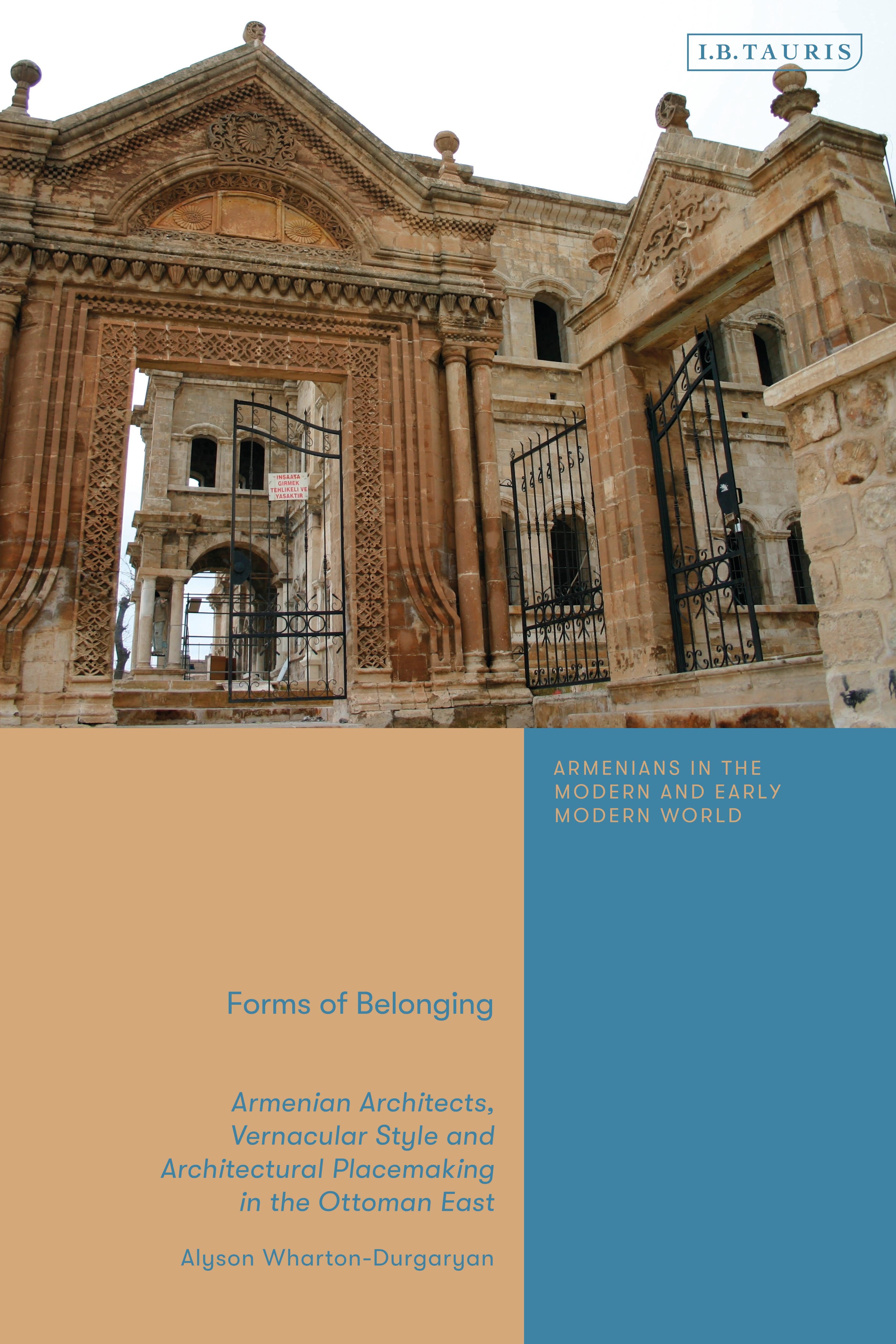
Contrary to the historical record, which views the architecture of the eastern Ottoman cities as unchanging remnants of a medieval and proto-Turkish golden age, this richly illustrated book highlights the wide-ranging transformations that Mardin, Diyarbakir, Urfa, Antep, Bitlis and Erzurum, saw at the hands of Armenian architects of the nineteenth and twentieth centuries.
Case studies reflect the agency of Armenian architects in constructing these buildings- whether churches, mansions, government offices, schools, or commercial structures. Each chapter looks to one of these cities and the participation of Armenians in shaping these places, not just through architecture but through city institutions, patronage, and benevolence. It argues that Armenians used the urban environment, and a uniquely Armenian reinvention of vernacular architecture, which reflected their religious, educational, intellectual, and political networks, to partake in the revival of these cities in an era marked by reforms to the Ottoman polity, political culture, and local governance. This was a show of popular belonging, and pride in local traditions, but it was also, merged with symbols of Ottoman authority, a reflection of the formation of Ottoman local elites, which included these Armenians - thus representing complex localization and Ottomanization processes at work. This book shows that there was not 'one' Armenian culture or identity, but many competing visions across Ottoman cities.
Case studies reflect the agency of Armenian architects in constructing these buildings- whether churches, mansions, government offices, schools, or commercial structures. Each chapter looks to one of these cities and the participation of Armenians in shaping these places, not just through architecture but through city institutions, patronage, and benevolence. It argues that Armenians used the urban environment, and a uniquely Armenian reinvention of vernacular architecture, which reflected their religious, educational, intellectual, and political networks, to partake in the revival of these cities in an era marked by reforms to the Ottoman polity, political culture, and local governance. This was a show of popular belonging, and pride in local traditions, but it was also, merged with symbols of Ottoman authority, a reflection of the formation of Ottoman local elites, which included these Armenians - thus representing complex localization and Ottomanization processes at work. This book shows that there was not 'one' Armenian culture or identity, but many competing visions across Ottoman cities.
Payez facilement par carte, Klarna, Apple Pay ou Google Pay. Pas satisfait ? Vous avez toujours une garantie de remboursement de 14 jours. En savoir plus dans nos conditions. Si vous avez des questions, envoyez-nous un e-mail à hello@memmo.org.
Memmo facilite tes études, où que tu sois dans le monde. On rassemble tes manuels de cours et des outils d'étude intelligents au même endroit : résumés, quiz, podcasts et flashcards. Et il y a Ted, ton compagnon d'étude qui répond à toutes tes questions. Plus de 50 000 étudiants étudient déjà ici – conçu pour t'aider à apprendre plus vite et à moins stresser.