
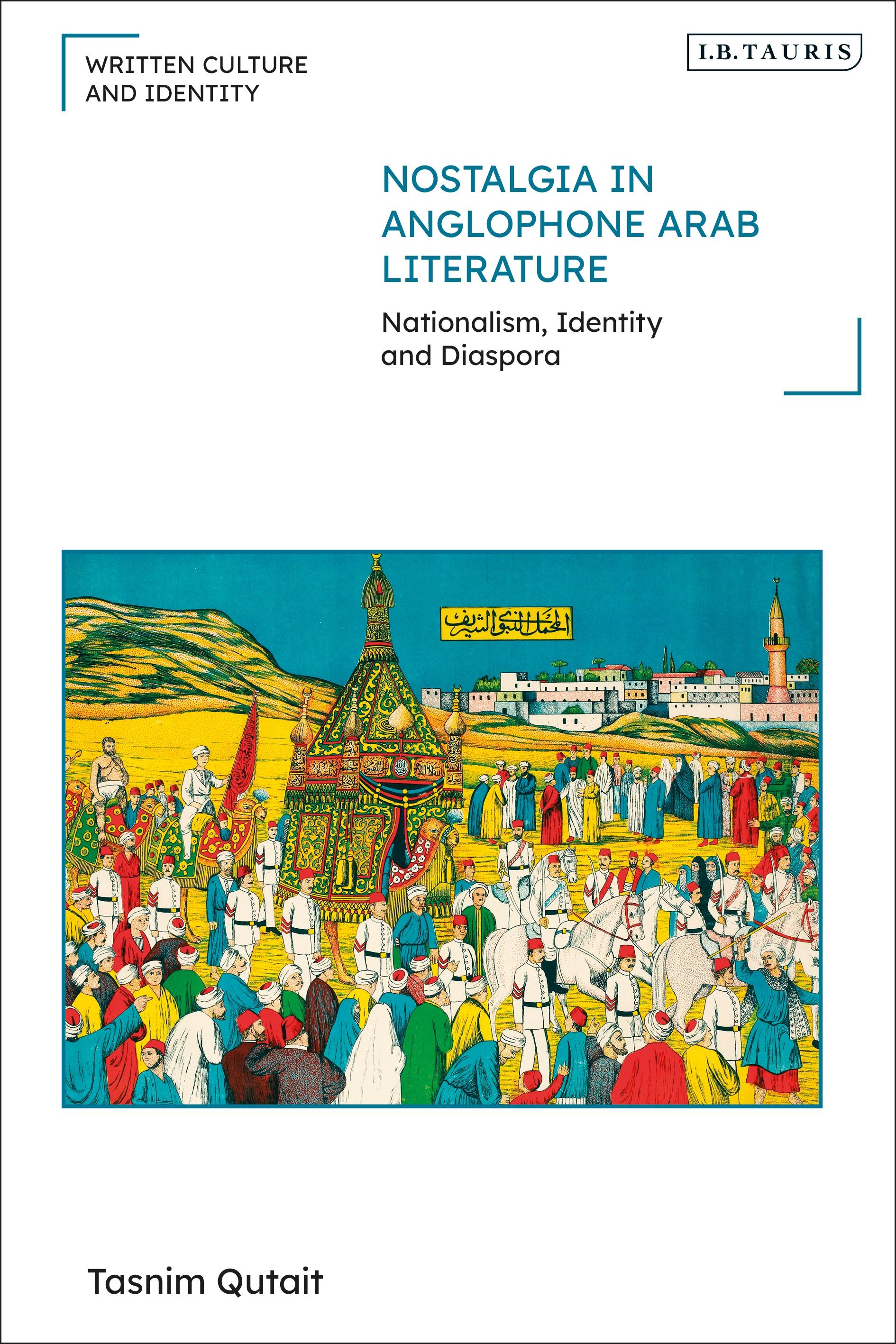
This book offers an in-depth engagement with the growing body of Anglophone Arab fiction in the context of theoretical debates around memory and identity. Against the critical tendency to dismiss nostalgia as a sentimental trope of immigrant narratives, Qutait sheds light on the creative uses to which it is put in the works of Rabih Alameddine, Ahdaf Soueif, Hisham Matar, Leila Aboulela, Randa Jarrar, Rawi Hage, and others.
Arguing for the necessity of theorising cultural memory beyond Eurocentric frameworks, the book demonstrates how Arab novelists writing in English draw on nostalgia as a touchstone of Arabic literary tradition from pre-Islamic poetry to the present. Qutait situates Anglophone Arab fiction within contentious debates about the place of the past in the Arab world, tracing how writers have deployed nostalgia as an aesthetic strategy to deal with subject matter ranging from the Islamic golden age, the era of anti-colonial struggle, the failures of the postcolonial state and of pan-Arabism, and the perennial issue of the diaspora's relationship to the homeland.
Making a contribution to the transnational turn in memory studies while focusing on a region underrepresented in this field, this book will be of interest for researchers interested in cultural memory, postcolonial studies and the literatures of the Middle East.
Arguing for the necessity of theorising cultural memory beyond Eurocentric frameworks, the book demonstrates how Arab novelists writing in English draw on nostalgia as a touchstone of Arabic literary tradition from pre-Islamic poetry to the present. Qutait situates Anglophone Arab fiction within contentious debates about the place of the past in the Arab world, tracing how writers have deployed nostalgia as an aesthetic strategy to deal with subject matter ranging from the Islamic golden age, the era of anti-colonial struggle, the failures of the postcolonial state and of pan-Arabism, and the perennial issue of the diaspora's relationship to the homeland.
Making a contribution to the transnational turn in memory studies while focusing on a region underrepresented in this field, this book will be of interest for researchers interested in cultural memory, postcolonial studies and the literatures of the Middle East.
Payez facilement par carte, Klarna, Apple Pay ou Google Pay. Pas satisfait ? Vous avez toujours une garantie de remboursement de 14 jours. En savoir plus dans nos conditions. Si vous avez des questions, envoyez-nous un e-mail à hello@memmo.org.
Memmo facilite tes études, où que tu sois dans le monde. On rassemble tes manuels de cours et des outils d'étude intelligents au même endroit : résumés, quiz, podcasts et flashcards. Et il y a Ted, ton compagnon d'étude qui répond à toutes tes questions. Plus de 50 000 étudiants étudient déjà ici – conçu pour t'aider à apprendre plus vite et à moins stresser.