
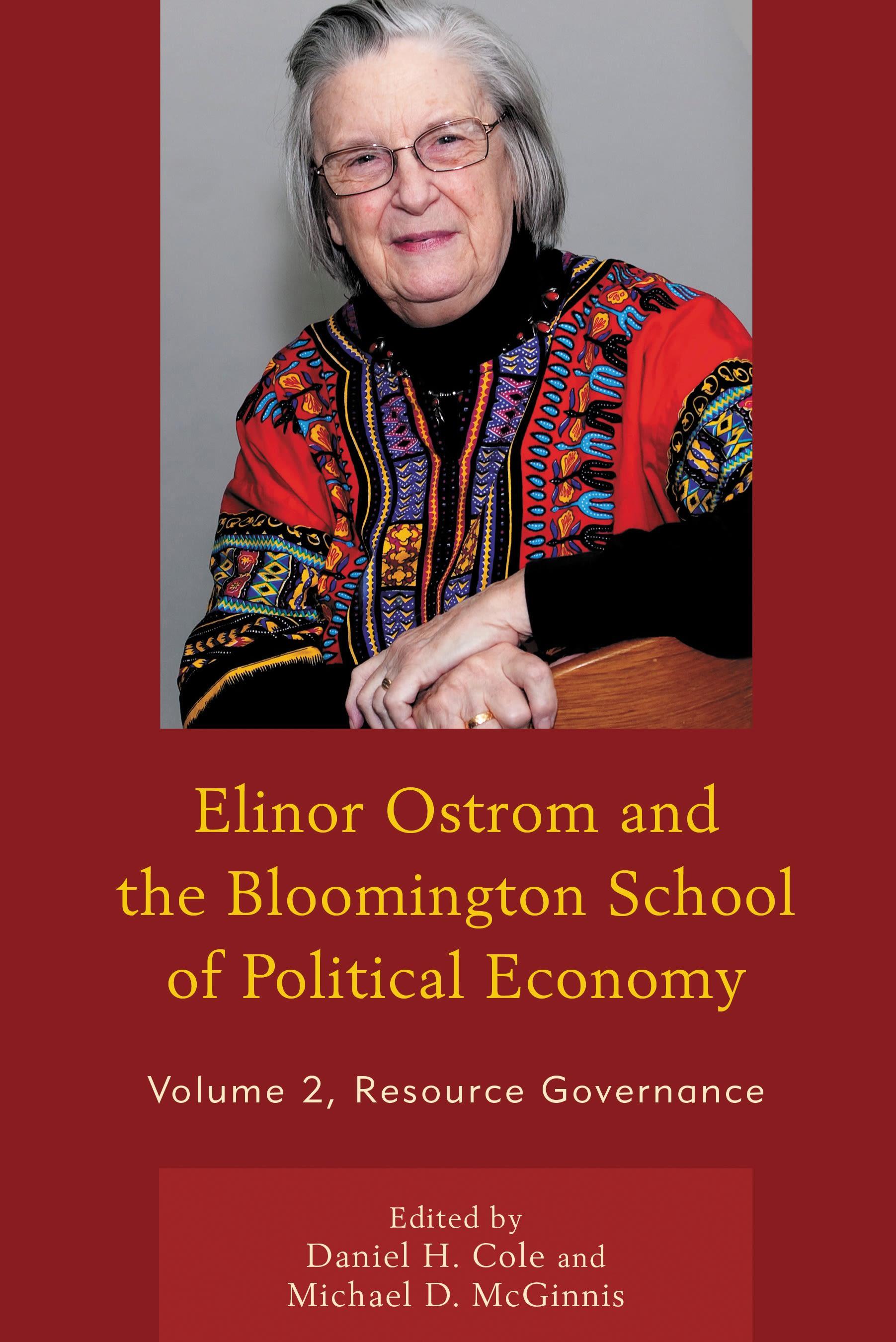
In addition to winning the 2009 Nobel Prize in Economic Sciences for her path-breaking research on “economic governance, especially the commons,” Elinor (Lin) Ostrom also made important contributions to other fields of political economy and public policy. This four-volume compendium of papers written by Lin (often with coauthors, most notably her husband, Vincent), along with papers by others expanding on her work, brings together the strands of her entire empirical, analytical, theoretical, and methodological research program. Together with Vincent’s important theoretical contributions, they defined a distinctive “Bloomington School” of political-economic thought.
Volume 2 examines Lin’s work on “the commons,” in which she demonstrated that, in many cases, local resource users can solve collective-action problems through common-property management regimes. It comprises papers, including some that are not well known, related to and building on the findings of Governing the Commons (1990). Part I focuses on key attributes of biophysical resources and the institutions human communities have designed to govern them. Part II shows how in various social and ecological circumstances, different sets of institutions facilitate or impede the long-run sustainability of resources. Part III highlights Ostrom’s first major research project on water resources in Southern California. It was a topic she (and her students) returned to with the specific intention of gathering data (more than 50 years’ worth) for longitudinal analyses of combined institutional and ecological change. In sum, this volume contextualizes what is, at present, thought to be Lin’s greatest legacy to social science: the conditions under which resources can be sustainably managed over very long periods of time by the collective action of ordinary people, beyond markets and states.
Volume 2 examines Lin’s work on “the commons,” in which she demonstrated that, in many cases, local resource users can solve collective-action problems through common-property management regimes. It comprises papers, including some that are not well known, related to and building on the findings of Governing the Commons (1990). Part I focuses on key attributes of biophysical resources and the institutions human communities have designed to govern them. Part II shows how in various social and ecological circumstances, different sets of institutions facilitate or impede the long-run sustainability of resources. Part III highlights Ostrom’s first major research project on water resources in Southern California. It was a topic she (and her students) returned to with the specific intention of gathering data (more than 50 years’ worth) for longitudinal analyses of combined institutional and ecological change. In sum, this volume contextualizes what is, at present, thought to be Lin’s greatest legacy to social science: the conditions under which resources can be sustainably managed over very long periods of time by the collective action of ordinary people, beyond markets and states.
Payez facilement par carte, Klarna, Apple Pay ou Google Pay. Pas satisfait ? Vous avez toujours une garantie de remboursement de 14 jours. En savoir plus dans nos conditions. Si vous avez des questions, envoyez-nous un e-mail à hello@memmo.org.
Memmo facilite tes études, où que tu sois dans le monde. On rassemble tes manuels de cours et des outils d'étude intelligents au même endroit : résumés, quiz, podcasts et flashcards. Et il y a Ted, ton compagnon d'étude qui répond à toutes tes questions. Plus de 50 000 étudiants étudient déjà ici – conçu pour t'aider à apprendre plus vite et à moins stresser.