
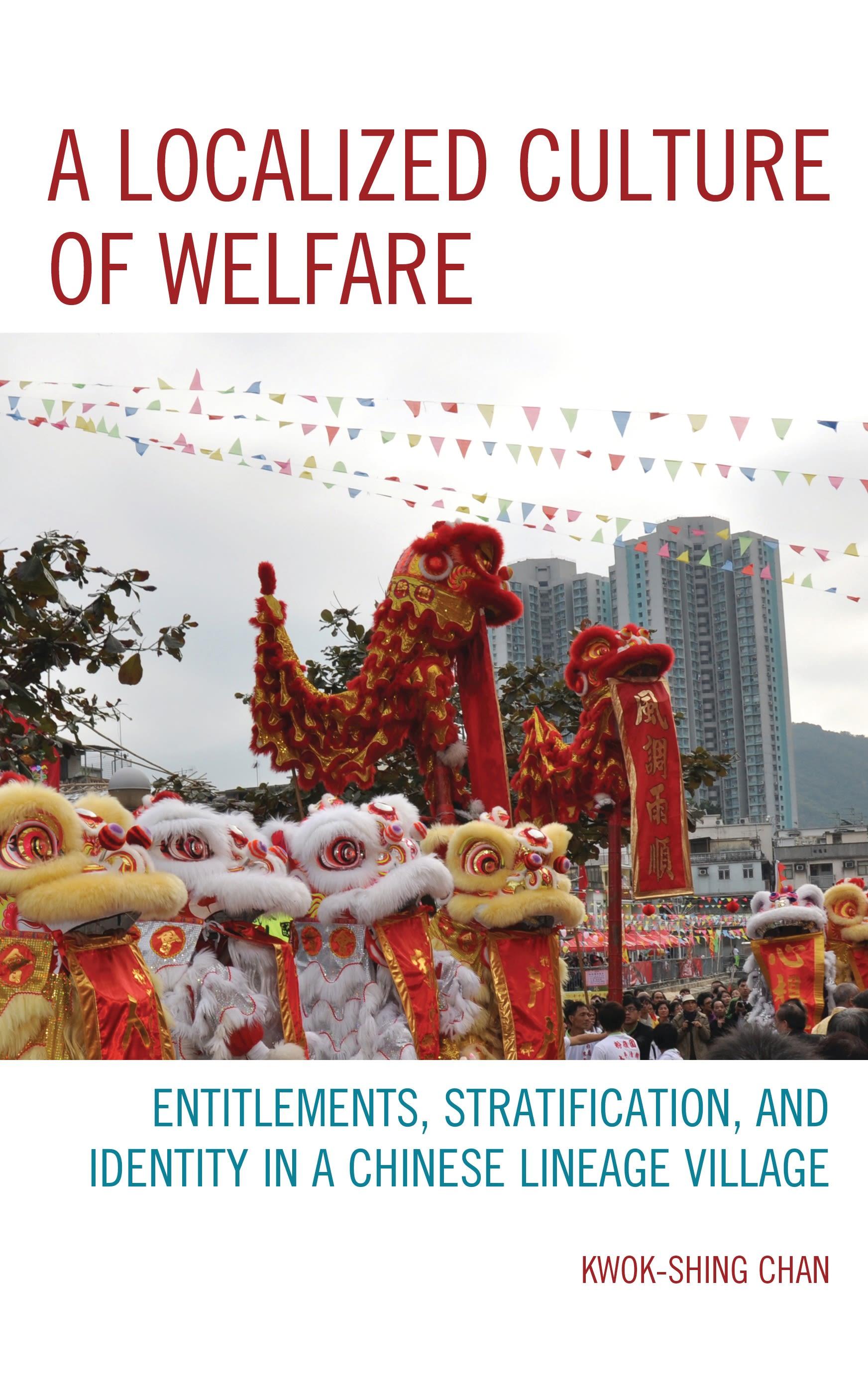
Hong Kong has undergone rapid and substantial social, economic, political and demographic changes since the 1970s. This book examines critically the real impact of these changes on a single surname village in rural Hong Kong. It draws on anthropological fieldwork conducted during the late 1990s and the early 2000s.
This ethnographic study demonstrates that kinship, particularly agnatic kinship, has remained a valuable resource for Pang villagers, enabling them to acquire key welfare entitlements, and to secure a good measure of economic and social well-being. Kinship affiliation has provided and still provides (admittedly differential) access to political patronage and legal entitlements, financial assistance and the substantial benefits of corporate property-holding, physical protection and political leadership, employment, care-giving and support networks, housing needs, old age security, a ritually-imagined community, with a sense of spiritual well-being. Agnatic kinship has been organized as a corporate institution and as a quasi-religious community through which substantial support, protection, and privileged access is provided for villagers. At the same time, reliance on this elaborate “localized culture of welfare” has maintained or reinforced the contours of stratification and inequality among Pang villagers, even as lineage identity has remained largely intact in the face of changing external circumstances.
This ethnographic study demonstrates that kinship, particularly agnatic kinship, has remained a valuable resource for Pang villagers, enabling them to acquire key welfare entitlements, and to secure a good measure of economic and social well-being. Kinship affiliation has provided and still provides (admittedly differential) access to political patronage and legal entitlements, financial assistance and the substantial benefits of corporate property-holding, physical protection and political leadership, employment, care-giving and support networks, housing needs, old age security, a ritually-imagined community, with a sense of spiritual well-being. Agnatic kinship has been organized as a corporate institution and as a quasi-religious community through which substantial support, protection, and privileged access is provided for villagers. At the same time, reliance on this elaborate “localized culture of welfare” has maintained or reinforced the contours of stratification and inequality among Pang villagers, even as lineage identity has remained largely intact in the face of changing external circumstances.
Payez facilement par carte, Klarna, Apple Pay ou Google Pay. Pas satisfait ? Vous avez toujours une garantie de remboursement de 14 jours. En savoir plus dans nos conditions. Si vous avez des questions, envoyez-nous un e-mail à hello@memmo.org.
Memmo facilite tes études, où que tu sois dans le monde. On rassemble tes manuels de cours et des outils d'étude intelligents au même endroit : résumés, quiz, podcasts et flashcards. Et il y a Ted, ton compagnon d'étude qui répond à toutes tes questions. Plus de 50 000 étudiants étudient déjà ici – conçu pour t'aider à apprendre plus vite et à moins stresser.