
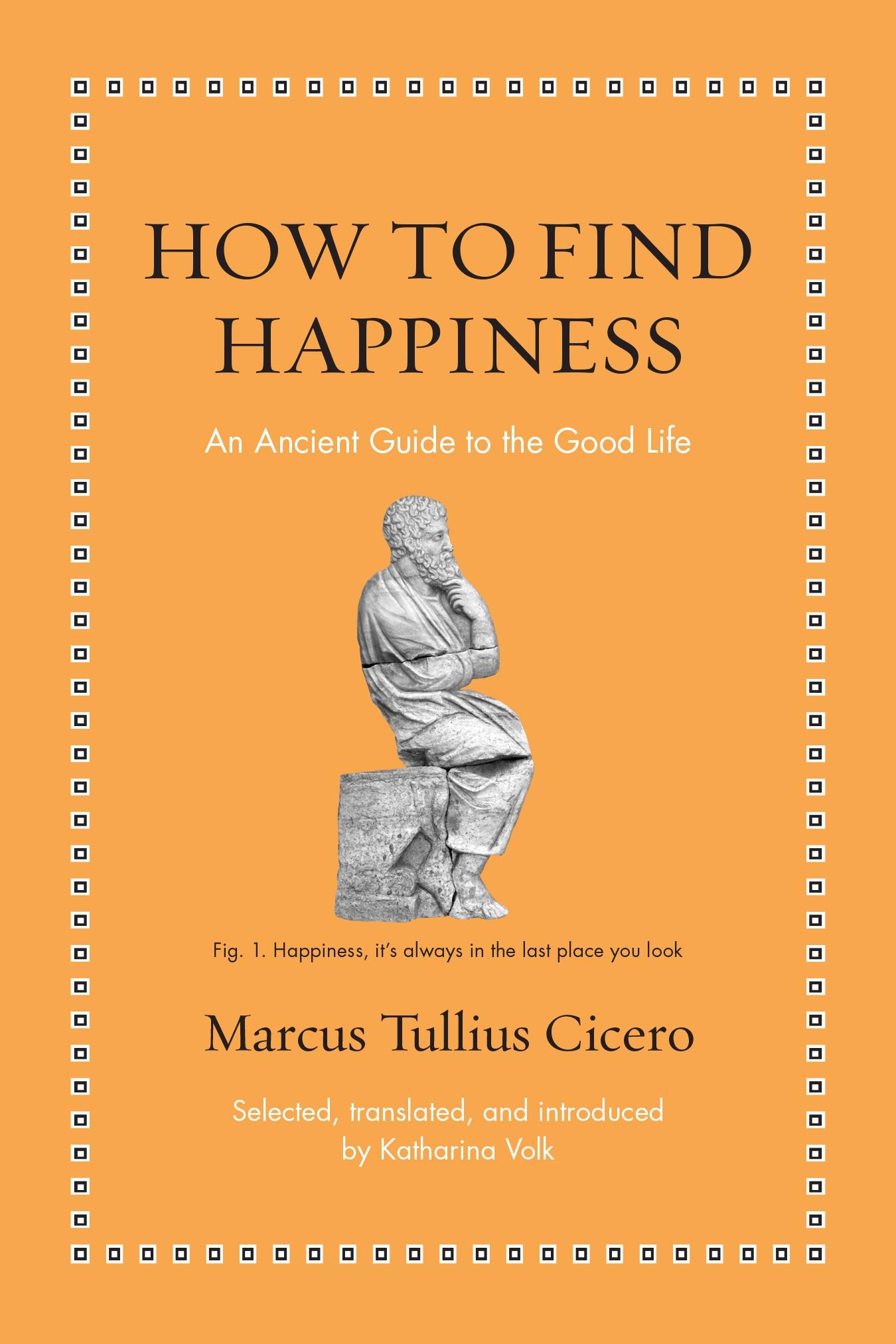
Does happiness come from the pursuit of pleasure or moral virtue? A vivid new translation of Cicero’s exploration of a timeless question
“Of course, we all want to be happy.” So wrote the Roman statesman, orator, and philosopher Marcus Tullius Cicero. He and his fellow Greek and Roman philosophers agreed that the secret to happiness—or what they called the “good life”—is pursuing the “greatest good.” The only problem is that they couldn’t agree on what the greatest good is. Cicero addressed this dilemma by composing a set of dialogues, On the Greatest Good and Evil (De finibus bonorum et malorum), in which he pitted advocates of different philosophical approaches to happiness against one another. Notably, these include the Epicureans (who believe that the greatest good is pleasure) and the Stoics (according to whom it is moral virtue). Rather than choosing sides, Cicero considers the pros and cons of the different philosophies, ultimately leaving it to his readers to make up their own minds. In How to Find Happiness, Katharina Volk offers a vivid new translation of selections from Cicero’s work, complete with an introduction and the original Latin text on facing pages. The result is a lively and engaging debate that invites each of us to discover our own path to happiness.
Payez facilement par carte, Klarna, Apple Pay ou Google Pay. Pas satisfait ? Vous avez toujours une garantie de remboursement de 14 jours. En savoir plus dans nos conditions. Si vous avez des questions, envoyez-nous un e-mail à hello@memmo.org.
Memmo facilite tes études, où que tu sois dans le monde. On rassemble tes manuels de cours et des outils d'étude intelligents au même endroit : résumés, quiz, podcasts et flashcards. Et il y a Ted, ton compagnon d'étude qui répond à toutes tes questions. Plus de 50 000 étudiants étudient déjà ici – conçu pour t'aider à apprendre plus vite et à moins stresser.