
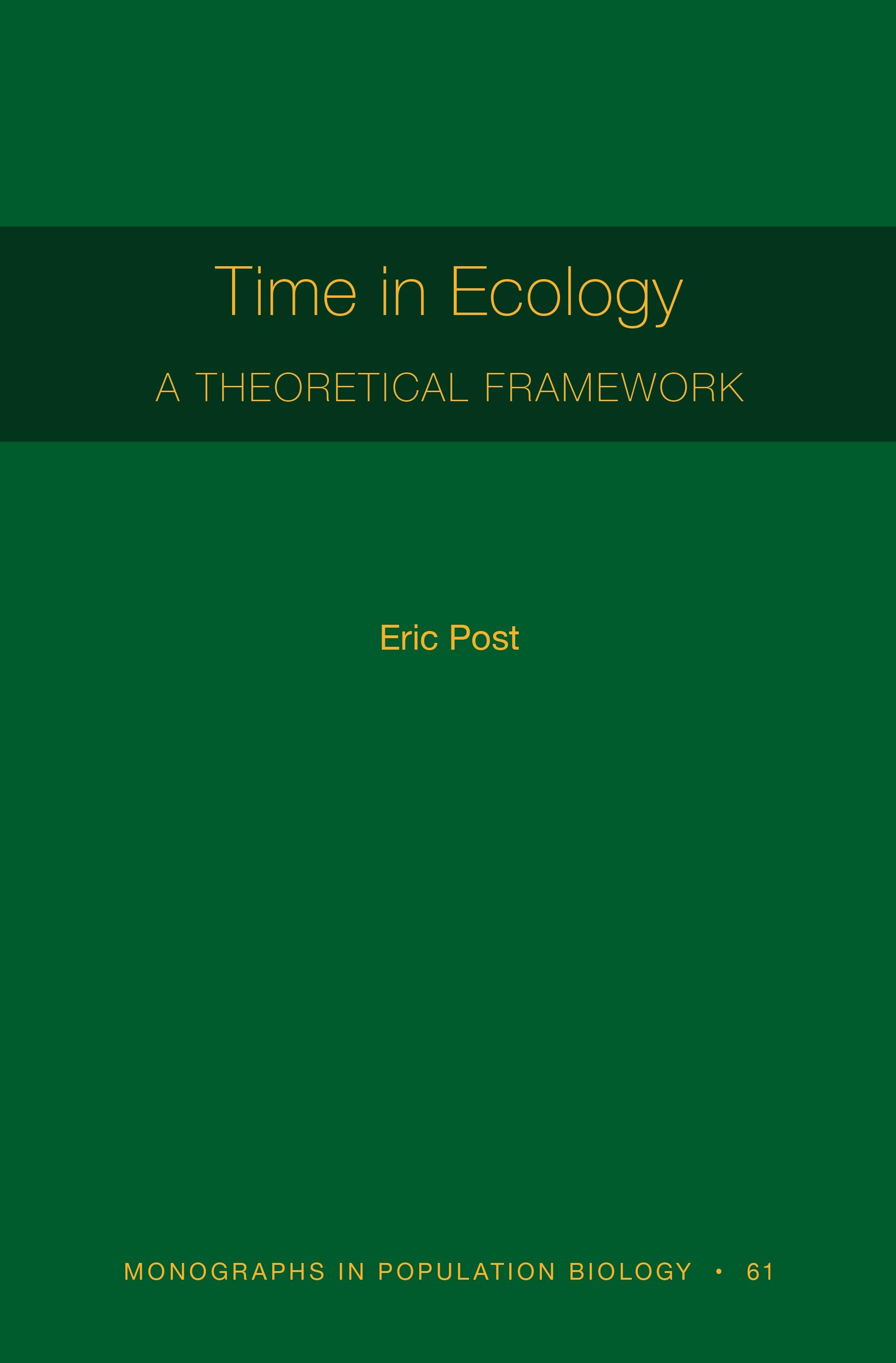
Ecologists traditionally regard time as part of the background against which ecological interactions play out. In this book, Eric Post argues that time should be treated as a resource used by organisms for growth, maintenance, and offspring production.
Post uses insights from phenology—the study of the timing of life-cycle events—to present a theoretical framework of time in ecology that casts long-standing observations in the field in an entirely new light. Combining conceptual models with field data, he demonstrates how phenological advances, delays, and stasis, documented in an array of taxa, can all be viewed as adaptive components of an organism’s strategic use of time. Post shows how the allocation of time by individual organisms to critical life history stages is not only a response to environmental cues but also an important driver of interactions at the population, species, and community levels.
To demonstrate the applications of this exciting new conceptual framework, Time in Ecology uses meta-analyses of previous studies as well as Post’s original data on the phenological dynamics of plants, caribou, and muskoxen in Greenland.
Payez facilement par carte, Klarna, Apple Pay ou Google Pay. Pas satisfait ? Vous avez toujours une garantie de remboursement de 14 jours. En savoir plus dans nos conditions. Si vous avez des questions, envoyez-nous un e-mail à hello@memmo.org.
Memmo facilite tes études, où que tu sois dans le monde. On rassemble tes manuels de cours et des outils d'étude intelligents au même endroit : résumés, quiz, podcasts et flashcards. Et il y a Ted, ton compagnon d'étude qui répond à toutes tes questions. Plus de 50 000 étudiants étudient déjà ici – conçu pour t'aider à apprendre plus vite et à moins stresser.