
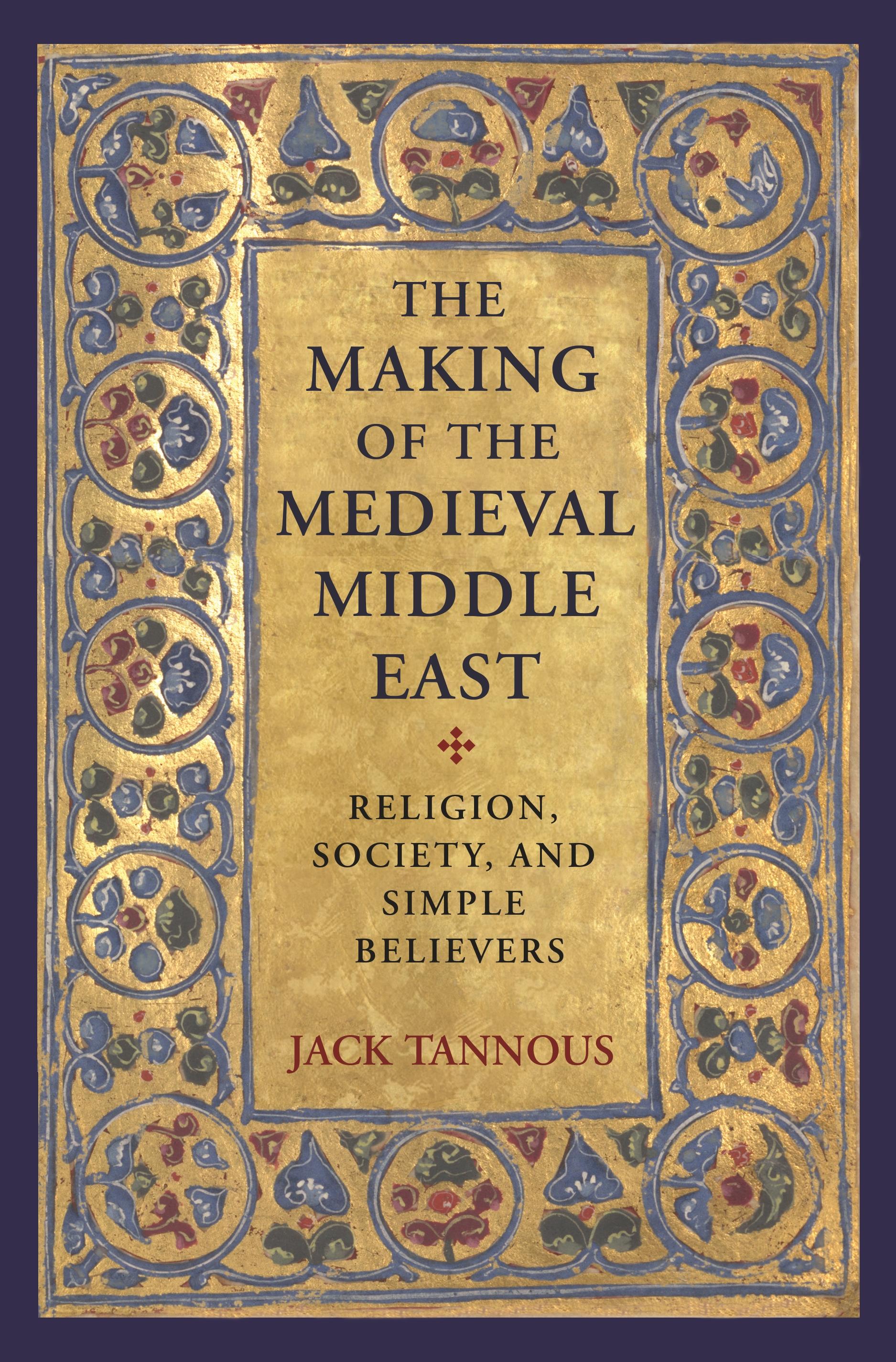
A bold new religious history of the late antique and medieval Middle East that places ordinary Christians at the center of the story
In the second half of the first millennium CE, the Christian Middle East fractured irreparably into competing churches and Arabs conquered the region, setting in motion a process that would lead to its eventual conversion to Islam. Jack Tannous argues that key to understanding these dramatic religious transformations are ordinary religious believers, often called “the simple” in late antique and medieval sources. Largely agrarian and illiterate, these Christians outnumbered Muslims well into the era of the Crusades, and yet they have typically been invisible in our understanding of the Middle East’s history.
What did it mean for Christian communities to break apart over theological disagreements that most people could not understand? How does our view of the rise of Islam change if we take seriously the fact that Muslims remained a demographic minority for much of the Middle Ages? In addressing these and other questions, Tannous provides a sweeping reinterpretation of the religious history of the medieval Middle East.
This provocative book draws on a wealth of Greek, Syriac, and Arabic sources to recast these conquered lands as largely Christian ones whose growing Muslim populations are properly understood as converting away from and in competition with the non-Muslim communities around them.
Payez facilement par carte, Klarna, Apple Pay ou Google Pay. Pas satisfait ? Vous avez toujours une garantie de remboursement de 14 jours. En savoir plus dans nos conditions. Si vous avez des questions, envoyez-nous un e-mail à hello@memmo.org.
Memmo facilite tes études, où que tu sois dans le monde. On rassemble tes manuels de cours et des outils d'étude intelligents au même endroit : résumés, quiz, podcasts et flashcards. Et il y a Ted, ton compagnon d'étude qui répond à toutes tes questions. Plus de 50 000 étudiants étudient déjà ici – conçu pour t'aider à apprendre plus vite et à moins stresser.