
CHOICE Outstanding Academic Title, 2022
How rural areas have become uneven proving grounds for the American Dream.
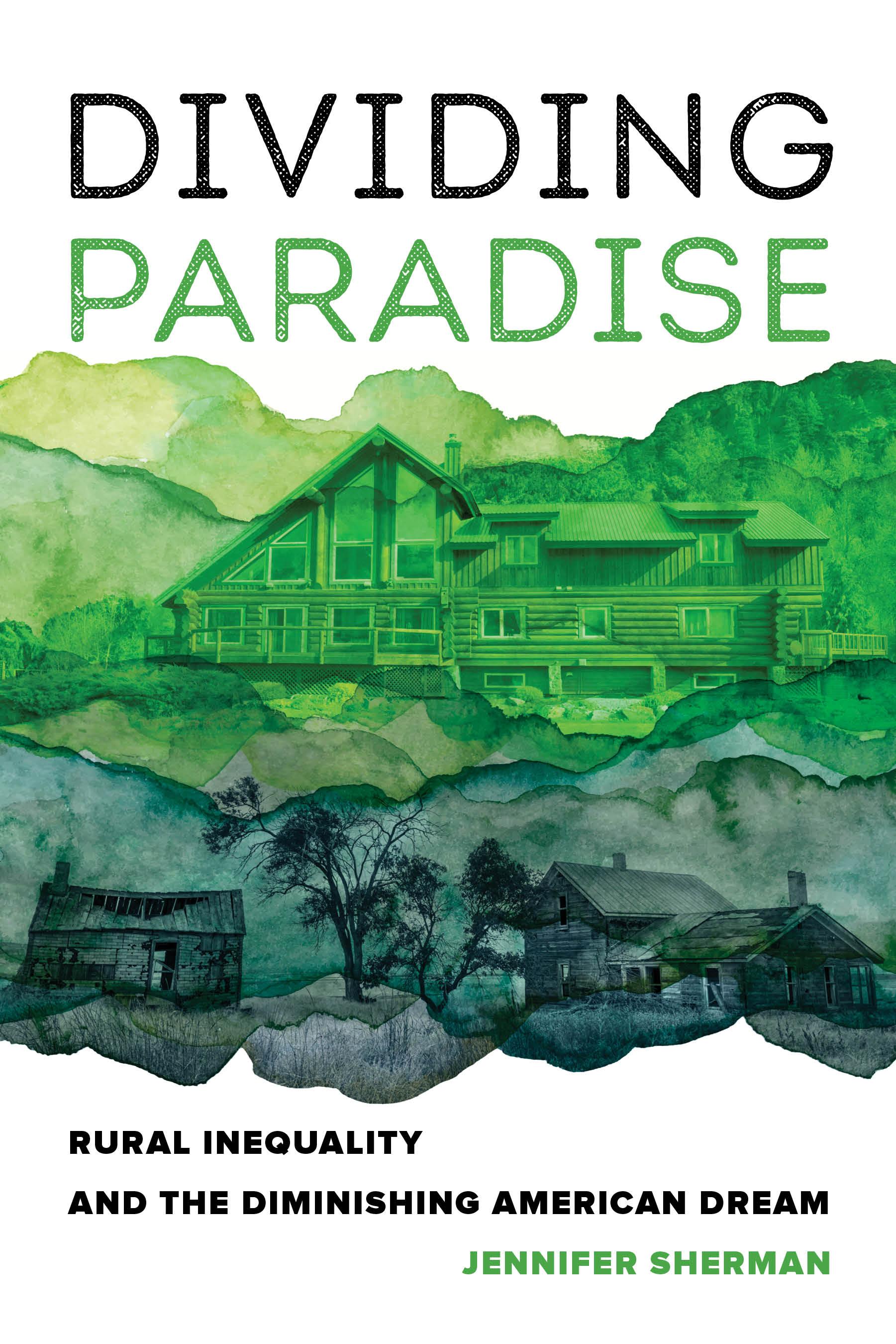
Late-stage capitalism is trying to remake rural America in its own image, and the resistance is telling. Small-town economies that have traditionally been based on logging, mining, farming, and ranching now increasingly rely on tourism, second-home ownership, and retirement migration. In Dividing Paradise, Jennifer Sherman tells the story of Paradise Valley, Washington, a rural community where amenity-driven economic growth has resulted in a new social landscape of inequality and privilege, with deep fault lines between old-timers and newcomers. In this complicated cultural reality, "class blindness" allows privileged newcomers to ignore or justify their impact on these towns, papering over the sentiments of anger, loss, and disempowerment of longtime locals.
Based on in-depth interviews with individuals on both sides of the divide, this book explores the causes and repercussions of the stark inequity that has become commonplace across the United States. It exposes the mechanisms by which inequality flourishes and by which Americans have come to believe that disparity is acceptable and deserved. Sherman, who is known for her work on rural America, presents here a powerful case study of the ever-growing tensions between those who can and those who cannot achieve their visions of the American dream.
How rural areas have become uneven proving grounds for the American Dream.
Late-stage capitalism is trying to remake rural America in its own image, and the resistance is telling. Small-town economies that have traditionally been based on logging, mining, farming, and ranching now increasingly rely on tourism, second-home ownership, and retirement migration. In Dividing Paradise, Jennifer Sherman tells the story of Paradise Valley, Washington, a rural community where amenity-driven economic growth has resulted in a new social landscape of inequality and privilege, with deep fault lines between old-timers and newcomers. In this complicated cultural reality, "class blindness" allows privileged newcomers to ignore or justify their impact on these towns, papering over the sentiments of anger, loss, and disempowerment of longtime locals.
Based on in-depth interviews with individuals on both sides of the divide, this book explores the causes and repercussions of the stark inequity that has become commonplace across the United States. It exposes the mechanisms by which inequality flourishes and by which Americans have come to believe that disparity is acceptable and deserved. Sherman, who is known for her work on rural America, presents here a powerful case study of the ever-growing tensions between those who can and those who cannot achieve their visions of the American dream.
Payez facilement par carte, Klarna, Apple Pay ou Google Pay. Pas satisfait ? Vous avez toujours une garantie de remboursement de 14 jours. En savoir plus dans nos conditions. Si vous avez des questions, envoyez-nous un e-mail à hello@memmo.org.
Memmo facilite tes études, où que tu sois dans le monde. On rassemble tes manuels de cours et des outils d'étude intelligents au même endroit : résumés, quiz, podcasts et flashcards. Et il y a Ted, ton compagnon d'étude qui répond à toutes tes questions. Plus de 50 000 étudiants étudient déjà ici – conçu pour t'aider à apprendre plus vite et à moins stresser.
Tu pourrais aussi aimer
Acheter le livre0