
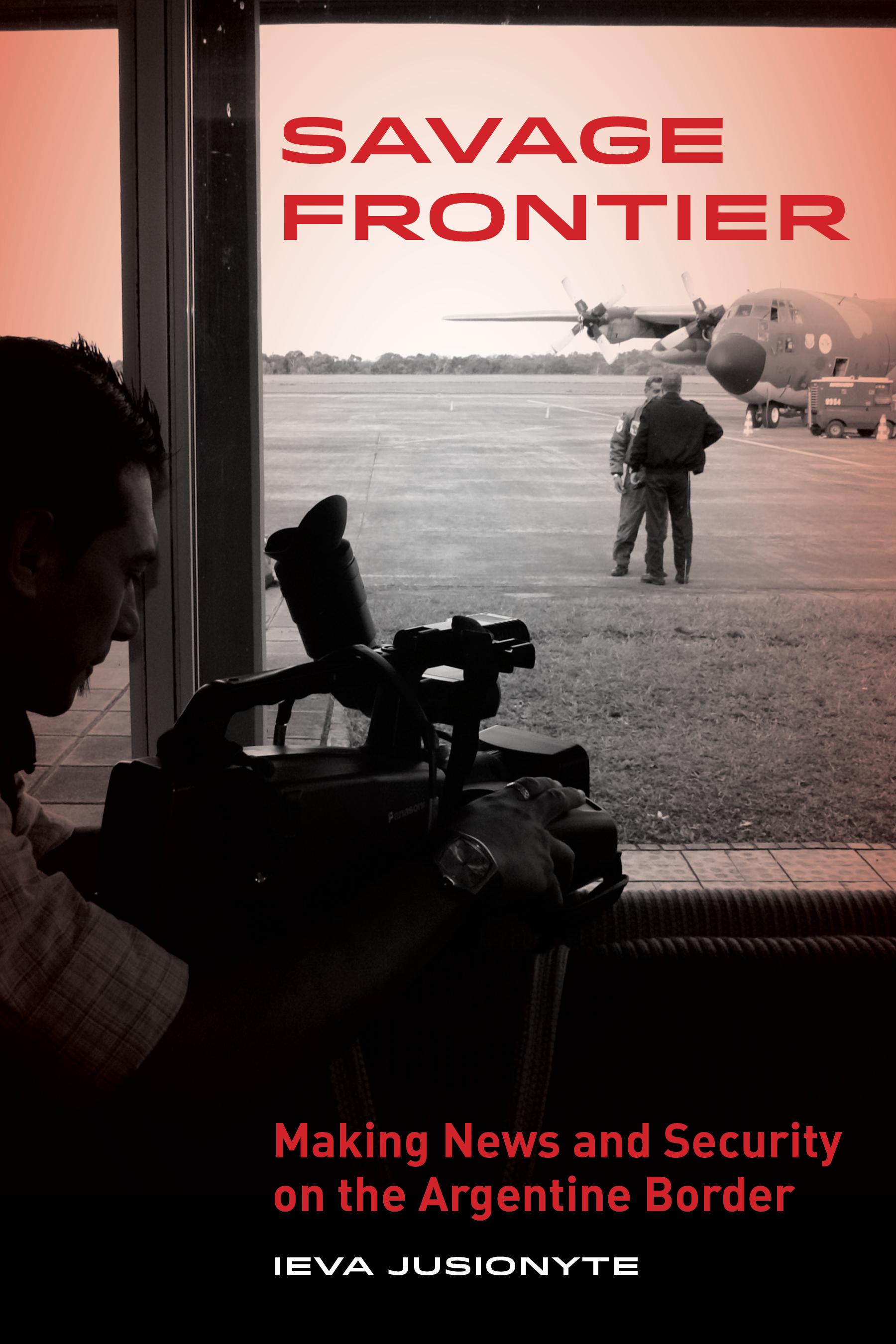
From MacArthur "Genius" Fellow Ieva Jusionyte, a groundbreaking anthropological study of how security is organized, perceived, and lived along the "hot border" where Argentina, Brazil, and Paraguay converge.
This highly original work of anthropology combines extensive ethnographic fieldwork and investigative journalism to explain how security is understood, experienced, and constructed along the Triple Frontera, the border region shared by Argentina, Brazil, and Paraguay. One of the major "hot borders" in the Western Hemisphere, the Triple Frontera is associated with drug and human trafficking, contraband, money laundering, and terrorism. It's also a place where residents, particularly on the Argentine side, are subjected to increased governmental control and surveillance.
How does a scholar tell a story about a place characterized by illicit international trading, rampant violence, and governmental militarization? Jusionyte inventively centered her ethnographic fieldwork on a community of journalists who investigate and report on crime and violence in the region. Through them she learned that a fair amount of petty, small-scale illicit trading goes unreported—a consequence of a community invested in promoting the idea that the border is a secure place that does not warrant militarized attention. The author's work demonstrates that while media is often seen as a powerful tool for spreading a sense of danger and uncertainty, sensationalizing crime and violence, and creating moral panics, journalists can actually do the opposite. Those who selectively report on illegal activities use the news to tell particular types of stories in an attempt to make their communities look and ultimately be more secure.
This highly original work of anthropology combines extensive ethnographic fieldwork and investigative journalism to explain how security is understood, experienced, and constructed along the Triple Frontera, the border region shared by Argentina, Brazil, and Paraguay. One of the major "hot borders" in the Western Hemisphere, the Triple Frontera is associated with drug and human trafficking, contraband, money laundering, and terrorism. It's also a place where residents, particularly on the Argentine side, are subjected to increased governmental control and surveillance.
How does a scholar tell a story about a place characterized by illicit international trading, rampant violence, and governmental militarization? Jusionyte inventively centered her ethnographic fieldwork on a community of journalists who investigate and report on crime and violence in the region. Through them she learned that a fair amount of petty, small-scale illicit trading goes unreported—a consequence of a community invested in promoting the idea that the border is a secure place that does not warrant militarized attention. The author's work demonstrates that while media is often seen as a powerful tool for spreading a sense of danger and uncertainty, sensationalizing crime and violence, and creating moral panics, journalists can actually do the opposite. Those who selectively report on illegal activities use the news to tell particular types of stories in an attempt to make their communities look and ultimately be more secure.
Payez facilement par carte, Klarna, Apple Pay ou Google Pay. Pas satisfait ? Vous avez toujours une garantie de remboursement de 14 jours. En savoir plus dans nos conditions. Si vous avez des questions, envoyez-nous un e-mail à hello@memmo.org.
Memmo facilite tes études, où que tu sois dans le monde. On rassemble tes manuels de cours et des outils d'étude intelligents au même endroit : résumés, quiz, podcasts et flashcards. Et il y a Ted, ton compagnon d'étude qui répond à toutes tes questions. Plus de 50 000 étudiants étudient déjà ici – conçu pour t'aider à apprendre plus vite et à moins stresser.
Tu pourrais aussi aimer
Acheter le livre0