
"...the best extant map of our sonic shadowlands, and it has changed how I listen."—Alex Ross, The New Yorker
"...an essential survey of contemporary music."—New York Times
"…sharp, provacative and always on the money. The listening list alone promises months of fresh discovery, the main text a fresh new way of navigating the world of sound."—The Wire
2017 Music Book of the Year—Alex Ross, The New Yorker
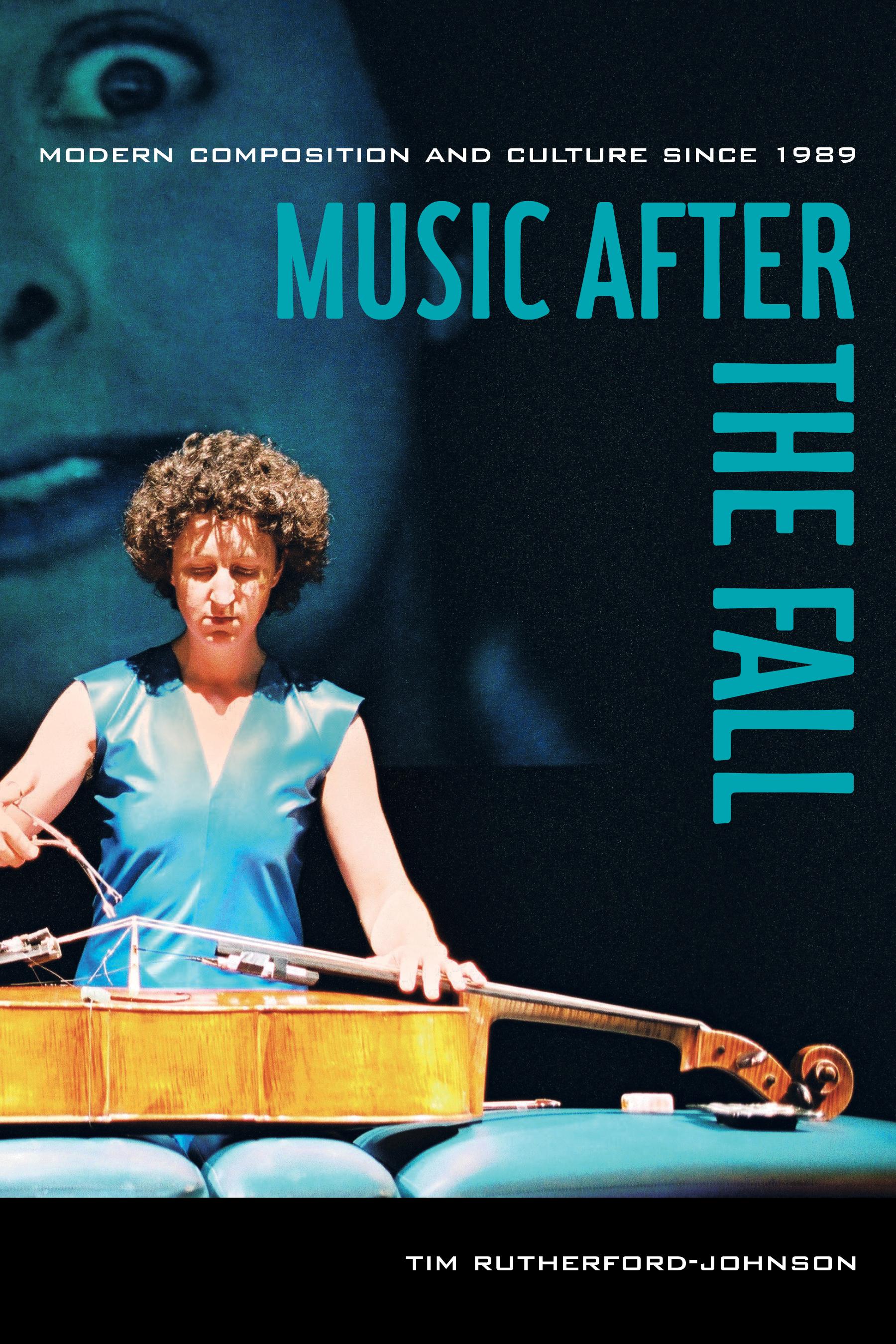
Music after the Fall is the first book to survey contemporary Western art music within the transformed political, cultural, and technological environment of the post–Cold War era. In this book, Tim Rutherford-Johnson considers musical composition against this changed backdrop, placing it in the context of globalization, digitization, and new media. Drawing connections with the other arts, in particular visual art and architecture, he expands the definition of Western art music to include forms of composition, experimental music, sound art, and crossover work from across the spectrum, inside and beyond the concert hall.
Each chapter is a critical consideration of a wide range of composers, performers, works, and institutions, and develops a broad and rich picture of the new music ecosystem, from North American string quartets to Lebanese improvisers, from electroacoustic music studios in South America to ruined pianos in the Australian outback. Rutherford-Johnson puts forth a new approach to the study of contemporary music that relies less on taxonomies of style and technique than on the comparison of different responses to common themes of permission, fluidity, excess, and loss.
"...an essential survey of contemporary music."—New York Times
"…sharp, provacative and always on the money. The listening list alone promises months of fresh discovery, the main text a fresh new way of navigating the world of sound."—The Wire
2017 Music Book of the Year—Alex Ross, The New Yorker
Music after the Fall is the first book to survey contemporary Western art music within the transformed political, cultural, and technological environment of the post–Cold War era. In this book, Tim Rutherford-Johnson considers musical composition against this changed backdrop, placing it in the context of globalization, digitization, and new media. Drawing connections with the other arts, in particular visual art and architecture, he expands the definition of Western art music to include forms of composition, experimental music, sound art, and crossover work from across the spectrum, inside and beyond the concert hall.
Each chapter is a critical consideration of a wide range of composers, performers, works, and institutions, and develops a broad and rich picture of the new music ecosystem, from North American string quartets to Lebanese improvisers, from electroacoustic music studios in South America to ruined pianos in the Australian outback. Rutherford-Johnson puts forth a new approach to the study of contemporary music that relies less on taxonomies of style and technique than on the comparison of different responses to common themes of permission, fluidity, excess, and loss.
Payez facilement par carte, Klarna, Apple Pay ou Google Pay. Pas satisfait ? Vous avez toujours une garantie de remboursement de 14 jours. En savoir plus dans nos conditions. Si vous avez des questions, envoyez-nous un e-mail à hello@memmo.org.
Memmo facilite tes études, où que tu sois dans le monde. On rassemble tes manuels de cours et des outils d'étude intelligents au même endroit : résumés, quiz, podcasts et flashcards. Et il y a Ted, ton compagnon d'étude qui répond à toutes tes questions. Plus de 50 000 étudiants étudient déjà ici – conçu pour t'aider à apprendre plus vite et à moins stresser.
Tu pourrais aussi aimer
Acheter le livre0