
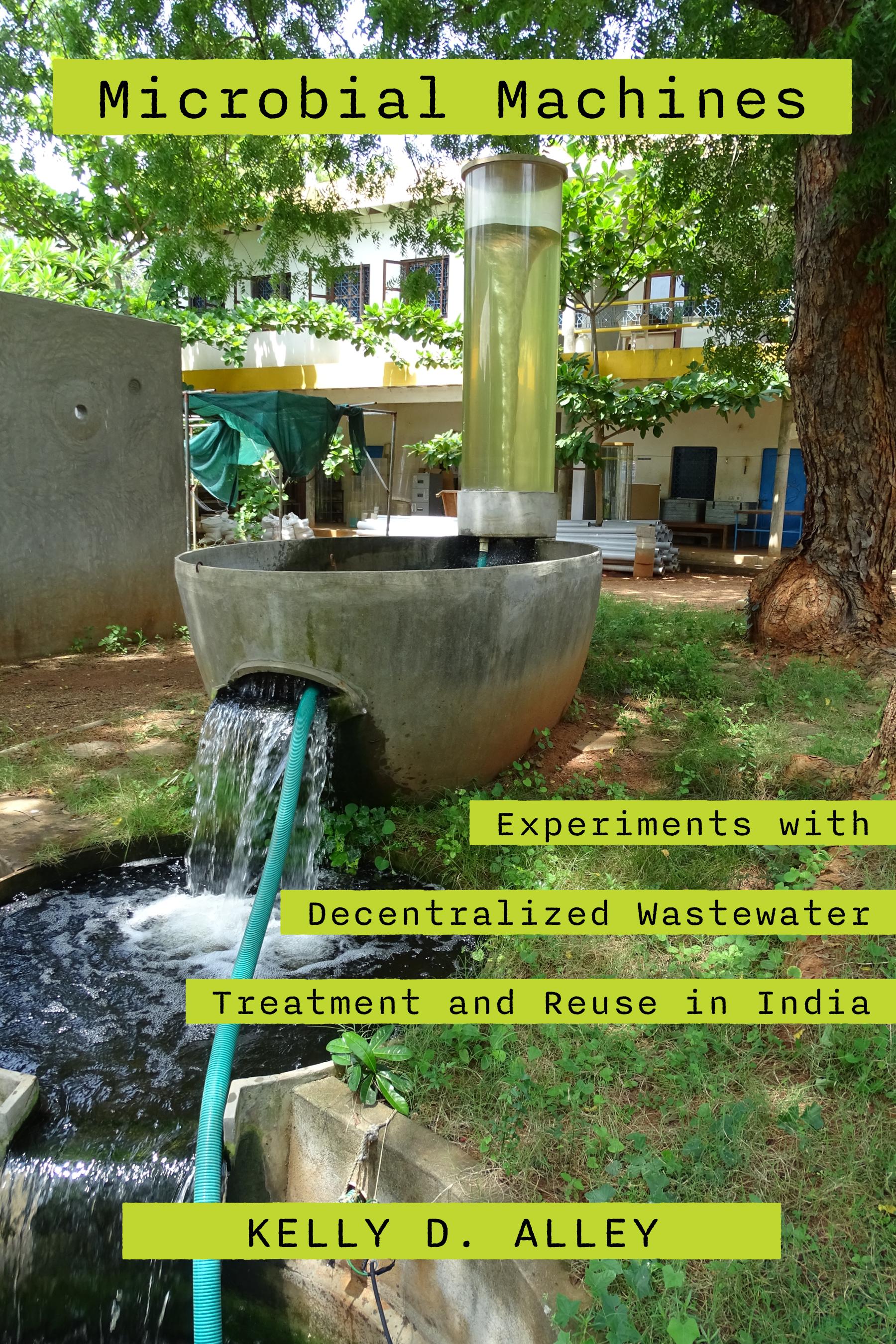
Around 2004, members of governmental and nongovernmental organizations, science institutes, and private companies throughout India began brainstorming and then experimenting with small-scale treatment systems that could produce usable water from wastewater. Through detailed case studies, Microbial Machines describes how residents, workers, and scientists interact with technology, science, and engineering during the processes of treatment and reuse. Using a human-machine-microbe framework, Kelly Alley explores the ways that people's sensory perceptions of water—including disgust—are dynamic and how people use machines and microbes to digest wastewater. A better understanding of how the human and nonhuman interact in these processes will enable people to generate more effective methods for treating and reusing wastewater. While decentralized wastewater treatment systems may not be a perfect solution, they alleviate resource stress in regions that are particularly hard hit by climate change. These case studies have broad relevance for solving similar problems in many other places around the world.
Payez facilement par carte, Klarna, Apple Pay ou Google Pay. Pas satisfait ? Vous avez toujours une garantie de remboursement de 14 jours. En savoir plus dans nos conditions. Si vous avez des questions, envoyez-nous un e-mail à hello@memmo.org.
Memmo facilite tes études, où que tu sois dans le monde. On rassemble tes manuels de cours et des outils d'étude intelligents au même endroit : résumés, quiz, podcasts et flashcards. Et il y a Ted, ton compagnon d'étude qui répond à toutes tes questions. Plus de 50 000 étudiants étudient déjà ici – conçu pour t'aider à apprendre plus vite et à moins stresser.
Tu pourrais aussi aimer
Acheter le livre0