
"A keen and insightful window into a rich artistic legacy."—Publishers Weekly
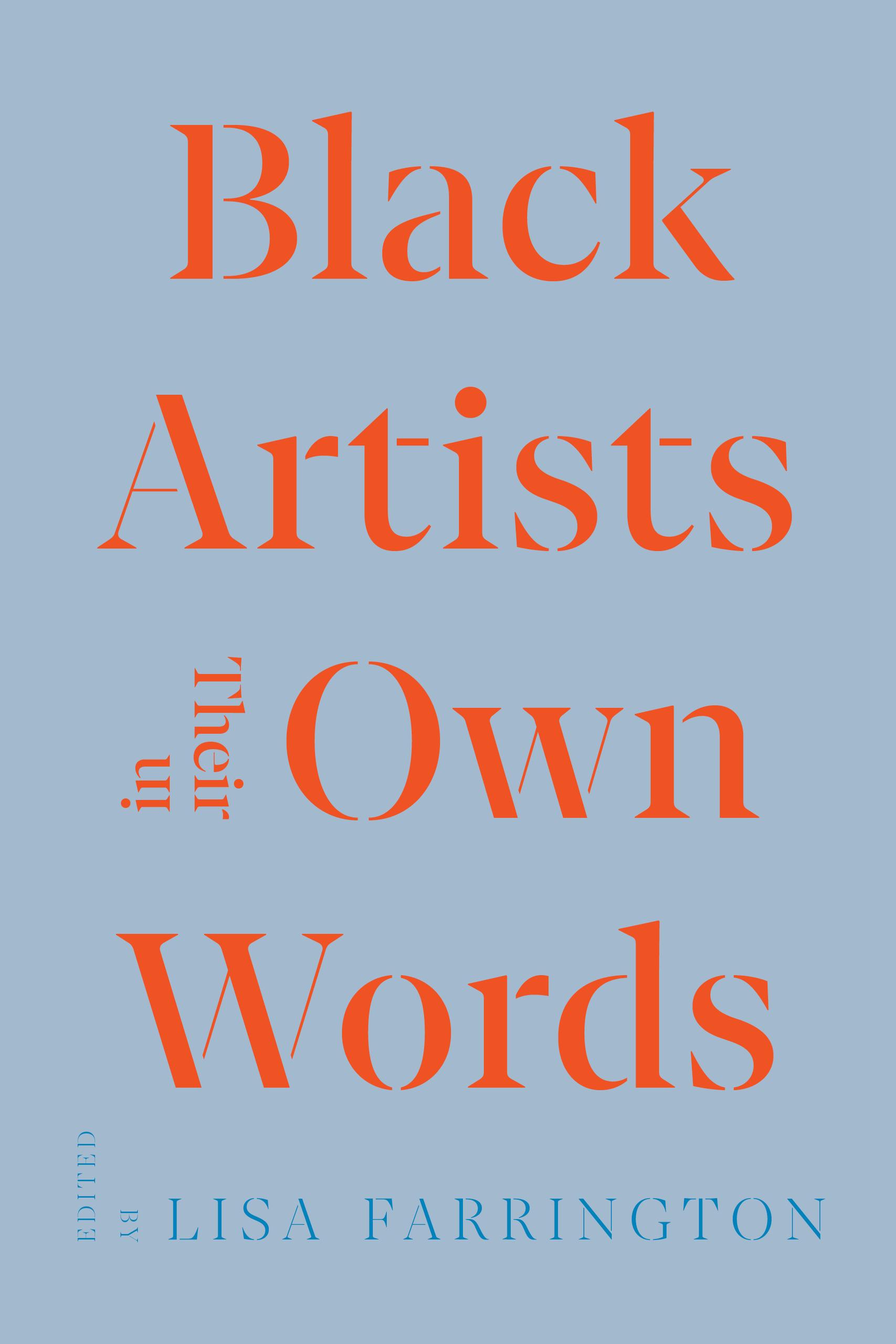
The first book to center Black artists' voices on Black aesthetics, revealing a century of evolving relationships to race, identity, and art.
What is Black art? No one has thought harder about that question than Black artists, yet their perspectives have been largely ignored. Instead, their stories have been told by intellectuals like W. E. B. Du Bois and Alain Locke, who defined "a school" of Black art in the early twentieth century. For the first time, Black Artists in Their Own Words offers an insightful corrective.
Esteemed art historian Lisa Farrington gathers writing spanning a century across the United States, the Caribbean, and the African continent—including from renowned artists Henry Tanner, Nancy Elizabeth Prophet, Romare Bearden, Wifredo Lam, Renee Cox, and many more—that reveals both evolutions and equivocations. Many artists, especially during the civil rights era, have embraced Black aesthetics as a source of empowerment. Others prefer to be artists first and Black second, while some have rejected racial identification entirely. Here, Black artists reclaim their work from reductive critical narratives, sharing the motivations underlying their struggles to create in a white-dominated art world.
The first book to center Black artists' voices on Black aesthetics, revealing a century of evolving relationships to race, identity, and art.
What is Black art? No one has thought harder about that question than Black artists, yet their perspectives have been largely ignored. Instead, their stories have been told by intellectuals like W. E. B. Du Bois and Alain Locke, who defined "a school" of Black art in the early twentieth century. For the first time, Black Artists in Their Own Words offers an insightful corrective.
Esteemed art historian Lisa Farrington gathers writing spanning a century across the United States, the Caribbean, and the African continent—including from renowned artists Henry Tanner, Nancy Elizabeth Prophet, Romare Bearden, Wifredo Lam, Renee Cox, and many more—that reveals both evolutions and equivocations. Many artists, especially during the civil rights era, have embraced Black aesthetics as a source of empowerment. Others prefer to be artists first and Black second, while some have rejected racial identification entirely. Here, Black artists reclaim their work from reductive critical narratives, sharing the motivations underlying their struggles to create in a white-dominated art world.
Payez facilement par carte, Klarna, Apple Pay ou Google Pay. Pas satisfait ? Vous avez toujours une garantie de remboursement de 14 jours. En savoir plus dans nos conditions. Si vous avez des questions, envoyez-nous un e-mail à hello@memmo.org.
Memmo facilite tes études, où que tu sois dans le monde. On rassemble tes manuels de cours et des outils d'étude intelligents au même endroit : résumés, quiz, podcasts et flashcards. Et il y a Ted, ton compagnon d'étude qui répond à toutes tes questions. Plus de 50 000 étudiants étudient déjà ici – conçu pour t'aider à apprendre plus vite et à moins stresser.
Tu pourrais aussi aimer
Acheter le livre0