
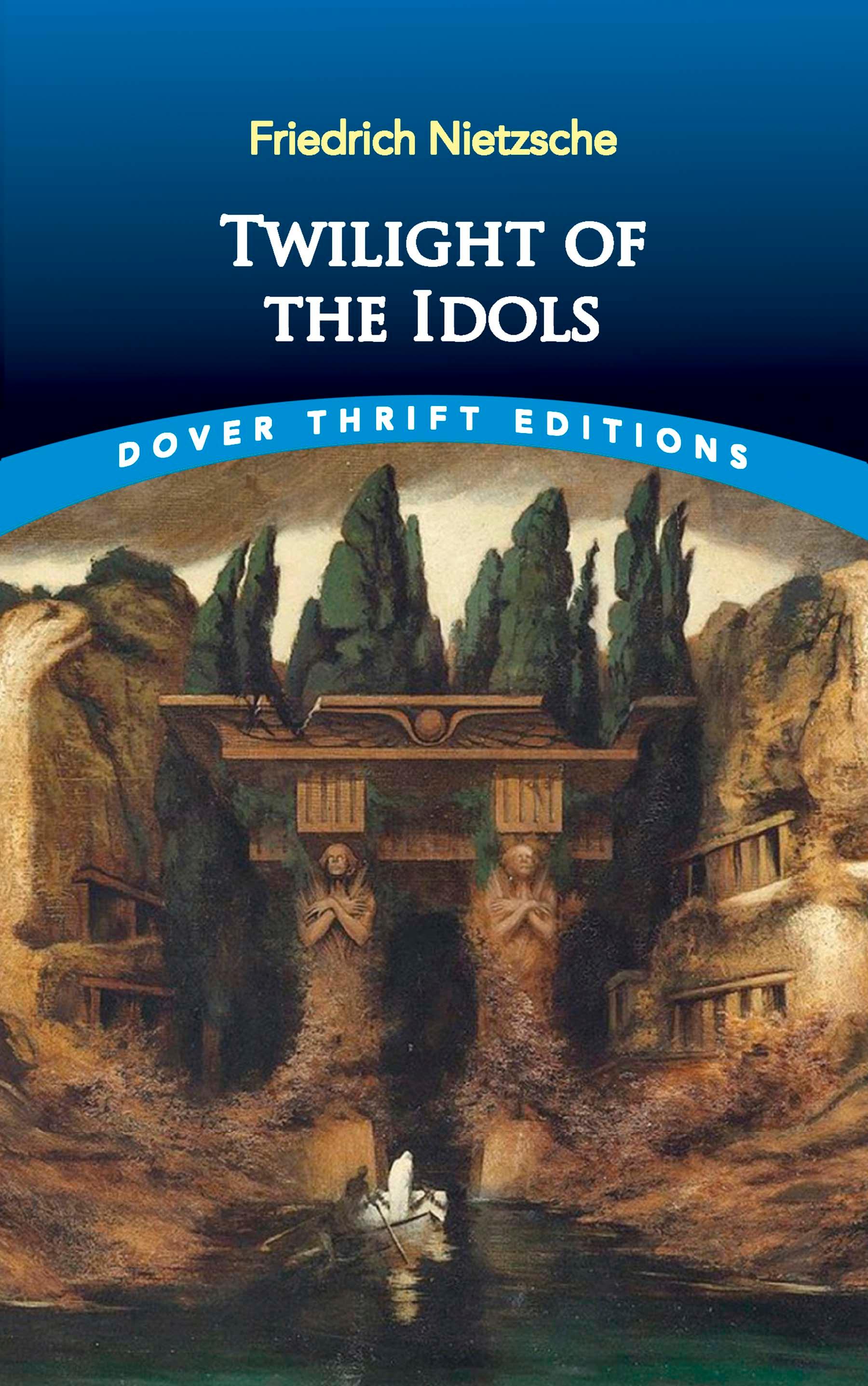
"Twilight of the Idols means that the old truth is on its last legs," declared Friedrich Nietzsche in this 1889 polemic. Forceful in his language and profound in his message, the philosopher delivered the nineteenth century's most devastating attack on Christianity. Intended by Nietzsche as a general introduction to his philosophy, it assails the "idols" of Western philosophy and culture, including the concepts of Socratic rationality and Christian morality.
Written while Nietzsche was at the peak of his powers, less than a year before the onset of the insanity that gripped him until his death in 1900, this work's proximity to the end of the author's career renders it a distinctive portrait from his later period. The source of the famous dictum, "Whatever does not kill me makes me stronger," it blazes with provocative, inflammatory rhetoric that challenges readers to reexamine what they worship and why.
Written while Nietzsche was at the peak of his powers, less than a year before the onset of the insanity that gripped him until his death in 1900, this work's proximity to the end of the author's career renders it a distinctive portrait from his later period. The source of the famous dictum, "Whatever does not kill me makes me stronger," it blazes with provocative, inflammatory rhetoric that challenges readers to reexamine what they worship and why.
Payez facilement par carte, Klarna, Apple Pay ou Google Pay. Pas satisfait ? Vous avez toujours une garantie de remboursement de 14 jours. En savoir plus dans nos conditions. Si vous avez des questions, envoyez-nous un e-mail à hello@memmo.org.
Memmo facilite tes études, où que tu sois dans le monde. On rassemble tes manuels de cours et des outils d'étude intelligents au même endroit : résumés, quiz, podcasts et flashcards. Et il y a Ted, ton compagnon d'étude qui répond à toutes tes questions. Plus de 50 000 étudiants étudient déjà ici – conçu pour t'aider à apprendre plus vite et à moins stresser.
Tu pourrais aussi aimer
Acheter le livre0