
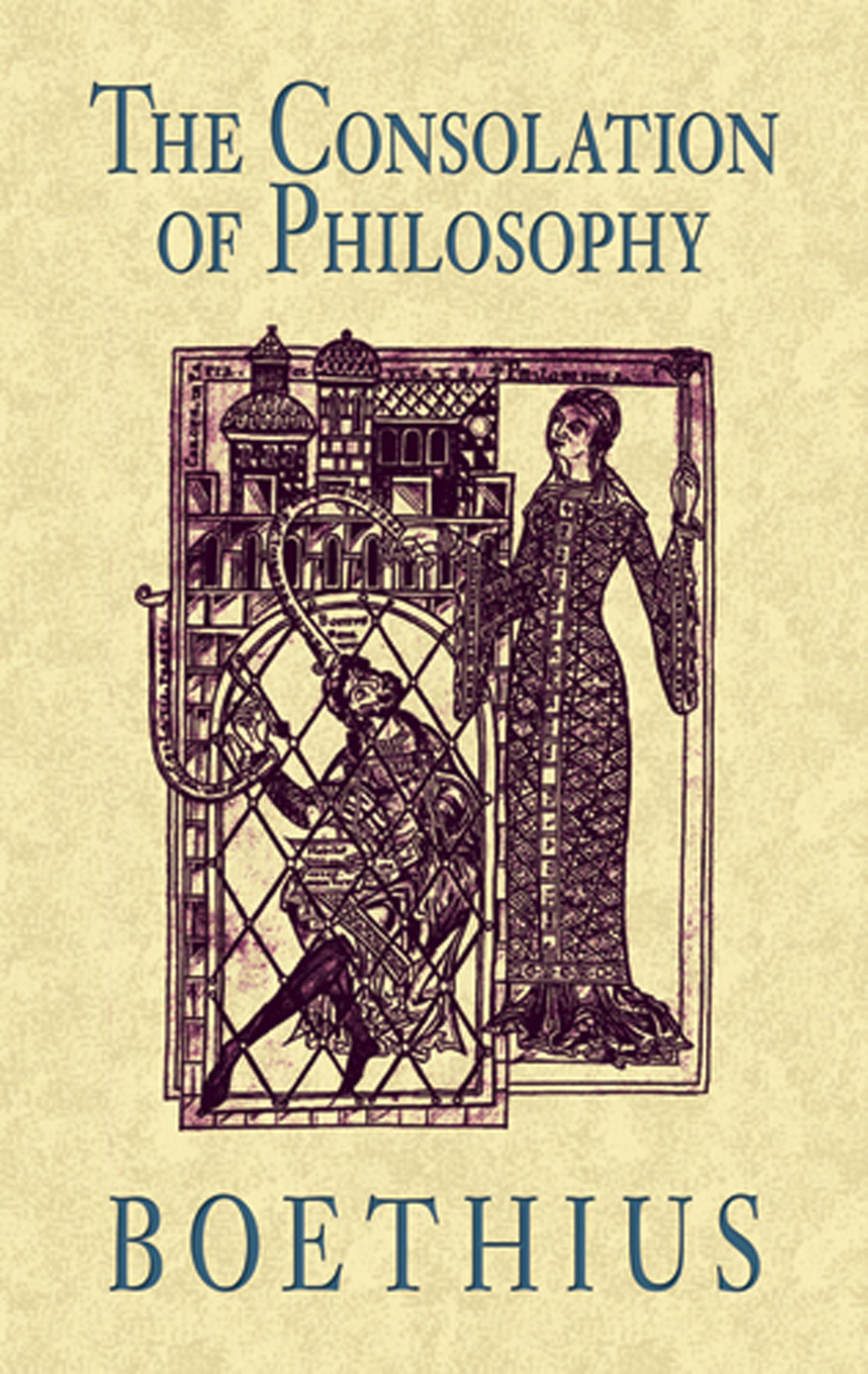
One of the most influential books in the history of Western thought, The Consolation of Philosophy was written in a prison cell by a condemned man. Anicius Manlius Severinus Boethius (c. 480–524) was a Roman scholar, theologian, philosopher, and statesman. Imprisoned by the Ostrogothic king Theodoric, probably on trumped-up subversion charges, he was thrown into a remote prison where he was eventually executed.
While awaiting his fate, he wrote this dialogue in alternating prose and poetry between himself and his spiritual guardian. Its subject is human happiness and the possibility of achieving it in the midst of the suffering and disappointment that characterize human existence. As Richard H. Green notes in the introduction, "For the reader of the Christian Middle Ages, The Consolation of Philosophy celebrated the life of the mind, or reason, and the possibility of its ultimate victory over the misfortunes and frustrations which attend fallen man's pursuit of transitory substitutes for the Supreme Good which alone can satisfy human desires."
Mr. Green's translation is quite literal in order to remain as faithful as possible to Boethius's original meaning. He has also provided an informative introduction and notes. The result is a superbly accessible edition that still exercises a powerful influence on contemporary thinkers and theologians and represents a source of comfort and solace for the general reader.
Payez facilement par carte, Klarna, Apple Pay ou Google Pay. Pas satisfait ? Vous avez toujours une garantie de remboursement de 14 jours. En savoir plus dans nos conditions. Si vous avez des questions, envoyez-nous un e-mail à hello@memmo.org.
Memmo facilite tes études, où que tu sois dans le monde. On rassemble tes manuels de cours et des outils d'étude intelligents au même endroit : résumés, quiz, podcasts et flashcards. Et il y a Ted, ton compagnon d'étude qui répond à toutes tes questions. Plus de 50 000 étudiants étudient déjà ici – conçu pour t'aider à apprendre plus vite et à moins stresser.