
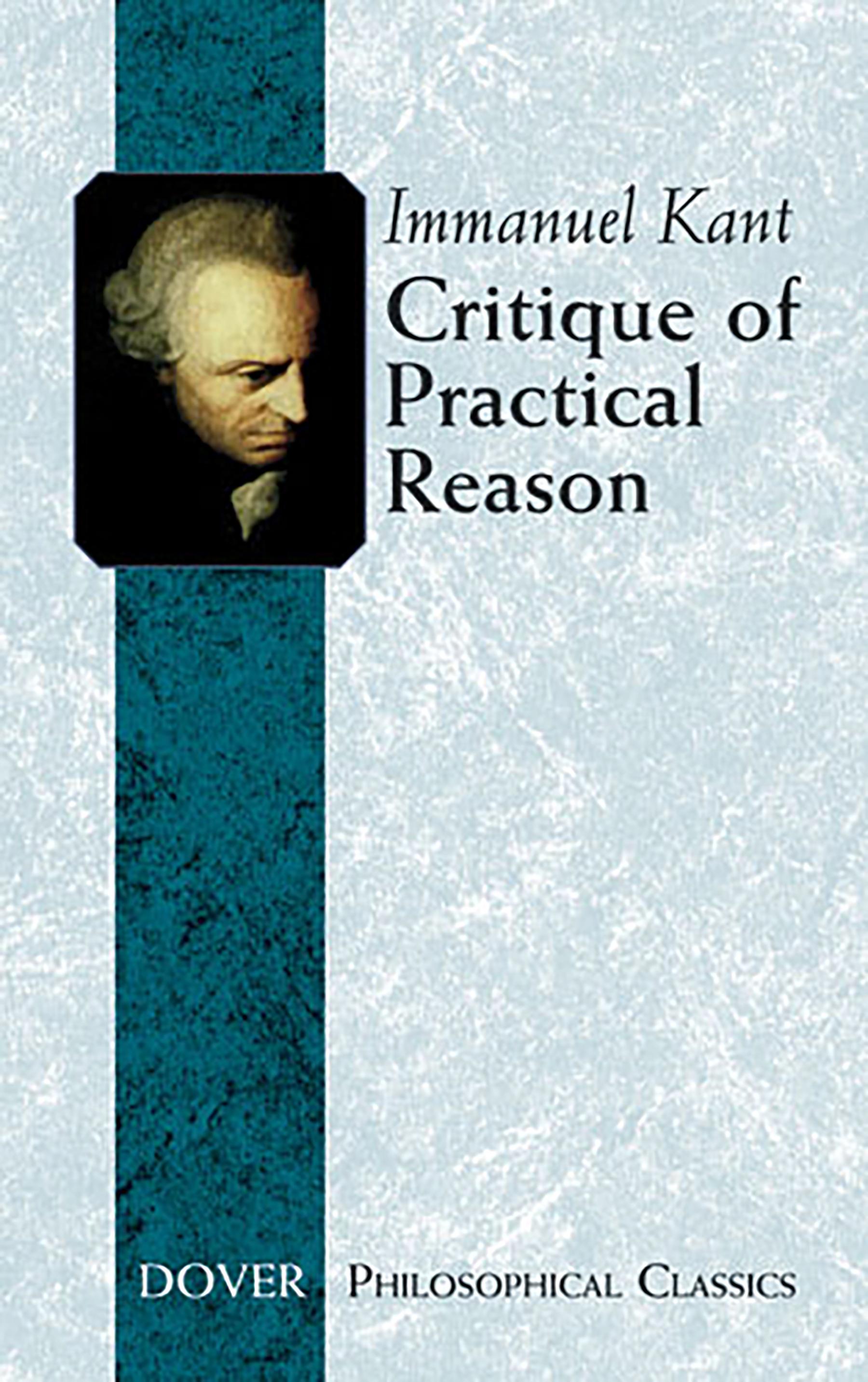
The second of Kant's three critiques, Critique of Practical Reason forms the center of Kantian philosophy; published in 1788, it is bookended by his Critique of Pure Reason and Critique of Judgement. With this work Kant establishes his role as a vindicator of the truth of Christianity; he approaches his proof by presenting positive affirmation of the immortality of the soul and the existence of God. The philosopher offers an argument concerning the summum bonum of life: people should not simply search after happiness, but follow the moral law and seek to become worthy of the happiness that God can bestow.
This Critique comprises three sections: the Analytic, the Dialectic, and the Doctrine of Method. The Analytic defines the ultimate moral principle, the categorical imperative, and argues that to obey it is to exercise a freedom. The Dialectic make the assumption that immortality and God exist, arguing that pure practical reason falls into error when it expects perfection in this world; we should anticipate finding perfection in the next world, with God's help. The final section, the Doctrine of Method, offers suggestions in educating people in the use of pure practical reason.
A seminal text in the history of moral philosophy, this volume offers the most complete statement of Kant's theory of free will and a full development of his practical metaphysics.
This Critique comprises three sections: the Analytic, the Dialectic, and the Doctrine of Method. The Analytic defines the ultimate moral principle, the categorical imperative, and argues that to obey it is to exercise a freedom. The Dialectic make the assumption that immortality and God exist, arguing that pure practical reason falls into error when it expects perfection in this world; we should anticipate finding perfection in the next world, with God's help. The final section, the Doctrine of Method, offers suggestions in educating people in the use of pure practical reason.
A seminal text in the history of moral philosophy, this volume offers the most complete statement of Kant's theory of free will and a full development of his practical metaphysics.
Payez facilement par carte, Klarna, Apple Pay ou Google Pay. Pas satisfait ? Vous avez toujours une garantie de remboursement de 14 jours. En savoir plus dans nos conditions. Si vous avez des questions, envoyez-nous un e-mail à hello@memmo.org.
Memmo facilite tes études, où que tu sois dans le monde. On rassemble tes manuels de cours et des outils d'étude intelligents au même endroit : résumés, quiz, podcasts et flashcards. Et il y a Ted, ton compagnon d'étude qui répond à toutes tes questions. Plus de 50 000 étudiants étudient déjà ici – conçu pour t'aider à apprendre plus vite et à moins stresser.
Tu pourrais aussi aimer
Acheter le livre0