
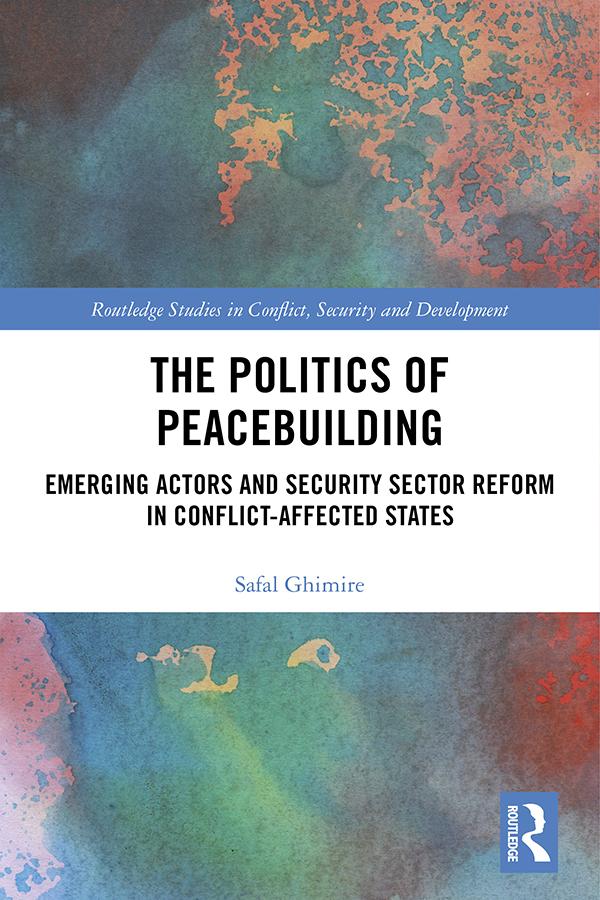
This book examines and compares the diverging security approaches of the UK, China and India in peacebuilding settings, with a specific focus on the case of Nepal.
Rising powers such as China and India dissent from traditional templates of peacebuilding and apply their own methods to respond to security issues. This book fills a gap in the literature by examining how emerging actors (China and India) engage with security and development and how their approaches differ from those of a traditional actor (the UK).
In the light of democratic peace and regional security complex theories, the book interprets interview data to compare and contrast the engagement of these three actors with post-war Nepal, and the implications for security sector governance and peacebuilding. It contends that the UK helped to peacefully manage transition but that the institutional changes were merely ceremonial. China and India, by contrast, were more effective in advancing mutual security agendas through elite-level interactions. However, the ‘hardware’ of security, for example material and infrastructure support, gained more consideration than the ‘software’ of security, such as meritocratic governance and institution building.
This book will be of much interest to students of peacebuilding, development studies, Asian politics, security studies and International Relations in general.
Payez facilement par carte, Klarna, Apple Pay ou Google Pay. Pas satisfait ? Vous avez toujours une garantie de remboursement de 14 jours. En savoir plus dans nos conditions. Si vous avez des questions, envoyez-nous un e-mail à hello@memmo.org.
Memmo facilite tes études, où que tu sois dans le monde. On rassemble tes manuels de cours et des outils d'étude intelligents au même endroit : résumés, quiz, podcasts et flashcards. Et il y a Ted, ton compagnon d'étude qui répond à toutes tes questions. Plus de 50 000 étudiants étudient déjà ici – conçu pour t'aider à apprendre plus vite et à moins stresser.