
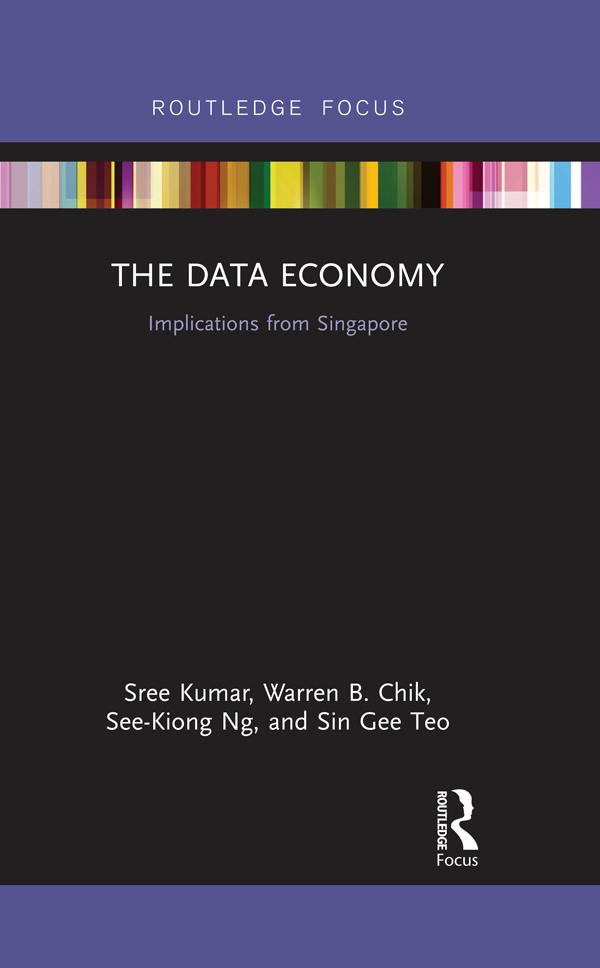
"The data economy" is a term used by many, but properly understood by few. Even more so the concept of "big data". Both terms embody the notion of a digital world in which many transactions and data flows animate a virtual space. This is the unseen world in which technology has become the master, with the hand of the human less visible. In fact, however, it is human interaction in and around technology that makes data so pervasive and important – the ability of the human mind to extract, manipulate and shape data that gives meaning to it.
This book outlines the findings and conclusions of a multidisciplinary team of data scientists, lawyers, and economists tasked with studying both the possibilities of exploiting the rich data sets made available from many human–technology interactions and the practical and legal limitations of trying to do so. It revolves around a core case study of Singapore’s public transport system, using data from both the private company operating the contactless payment system (EZ-Link) and the government agency responsible for public transport infrastructure (Land Transport Authority). In analysing both the possibilities and the limitations of these data sets, the authors propose policy recommendations in terms of both the uses of large data sets and the legislation necessary to enable these uses while protecting the privacy of users.
Payez facilement par carte, Klarna, Apple Pay ou Google Pay. Pas satisfait ? Vous avez toujours une garantie de remboursement de 14 jours. En savoir plus dans nos conditions. Si vous avez des questions, envoyez-nous un e-mail à hello@memmo.org.
Memmo facilite tes études, où que tu sois dans le monde. On rassemble tes manuels de cours et des outils d'étude intelligents au même endroit : résumés, quiz, podcasts et flashcards. Et il y a Ted, ton compagnon d'étude qui répond à toutes tes questions. Plus de 50 000 étudiants étudient déjà ici – conçu pour t'aider à apprendre plus vite et à moins stresser.