
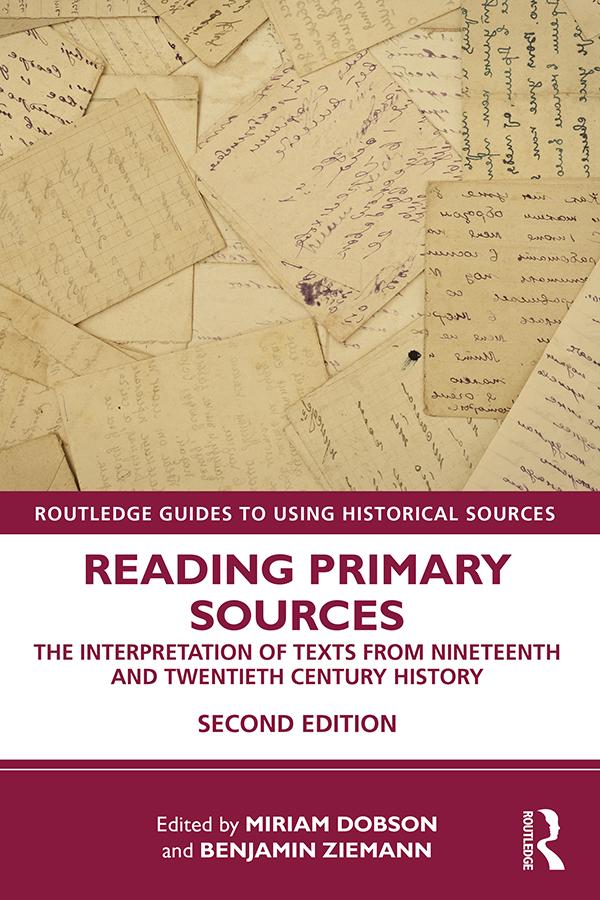
Now in its second edition, Reading Primary Sources explores the varied traditions in source criticism and, through specific examples, illustrates how primary sources can be read and used in historical research.
Part I of this two-part volume begins by establishing the reader’s understanding of source criticism with an overview of both traditional and new methodological approaches to the use of primary documents. Taking into account the huge expansion in the range of primary sources used by historians, Part II includes chapters on surveillance reports, testimony and court files, in addition to more traditional genres such as letters, memoranda, diaries, novels, newspapers, political speeches and autobiography. For the new edition, each chapter now includes a checklist that suggests an easy-to-follow sequence of steps for interpreting a specific source genre, enabling students to understand how the sources should be read, what they have to offer, and the pitfalls of their interpretation. In addition to new discussions about the availability of digitised source materials, a new chapter on social surveys unlocks the potential of these widely used primary sources.
Taking examples of sources from many European countries and the United States, and providing up-to-date information on the most widely used textual sources, this book is the perfect companion for every student of history who wants to engage with primary sources.
Payez facilement par carte, Klarna, Apple Pay ou Google Pay. Pas satisfait ? Vous avez toujours une garantie de remboursement de 14 jours. En savoir plus dans nos conditions. Si vous avez des questions, envoyez-nous un e-mail à hello@memmo.org.
Memmo facilite tes études, où que tu sois dans le monde. On rassemble tes manuels de cours et des outils d'étude intelligents au même endroit : résumés, quiz, podcasts et flashcards. Et il y a Ted, ton compagnon d'étude qui répond à toutes tes questions. Plus de 50 000 étudiants étudient déjà ici – conçu pour t'aider à apprendre plus vite et à moins stresser.