
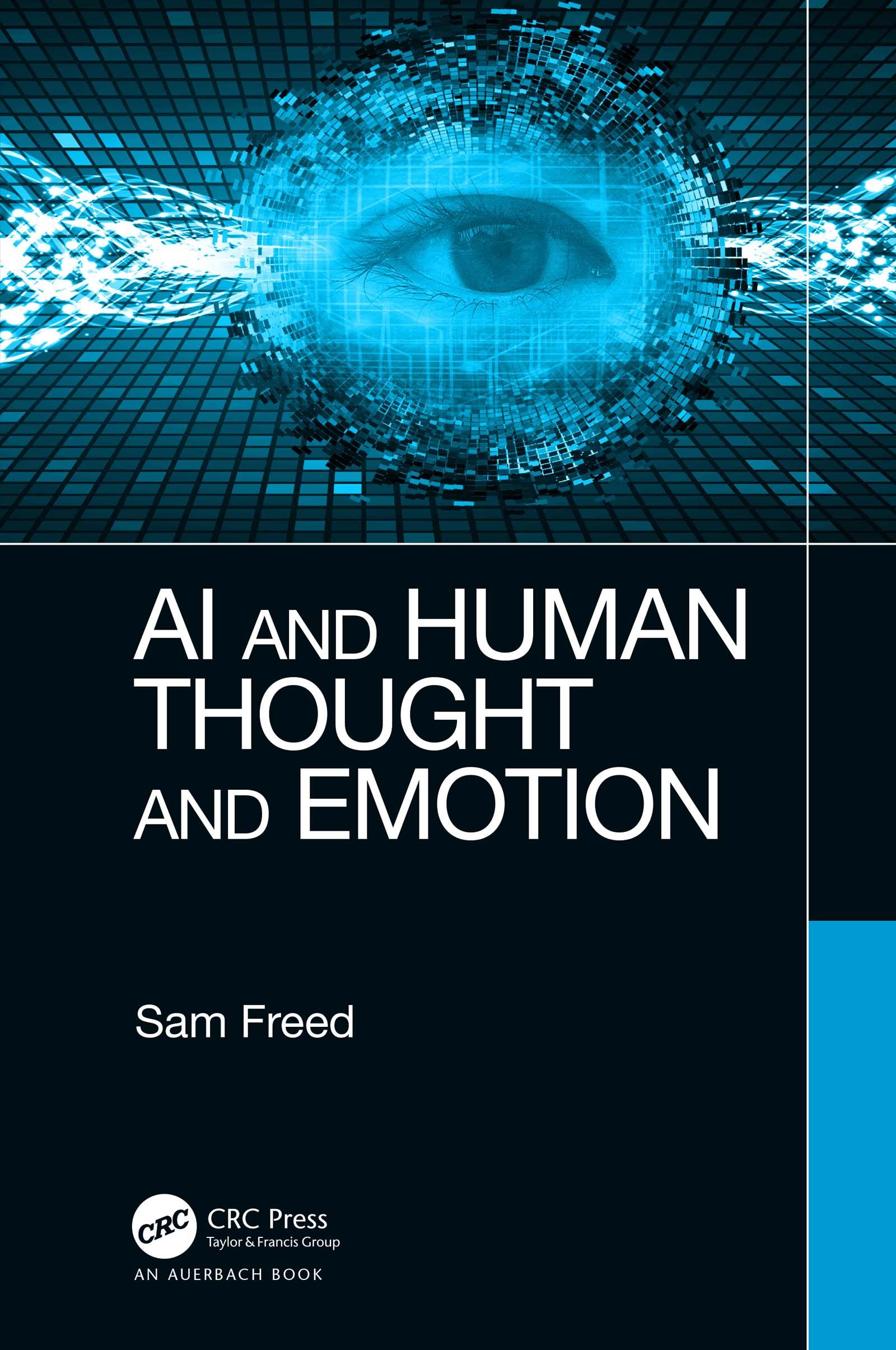
The field of artificial intelligence (AI) has grown dramatically in recent decades from niche expert systems to the current myriad of deep machine learning applications that include personal assistants, natural-language interfaces, and medical, financial, and traffic management systems. This boom in AI engineering masks the fact that all current AI systems are based on two fundamental ideas: mathematics (logic and statistics, from the 19th century), and a grossly simplified understanding of biology (mainly neurons, as understood in 1943). This book explores other fundamental ideas that have the potential to make AI more anthropomorphic.
Most books on AI are technical and do not consider the humanities. Most books in the humanities treat technology in a similar manner. AI and Human Thought and Emotion, however is about AI, how academics, researchers, scientists, and practitioners came to think about AI the way they do, and how they can think about it afresh with a humanities-based perspective. The book walks a middle line to share insights between the humanities and technology. It starts with philosophy and the history of ideas and goes all the way to usable algorithms.
Central to this work are the concepts of introspection, which is how consciousness is viewed, and consciousness, which is accessible to humans as they reflect on their own experience. The main argument of this book is that AI based on introspection and emotion can produce more human-like AI. To discover the connections among emotion, introspection, and AI, the book travels far from technology into the humanities and then returns with concrete examples of new algorithms. At times philosophical, historical, and technical, this exploration of human emotion and thinking poses questions and provides answers about the future of AI.
Payez facilement par carte, Klarna, Apple Pay ou Google Pay. Pas satisfait ? Vous avez toujours une garantie de remboursement de 14 jours. En savoir plus dans nos conditions. Si vous avez des questions, envoyez-nous un e-mail à hello@memmo.org.
Memmo facilite tes études, où que tu sois dans le monde. On rassemble tes manuels de cours et des outils d'étude intelligents au même endroit : résumés, quiz, podcasts et flashcards. Et il y a Ted, ton compagnon d'étude qui répond à toutes tes questions. Plus de 50 000 étudiants étudient déjà ici – conçu pour t'aider à apprendre plus vite et à moins stresser.