
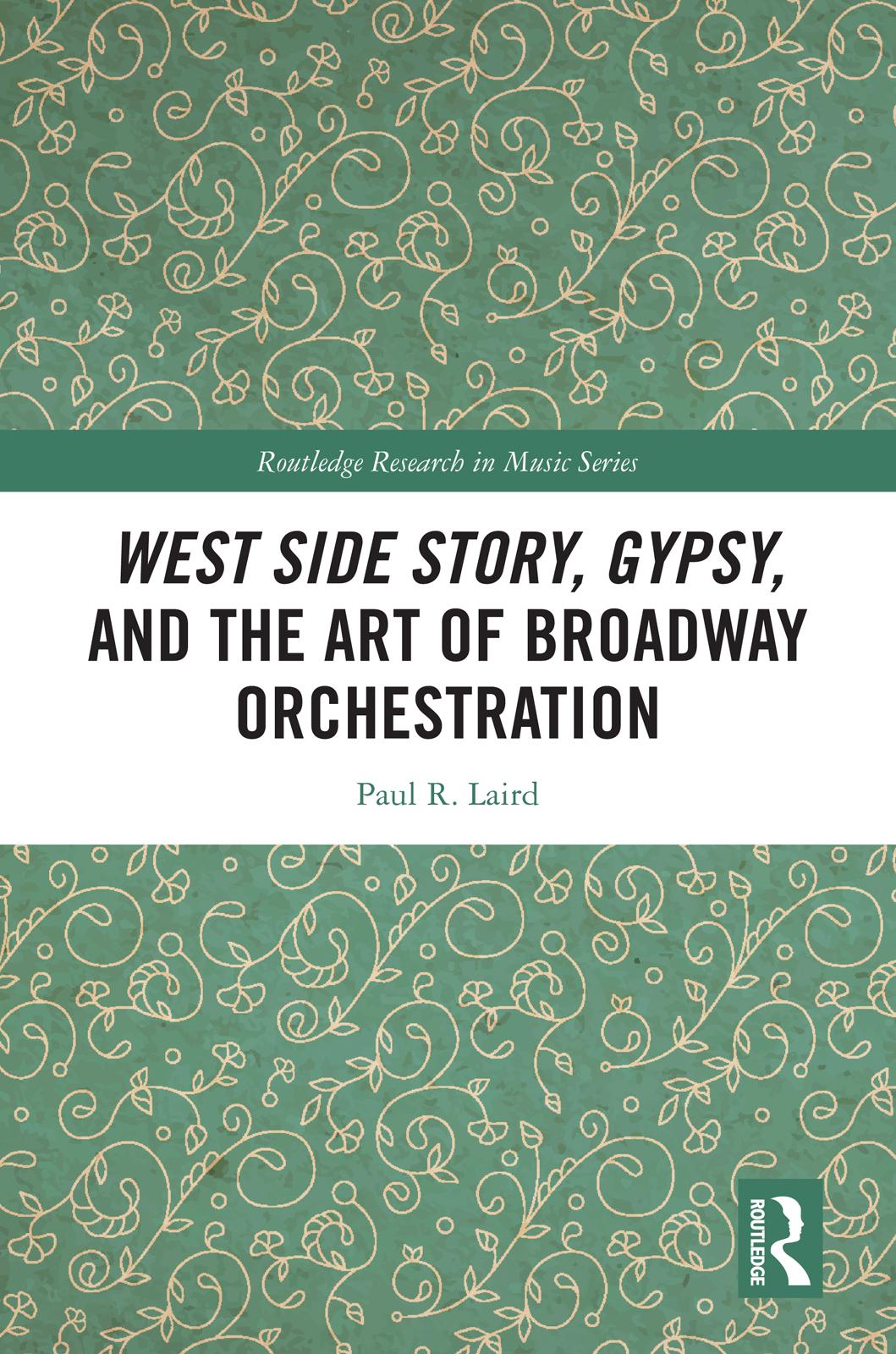
In this ground-breaking study, Paul Laird examines the process and effect of orchestration in West Side Story and Gypsy, two musicals that were among the most significant Broadway shows of the 1950s, and remain important in the modern repertory. Drawing on extensive archival research with original manuscripts, Laird provides a detailed account of the process of orchestration for these musicals, and their context in the history of Broadway orchestration. He argues that the orchestration plays a vital role in the characterization and plot development in each major musical number, opening a new avenue for analysis that deepens our understanding of the musical as an art form.
The orchestration of the score in Broadway musicals deeply shapes their final soundscapes, but only recently has it begun to receive real attention. Linked by a shared orchestrator, in other ways West Side Story and Gypsy offer a study in contrasts. Breaking down how the two composers, Leonard Bernstein and Jules Styne, collaborated with orchestrators Sid Ramin, Irwin Kostal, and Robert Ginzler, Laird’s study enables us to better understand both of these two iconic shows, and the importance of orchestration within musical theatre in general.
Payez facilement par carte, Klarna, Apple Pay ou Google Pay. Pas satisfait ? Vous avez toujours une garantie de remboursement de 14 jours. En savoir plus dans nos conditions. Si vous avez des questions, envoyez-nous un e-mail à hello@memmo.org.
Memmo facilite tes études, où que tu sois dans le monde. On rassemble tes manuels de cours et des outils d'étude intelligents au même endroit : résumés, quiz, podcasts et flashcards. Et il y a Ted, ton compagnon d'étude qui répond à toutes tes questions. Plus de 50 000 étudiants étudient déjà ici – conçu pour t'aider à apprendre plus vite et à moins stresser.