
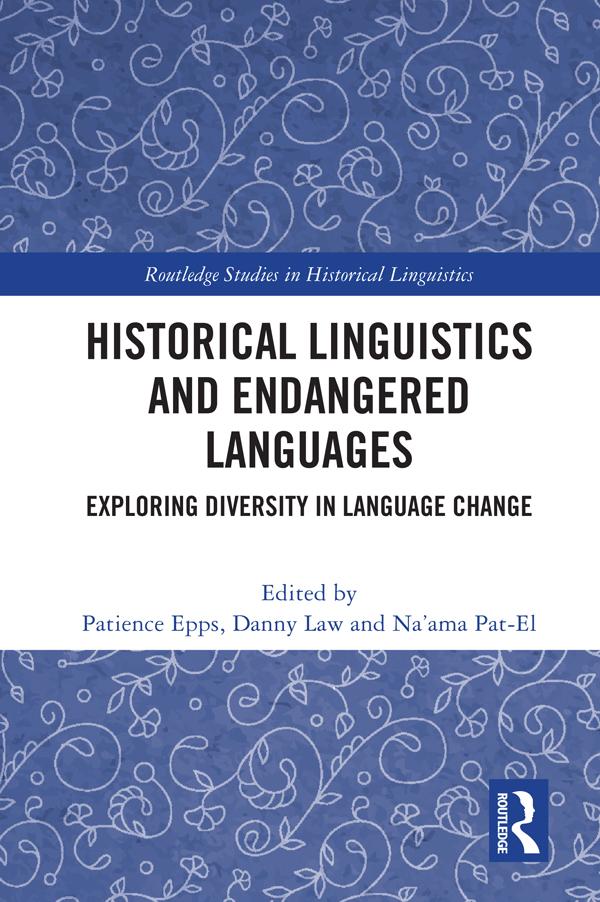
This collection showcases the contributions of the study of endangered and understudied languages to historical linguistic analysis, and the broader relevance of diachronic approaches toward developing better informed approaches to language documentation and description.
The volume brings together perspectives from both established and up-and-coming scholars and represents a globally and linguistically diverse range of languages.The collected papers demonstrate the ways in which endangered languages can challenge existing models of language change based on more commonly studied languages, and can generate innovative insights into linguistic phenomena such as pathways of grammaticalization, forms and dynamics of contact-driven change, and the diachronic relationship between lexical and grammatical categories. In so doing, the book highlights the idea that processes and outcomes of language change long held to be universally relevant may be more sensitive to cultural and typological variability than previously assumed.
Taken as a whole, this collection brings together perspectives from language documentation and historical linguistics to point the way forward for richer understandings of both language change and documentary-descriptive approaches, making this key reading for scholars in these fields.
Payez facilement par carte, Klarna, Apple Pay ou Google Pay. Pas satisfait ? Vous avez toujours une garantie de remboursement de 14 jours. En savoir plus dans nos conditions. Si vous avez des questions, envoyez-nous un e-mail à hello@memmo.org.
Memmo facilite tes études, où que tu sois dans le monde. On rassemble tes manuels de cours et des outils d'étude intelligents au même endroit : résumés, quiz, podcasts et flashcards. Et il y a Ted, ton compagnon d'étude qui répond à toutes tes questions. Plus de 50 000 étudiants étudient déjà ici – conçu pour t'aider à apprendre plus vite et à moins stresser.