
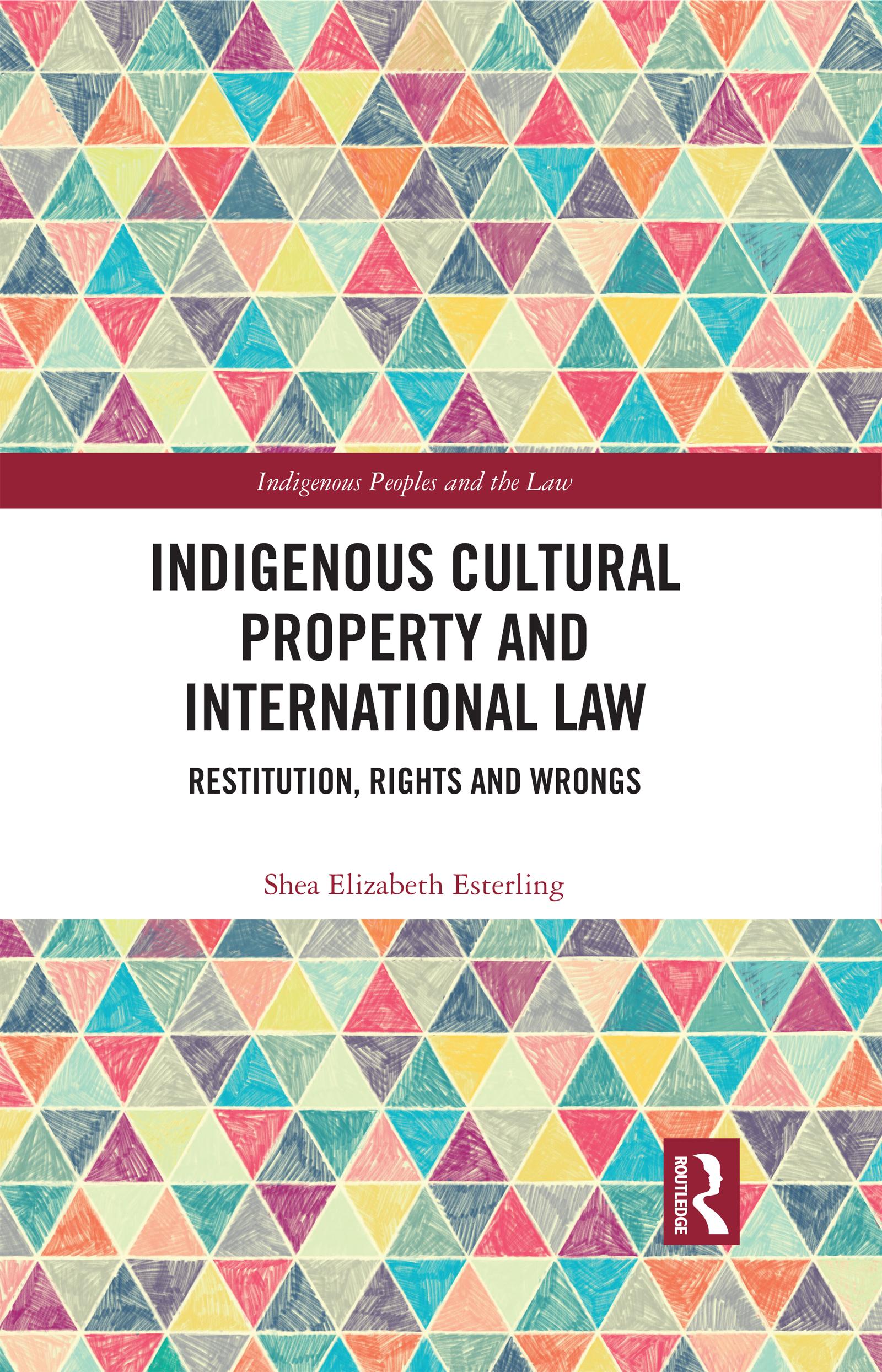
Examining the restitution of cultural property to Indigenous Peoples in human rights law, this book offers a detailed analysis of the opportunities and constraints of international law as a tool of resistance and social transformation for marginalized groups.
In accordance with an increasing insistence on respect for diverse cultures, and through their own international mobilization, Indigenous Peoples have participated in the construction of a distinct human rights framework. Significant academic inquiry has focused on the substantive gains made by Indigenous Peoples in this context, along with its impact on a body of law that had previously denied Indigenous Peoples a basis for claims to their own cultural materials and practices. Accordingly, this book acknowledges that Indigenous Peoples, as non-state actors, have generated greater substantive and procedural legitimacy in human rights law making. Offering normative insights into the participation of non-state actors in international law making, however, it also demonstrates that, despite their significant role in constructing the legal framework of human rights in the 21st century, the participation of Indigenous Peoples continues to be structurally limited.
With its interdisciplinary approach to the field, this book will appeal to scholars and students in the fields of law, politics, anthropology and indigenous studies.
Payez facilement par carte, Klarna, Apple Pay ou Google Pay. Pas satisfait ? Vous avez toujours une garantie de remboursement de 14 jours. En savoir plus dans nos conditions. Si vous avez des questions, envoyez-nous un e-mail à hello@memmo.org.
Memmo facilite tes études, où que tu sois dans le monde. On rassemble tes manuels de cours et des outils d'étude intelligents au même endroit : résumés, quiz, podcasts et flashcards. Et il y a Ted, ton compagnon d'étude qui répond à toutes tes questions. Plus de 50 000 étudiants étudient déjà ici – conçu pour t'aider à apprendre plus vite et à moins stresser.