
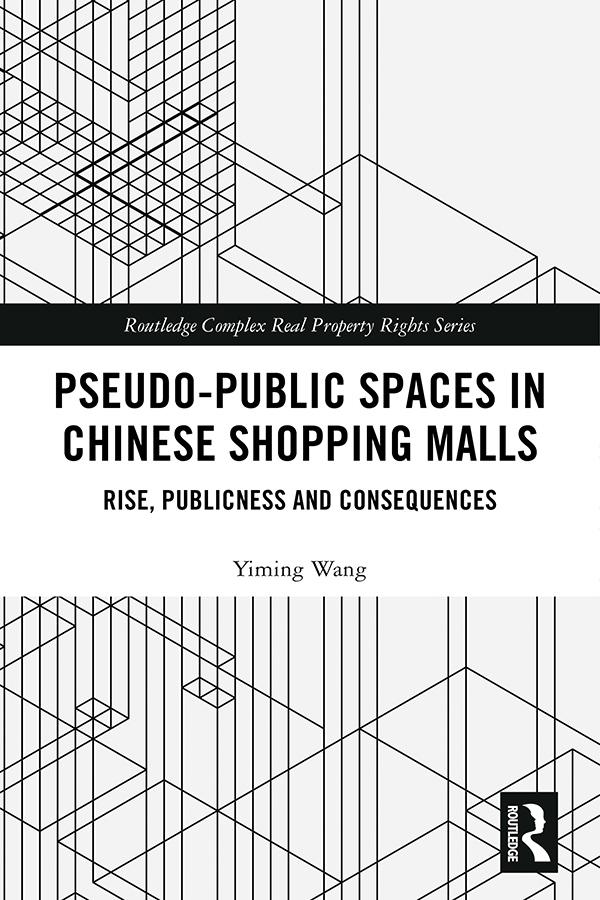
Shopping malls in China create a new pseudo-public urban space which is under the control of private or quasi-public power structure. As they are open for public use, mediated by the co-mingling of private property rights and public meanings of urban space, the rise, publicness and consequences of the boom in the construction of shopping malls raises major questions in spatial political economy and magnifies existing theoretical debates between the natural and conventional schools of property rights.
In examining these issues this book develops a theoretical framework starting with a critique of the socio-spatial debate between two influential bodies of work represented by the work of Henri Lefebvre and David Harvey. Drawing on the framework, the book examines why pseudo-public spaces have been growing so rapidly in China since the 1980s; assesses to what degree pseudo-public spaces are public, and how they affect the publicness of Chinese cities; and explores the consequences of their rise.
Findings of this book provide insights that can help to better understand Chinese urbanism and also have the potential to inform urban policy in China. This book will be of interest to academics and researchers in both Chinese studies and urban studies.
Payez facilement par carte, Klarna, Apple Pay ou Google Pay. Pas satisfait ? Vous avez toujours une garantie de remboursement de 14 jours. En savoir plus dans nos conditions. Si vous avez des questions, envoyez-nous un e-mail à hello@memmo.org.
Memmo facilite tes études, où que tu sois dans le monde. On rassemble tes manuels de cours et des outils d'étude intelligents au même endroit : résumés, quiz, podcasts et flashcards. Et il y a Ted, ton compagnon d'étude qui répond à toutes tes questions. Plus de 50 000 étudiants étudient déjà ici – conçu pour t'aider à apprendre plus vite et à moins stresser.