
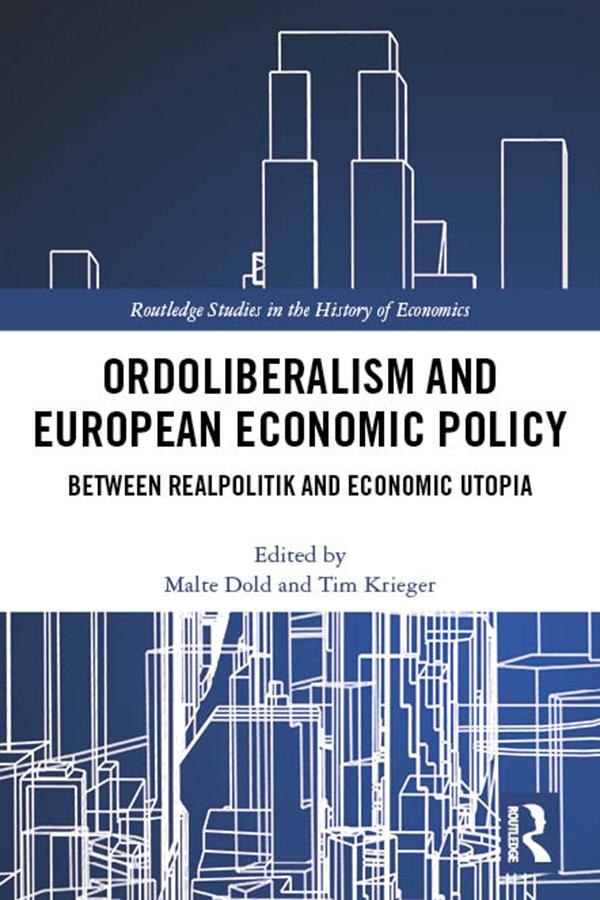
This volume takes a broad perspective on the recent debate on the role of German ordoliberalism in shaping European economic policy before and after the eurozone crisis. It shows how ordoliberal scholars explain the institutional origins of the eurozone crisis, and presents creative policy proposals for the future of the European economy.
Ordoliberal discourse both attempts to offer political solutions to socioeconomic challenges, and to find an ideal market order that fosters individual freedom and social cohesion. This tension between realpolitik and economic utopia reflects the wider debate on how far economic theory shapes, and is shaped by, historical contingencies and institutions.
The volume will be of interest to policymakers as well as research scholars, and graduate students from various disciplines ranging from economics to political science, history, and philosophy.
Payez facilement par carte, Klarna, Apple Pay ou Google Pay. Pas satisfait ? Vous avez toujours une garantie de remboursement de 14 jours. En savoir plus dans nos conditions. Si vous avez des questions, envoyez-nous un e-mail à hello@memmo.org.
Memmo facilite tes études, où que tu sois dans le monde. On rassemble tes manuels de cours et des outils d'étude intelligents au même endroit : résumés, quiz, podcasts et flashcards. Et il y a Ted, ton compagnon d'étude qui répond à toutes tes questions. Plus de 50 000 étudiants étudient déjà ici – conçu pour t'aider à apprendre plus vite et à moins stresser.