
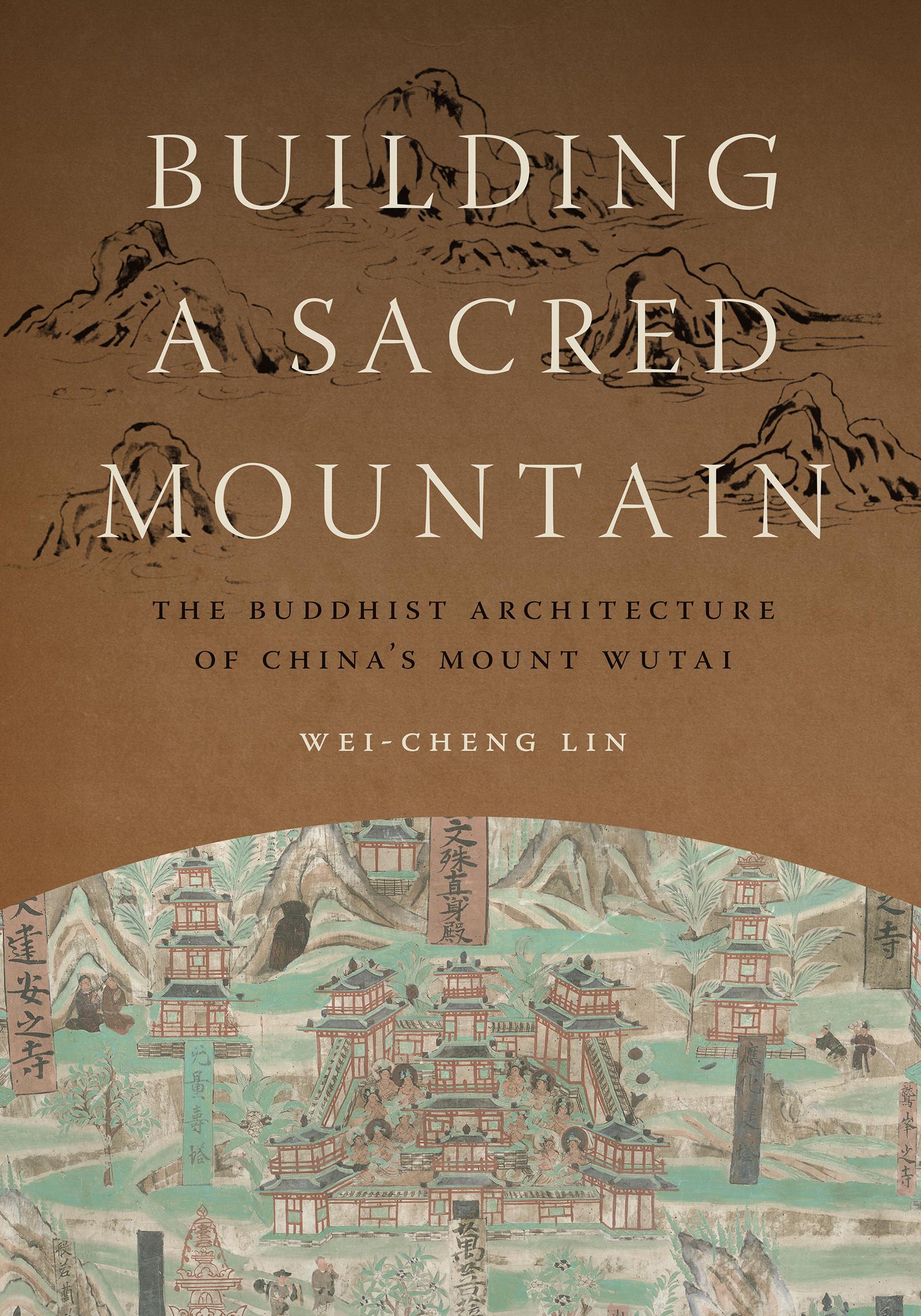
By the tenth century CE, Mount Wutai had become a major pilgrimage site within the emerging culture of a distinctively Chinese Buddhism. Famous as the abode of the bodhisattva Mañjuśrī (known for his habit of riding around the mountain on a lion), the site in northeastern China’s Shanxi Province was transformed from a wild area, long believed by Daoists to be sacred, into an elaborate complex of Buddhist monasteries.
In Building a Sacred Mountain, Wei-Cheng Lin traces the confluence of factors that produced this transformation and argues that monastic architecture, more than texts, icons, relics, or pilgrimages, was the key to Mount Wutai’s emergence as a sacred site. Departing from traditional architectural scholarship, Lin’s interdisciplinary approach goes beyond the analysis of forms and structures to show how the built environment can work in tandem with practices and discourses to provide a space for encountering the divine.
Art History Publication Initiative. For more information, visit http://arthistorypi.org/books/building-a-sacred-mountain
Payez facilement par carte, Klarna, Apple Pay ou Google Pay. Pas satisfait ? Vous avez toujours une garantie de remboursement de 14 jours. En savoir plus dans nos conditions. Si vous avez des questions, envoyez-nous un e-mail à hello@memmo.org.
Memmo facilite tes études, où que tu sois dans le monde. On rassemble tes manuels de cours et des outils d'étude intelligents au même endroit : résumés, quiz, podcasts et flashcards. Et il y a Ted, ton compagnon d'étude qui répond à toutes tes questions. Plus de 50 000 étudiants étudient déjà ici – conçu pour t'aider à apprendre plus vite et à moins stresser.